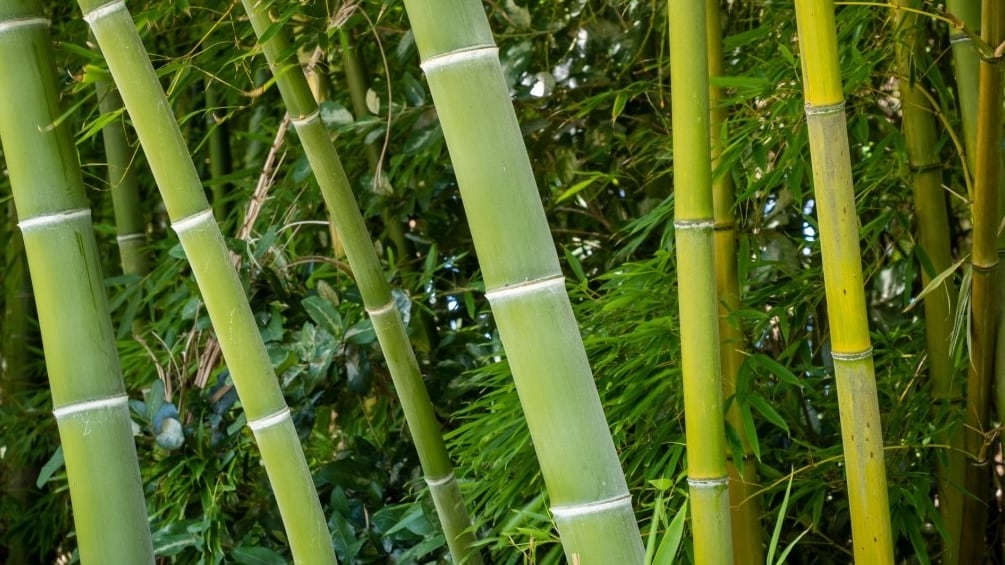
Researchers have identified potential climate solutions in “grassy trees” – plants like bamboo, palm, banana and more that look like trees, but display some characteristics of different grasses. New research published in Trends in Ecology and Evolution claims that these plants grow rapidly like grass with “tree-like canopy dominance,” which highlights their potential to be nature-based solutions for sustainability. These monocots, referred to by researchers as “grassy trees,” produce dense, fast-forming tissue for stable structures, and some species can rapidly sprout by filling into canopy gaps, according to the analysis by researchers from New York University. “These hybrid traits – combining the structural presence of trees with the regenerative flexibility of grasses – give grassy trees a competitive edge in high-disturbance or transitional environments, where short-term productivity is favoured over long-term persistence,” the analysis read. Aiyu Zheng, a researcher at New York University’s Department of Environmental Studies and the lead author of the analysis, said “grassy trees” typically grow faster than trees, supplying timber, fruit, fibre and fuel, while also offering more construction materials, shade, wind shelter and permanence than normal grasses. “They also restore land very quickly,” Zheng said during an interview with CTVNews.ca. According to Zheng, plants like bamboo grow at a much faster rate than conventional trees, making it easier to replenish after harvesting. “The Achilles heel of trees is that they grow too slow, and by the time they become skyscraper-like trees, we might already blow past the most optimistic goal, so they’re not fast enough to come to our rescue. That’s the problem,” Mingzhen Lu, an assistant professor in NYU’s Department of Environmental Studies and the paper’s senior author, told CTVNews.ca. Lu added that the economic benefits of these plants was seen in examples from all around the world for conservation, local businesses and food security in countries like Brazil, Ethiopia and Southeast Asia. Meanwhile, “bamboo can sequester carbon at rates up to four times higher than typical tropical regrowth forests,” the analysis said. “They’re non-stop taking in carbon,” Zheng said, adding that larger trees accumulate carbon in their bodies in a large amount, even if that process takes much longer than what the “grassy trees” can do. However, the analysis says their ambiguous nature and status, presenting as “woody and herbaceous plants” has led to them being looked past in research. “They’re all often neglected because they’re a little bit like trees, a little bit like grasses, but technically they’re neither trees nor grasses. They’re kind of one of their own groups,” Zheng said. These plants have the ability to recover from and adapt to extreme changes in weather conditions, which is significantly different from other trees, according to the research. They offer an efficient carbon uptake, and their biodiversity can have a positive effect on the economy. “People want to have higher income, want to have economic development and they have to cut down the forest for creating more farmland,” Zheng said. “In that case, how do we balance preservation of nature for the ecological benefit?” Bamboo plants can be the source of biodegradable plastic that is strong, recyclable and effective in curbing global plastic waste and increasing sustainable living, the researchers said. There are other products made from these plants like kitchen utensils, clothes, bags and more that makes them a better choice for the environment. However, some invasive species of these plants may not be suitable for parts of the North America’s native species, they added. There is a need for careful selection and analysis when introducing these plants to a newer environment.