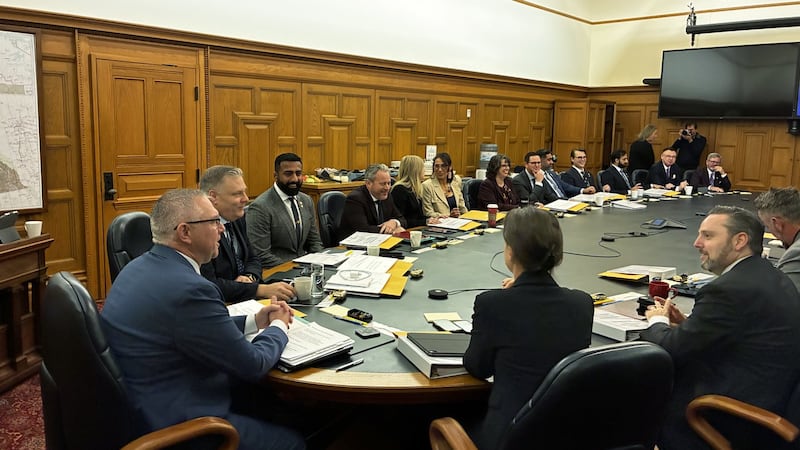
Ontario Premier Doug Ford’s response to a spate of home invasions this month that left one person dead and another family injured may have some residents asking what their rights are when confronted by an armed robber. On Thursday, Ford revealed that he is a legal gun owner and said he would not hesitate to use the weapon on someone who invaded his home and threatened his family. “I’ll blow the guy right through the front door,” he told reporters at Queen’s Park. The premier’s comments come a day after police confirmed that one or more suspects broke into a home in Toronto’s Casa Loma neighbourhood and shot one of the residents. The homicide follows just weeks after another home invasion in Toronto’s Bridle Path neighbourhood where three residents were shot and a fourth was a struck by a hammer. Ontario’s attorney general and solicitor general are now asking the federal government to amend the Criminal Code to “strengthen and clarify the legal protections available to homeowners confronted with a home invasion.” Toronto criminal lawyer Joseph Neuberger says Canadians have “robust rights under the Criminal Code to defend themselves, their family, their friends in their home, as well as their property.” However, they must be able to prove a “reasonable and proportional” use of force against a threat, he told CTV’s Your Morning on Friday. A resident, for example, could use force to “repel or possible kill the individuals” if confronted in a home invasion by armed individuals, where they feel they’re “under imminent risk of grievous bodily harm,” he said. Residents who are lawful gun owners can use their firearms to defend themselves, but must “have some certainty” that there is a risk to their and their family’s lives. “It’s a bit of a delicate balance in Canada,” he said “It’s different than the United States.” Reasonable use of force and firearms Canadians have the right to “not retreat,” Neuberger said, which means, residents can stay to protect themselves. The circumstances of the confrontation may dictate whether a person’s use of force to respond was reasonable or not. For instance, if a threatening, but unarmed, individual invades a home and orders residents to give them things, responding with a firearm is “unreasonable,” he said. “If it’s clear they’ve come into the home, they’re brandishing firearms, it’s more than one individual and you feel at that point that you’re at risk, that can be reasonable force,” he added. Neuberger added that the best way to respond is to try to find a secure place with the family and call 911, without engaging the individuals. “But if you’re caught in these circumstances, then you can use reasonable force,” he said. Police messaging The change in local police messaging on how to protect oneself from a home invasion suggests that police might be “frustrated,” Neuberger said. In 2024, a Toronto police officer suggested that homeowners leave their car keys near the front door to avoid invaders coming into the house and threatening families. This week, police suggested that victims “follow their gut” and call 911 first. “We do have a rise of home invasions in Toronto,” Neuberger said. “I feel that the police are underfunded. In my opinion, we need more officers trained and on the streets and patrolling.” He added that criminals are less likely to invade homes when there are police cars patrolling the area. “It’s clear that we need a much more significant presence,” he said. Some residents have turned to courses to get their own firearm licences, Neuberger added. “I think the police are saying, do what you think is reasonable to protect yourself and your family because we’re having deaths occur or serious injuries. And I think a part of it (comes from) some level of frustration.”