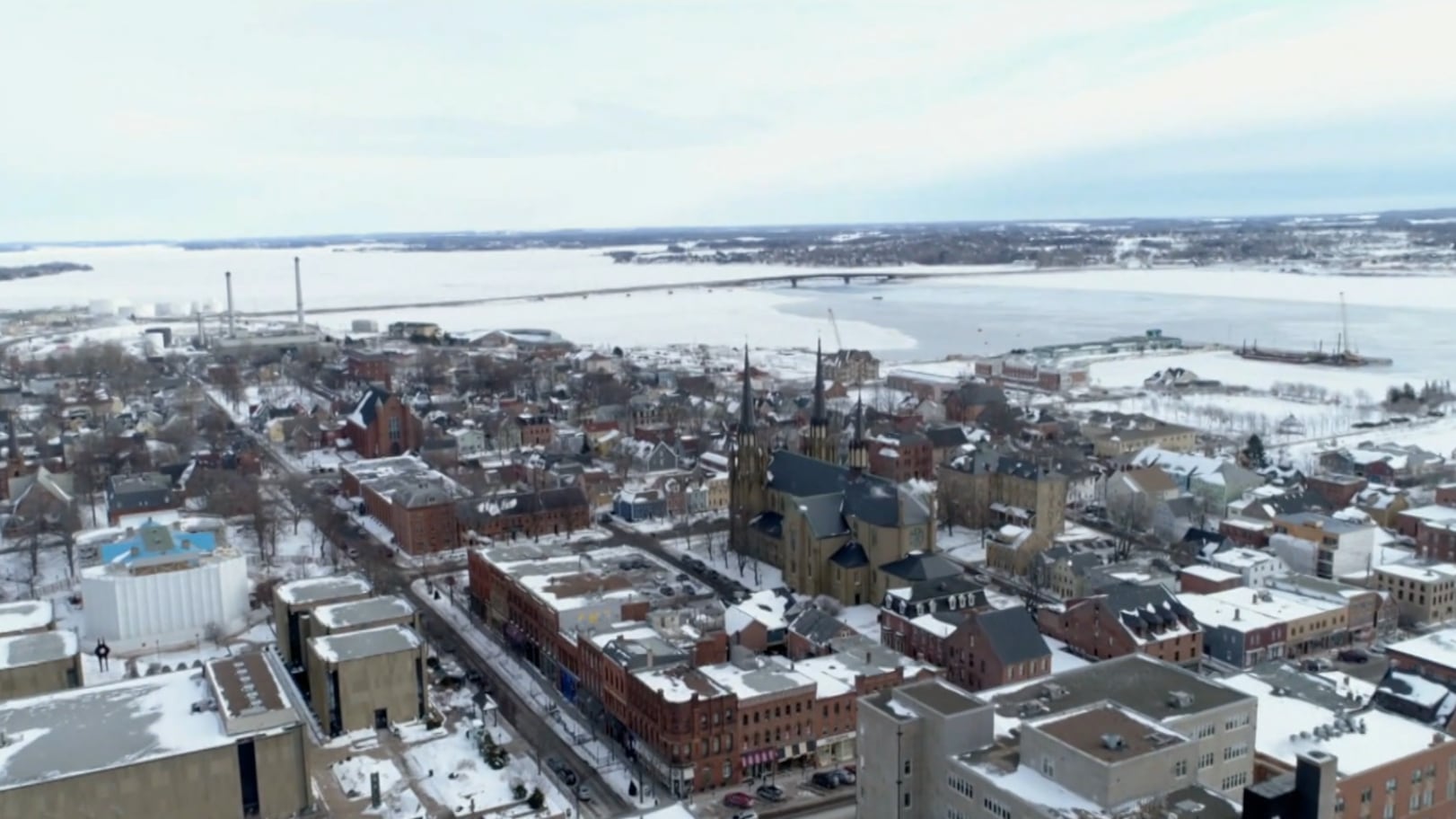
Prince Edward Island’s population has been climbing quickly, with newcomers filling job shortages and starting businesses, but some community leaders say that rapid growth comes with challenges. The Community Foundation of P.E.I.’s 2025 Vital Signs report paints a picture of a province expanding fast, with the population reaching roughly 180,000 in 2025, up about 1.5 per cent from the year before. It stresses that immigration is increasingly important as deaths outpace births. However, pressures on public services and infrastructure have worsened. “That strain is showing up in almost every theme that we see,” said Kent Hudson, the foundation’s executive director. “It’s showing up as affordability. It’s showing up as health and wellness … We have grown so much, and we now need to figure out how we best maximize what we’re doing so that we don’t get into a worse situation.” On housing, the report cites a tightening rental market, noting P.E.I.’s vacancy rate was 0.7 per cent in 2024, down from 1.9 per cent in 2016. It also pulls numbers from the Canadian Institute for Health Information, which suggest 27 per cent of Islanders do not have a regular health-care provider, compared with 17 per cent nationally. Hudson attributes ongoing issues such as long wait times to rising demand from population growth and an aging demographic, among other factors. “That aging population is also going to be more of a drain on the health-care system, and so I think there are aspects that are very positive at play here,” he said, referring to the Island’s recent growth from immigration. Steve Ogden, the mayor of Stratford, one of the province’s fastest-growing municipalities, echoed the sentiment. “Our birth rate isn’t high enough to sustain our population,” Ogden said. He pointed to Japan as a cautionary example, where an aging society and shrinking workforce have fueled concerns about economic decline as newcomer numbers fall. “We don’t want to end up … where our economy is imploding because we don’t have enough people to pay the bills.” Ogden said he supports a more targeted approach to immigration, where new arrivals are tailored to the needs of communities. According to the last census in 2021, immigrants made up 7.8 per cent of the Island’s population. Ottawa began scaling back federal immigration targets in the fall of 2024, most recently lowering planned permanent resident admissions to 395,000 in 2025 and 380,000 in both 2026 and 2027. Before that, Canada had been on track admit up to 500,000 newcomers per year. Those policy changes have trickled down, with international immigration to P.E.I. seemingly slowing too. The period from July 1, 2024, to June 30, 2025, saw 2,843 newcomers, down 31 per cent from the previous year, and the lowest number of new arrivals since the pandemic year of 2020-21. Dean Constable, executive director of the Immigrant and Refugee Services Association of P.E.I., said newcomers are not the main source of the strain -- in fact, many are part of the solution. “If we were to move every newcomer off the doctor waiting registry, we’d still not be able to get a doctor,” Constable said. “If we were to remove them all from housing, we still wouldn’t have enough houses.” He said one of the biggest contributors to development in P.E.I.’s construction sector is newcomers filling labour shortages, which they do in other key industries as well, from health care to technology. Constable added that when pathways to residency narrow or stall, it can leave people unsure whether to put down roots and make it harder for employers and communities to plan ahead. “Maybe they came in on a work permit, knowing there was a pathway to permanent residency and setting up. Now they’re not sure … and that puts uncertainty in terms of their investment in the community for the long term.” He warned that rapid change in any direction creates challenges for systems to absorb, and advocated for a slower, long-term approach to population planning.