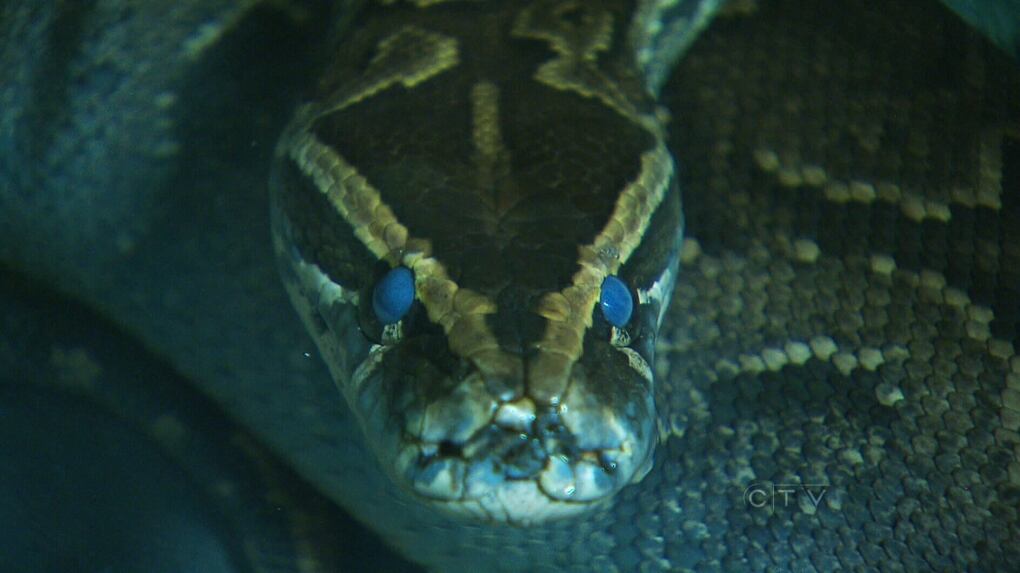
The deaths of two New Brunswick boys who police believe were strangled by a large python highlight the need for strict provincial regulations when it comes to exotic pets, a global animal welfare group says. “What we have in Canada is a patchwork of different municipal bylaws and provincial regulations,” Melissa Matlow, a spokesperson for the World Society for Protection of Animals, told CTVNews.ca. She said her organization has been calling on Canadian provinces to take on the responsibility of regulating the sale and ownership of exotic animals, especially those that may pose a danger to people and the environment. “Municipal bylaws are usually passed in response to a particular incident that happened in a community so they will deal with that animal that was a problem, but they may not restrict all the animals that are potentially dangerous and difficult to care for,” Matlow said. “What one community doesn’t allow, another community might allow and the problem just gets pushed on from one community to the next.” The New Brunswick government said Tuesday it did not issue a permit for the 45-kilogram, 4.3-metre long African rock python that was kept in a Campbellton apartment where the two boys, Noah and Connor Barthe, were killed. That type of python is generally only allowed in accredited zoos, unless the owner obtains a special permit, a spokesperson for the province’s Natural Resources Department told The Canadian Press. The RCMP is investigating the boys' deaths. Matlow said pythons, large and venomous snakes should be banned across Canada, unless they are being held in facilities that specialize in animal welfare and rehabilitation. “These animals don’t make suitable pets and should be banned outright,” she said. “I question why people need to keep four-metre, six-metre long animals that can weigh up to 200 pounds. It’s certainly not in the best interests of the animal to be kept as a pet…it’s definitely a public safety risk, as this tragedy has shown, and it’s also an environmental risk.” Large snakes and other exotic pets are often released into the wild, wreaking havoc on the ecosystem, Matlow said. She pointed to a WSPA report on the trade of reptiles in Canada that highlighted problems with keeping certain types of animals in captivity. The report noted that African rock pythons can be very aggressive and are considered to be “nervous” snakes, prone to biting. “While these snakes are non-venomous, they can strike rapidly at their prey with large sharp teeth that can inflict deep lacerations,” the report said. It also noted that African rock pythons require “expansive enclosures that are beyond the ability of amateur hobbyists to provide.” Bry Loyst, the curator at the Indian River Reptile Zoo in Ontario, doesn’t believe a universal ban on pythons is necessary, but he said stricter restrictions and guidelines are needed. He told CTVNews.ca on Monday that pythons and other large snakes are potentially dangerous, “and they need to be looked after properly and we need to have a licensing system that makes sense.” Louis McCann, the director of the Pet Industry Joint Advisory Council, also said an outright ban on all pythons would be excessive. But his group has supported limiting seven larger python species, including the African rock python, to accredited zoos. British Columbia adopted tough rules on exotic animals several years ago and should serve as a role model to other provinces, Matlow said. More than 1,000 animal species, including pythons, were designated as “controlled alien species” in B.C. in 2009. Those species can no longer be sold, bred or kept in private ownership. People who already owned the banned animals were allowed to keep them until they died, but had to obtain permits and comply with various regulations. “That is, to me, a very practical and humane and safe way of dealing with the problem because you can’t just ban these animals outright overnight,” Matlow said, noting that Alberta also has “good standards” when it comes to exotic pets. Although experts have described python attacks on humans as extremely rare, they do happen around the world, Matlow said. In 1992, an Ontario man was strangled by his python. A coroner’s inquest into his death called for the banning of exotic animals in the province, but ownership rules are still left to municipal governments. In the United States, the Humane Society has recorded 12 deaths involving large constrictor snakes since 1990. With files from The Canadian Press