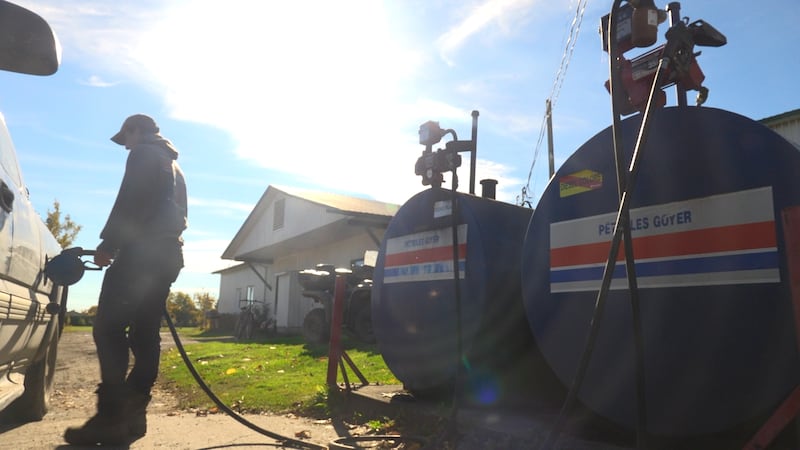
With global oil prices rising, one food expert says the Canadian agriculture sector could be next to feel the impacts of the war in the Middle East. Mike von Massow, a professor in the Department of Food Agricultural and Resource Economics at the University of Guelph, told CTV News Channel on Wednesday that the war could increase the cost of farming operations in Canada. “We’re getting to that time of year where farmers are going to be out on the land burning fuel to get seed in the ground and then as we go forward, even to harvest, that’s going to be more expensive,” he said. Global oil prices have increased because the war in the Middle East has closed oil shipments through the Strait of Hormuz, one of the most important oil checkpoints in the world. But Massow thinks the Canadian agriculture sector is already seeing a significant impact on the price of nitrogen fertilizer, much of which is produced in the Middle East. “That will have a more dramatic effect in Eastern Canada, which depends more heavily on imports than the west does,” he said. “Depending on how much fertilizer is already on the ground and ready to be used here at this time of year, we could see a significant impact on the cost of fertilizer as well.” Grocery prices going up? Massow says items at the grocery store could slightly increase in price, particularly on imported produce. According to the professor, transportation makes up about 3.5 per cent of the retail price of food products on average. Therefore, if fuel prices increase, Massow says consumers might see small increases on items at the grocery store. “There are products, especially in Canada at this time of year, like fresh fruits and vegetables, that we’re bringing in on trucks from the southern U.S., Central America and other places, and for those (items), it’s closer to 10 per cent,” he said. “We could see the price of fresh fruits and vegetables that are imported go up a little more than the average, but I don’t think we’re talking 10 to 15 per cent. But given the pressure we have on food, every little bit matters.” Canadians could start to see these changes at the grocery store relatively quickly, Massow says. “Produce is a perishable product. It’s not in storage, it’s being brought up regularly, and so the increased cost will be passed on to consumers, I expect, within a week or two,” he said. “For some other things, it will be more slow, because (it’s) a smaller component and some people might hold off on passing prices along if we believe fuel prices will come down relatively quickly again.”