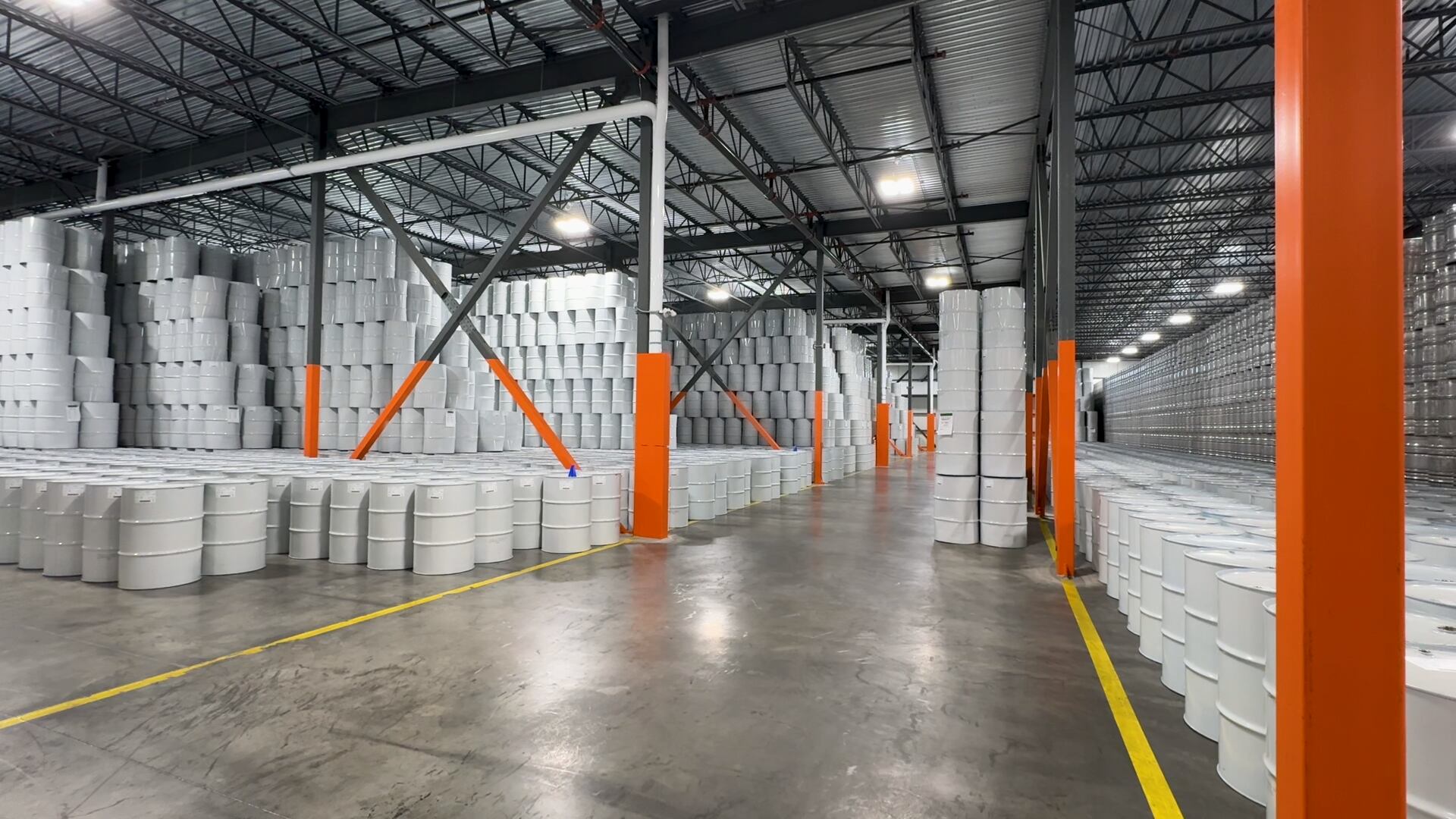
Tens of thousands of barrels of maple syrup are stockpiled in Quebec’s Maple Regional County, an area two hours’ drive from Montreal, though all of them have been sold. “Welcome to the world’s maple syrup strategic reserve,” says the reserve’s director Kevin Gauthier. The reserve was first set up more than a quarter of a century ago, to ensure a stable flow of maple syrup to national and international markets, and it is coming in handy. Quebec’s maple producers say the province is a powerhouse for global supply, accounting for 90 per cent of Canada’s output, and 72 per cent of the world’s production. And while the demand for maple products is rising every year, production so far this season is slow. “The mountain is still totally snow-covered,” says David Hall, a sixth-generation maple producer in Bromont in Quebec’s Eastern Townships. He says the long cold winter is cutting into the number of days sap has flowed so far this spring. “It’s feast or famine,” says Hall. “It’s either run like hell or nothing. It’s frozen. The saving grace for us is that the sugar content in the sap is higher.” A few days ago, the average producer’s harvest in Quebec was down 30 per cent. The temperature has been shooting up and down since, but the concern is that it may suddenly get too hot too fast. Still, there is no concern over a shortage now. Producers set up the reserve to ensure the industry rides the ups and downs of nature. Both 2024 and 2025 were record years for harvesting. “This is the idea, because ever since God was a boy scout, you have had good years and bad years in the forest,” says Hall. Replenishing the reserve could pose a challenge if the weather doesn’t cooperate, but producers will take stock of how much they can store away weeks after the season is over. With climate change, producers are also ensuring they find ways to adapt with more variabilities in the sugaring off season and tap trees on a different schedule. The rising cost of boiling the sap is also a challenge for producers who use oil. “The last 17 drums we boiled, it averaged about $60 a drum for the oil,” says Hall. “Normally it has been about $40.” But Hall also says that no matter the obstacles, there is no doubt in his mind that maple syrup will continue to be a popular staple. “In 50 years, do I think we will be producing maple syrup? My answer is ‘yes’,” says Hall. And the strategic reserve, he says, helps ensure producers are paid fairly.