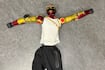
A professor at the University of Calgary is trying to give a voice to those with non-verbal autism. Diwakar Krishnamurthy is the head of a team at the Schulich School of Engineering that is working to develop a system using augmented and virtual-reality goggles. When wearing the goggles, the participant can see letters that they can virtually tap or grab to make words with. “We built a system where a fully embodied virtual therapist is in the room with you,” he said. “When you have the headset on, you see the therapist and they offer encouragement, and they actually give you motor coaching, like, ‘Here’s how you reach an ‘A’ -- you’re trying to spell Apple, so let’s focus. Now, what comes next?’” Krishnamurthy’s teenage son is on the autism spectrum and non-verbal. He says he was frustrated that technology wasn’t being used to help his son, so he started working on a solution. “When my son was diagnosed, we were given the doom and gloom dire scenario, but eventually, we discovered that he is quite a smart guy with a lot of innermost thoughts to convey,” Krishnamaurthy said. He says the goal of the project is to build around the participant’s abilities and develop or adapt technology to provide seamless, expressive communication tools to the non-verbal community so they can communicate effortlessly. Travis Dow, a PHD student, is the project lead and also works on design and development of the headset. Dow says the participants range in age from nine to their 40s. “A lot of our participants have never worked with VR and have never worn a headset before,” he said. “It’s really cool to see their expressions change -- and flash a smile -- when they realize ‘Oh, there’s this cool virtual object in front of us and we can interact with it.’” He says the key to the system is how adaptable it is. “A lot of people really like the appeal of the digital content being super customizable,” he said. “If you’re dealing with hardware, you buy it in the store and get it as is. But with software, we can change so much -- we can really make it bespoke to each individual person, and that can be really huge for these people.” Dow says one participant likes blue, so now when he wears the goggles, all the walls surrounding him are blue. Another likes an enchanted forest, so when the goggles are put on, that’s what they see. Krishnamaurthy says the project is still in the research phase, but he is applying for government funding to take the project to the next level. “We’ve done all the foundational research and shown that these technologies can be effective in promoting independence,” he said. “Now the question is, how do we (get) it to families because they were in need of this technology yesterday.”