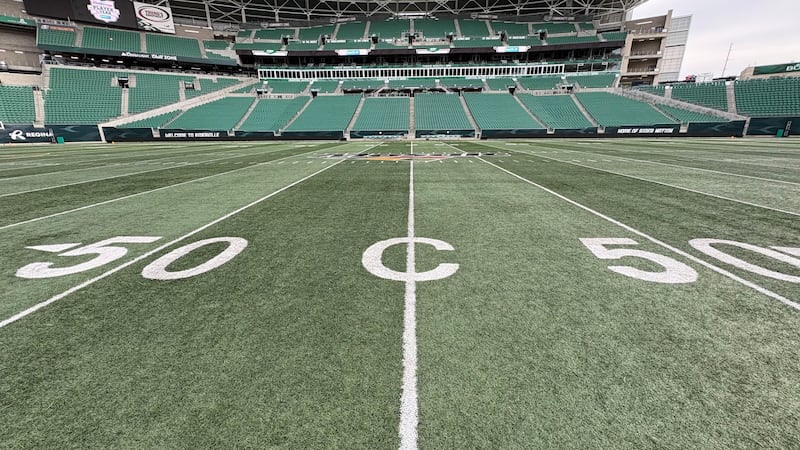
Friday marks 65 years since the official opening and first ever football game held at McMahon Stadium. The facility has been at the heart of Calgary’s sports and entertainment scene, witnessing decades of athletic triumphs, international events, and cultural milestones. Originally built to house the Calgary Stampeders of the Canadian Football League (CFL), the stadium quickly became a multi-purpose venue, hosting everything from high-profile concerts to Olympic ceremonies and royal visits. “I was six years old when the stadium was opened up on August 15, 1960,” said John McMahon, son of George McMahon. “My dad and my uncle were out in centre field for the ceremonial kickoff. I remember being there, it was just really exciting, it was kind of mind-blowing to look back on all these years later now to be quite honest.” Timeline of McMahon Milestones Building McMahon Stadium The stadium was constructed in a remarkable 103 days in 1960, replacing the aging Mewata Stadium as the Stampeders’ home. Designed by architect Peter Rule of Rule Wynn and Rule, and built by Burns and Dutton Concrete and Construction, McMahon Stadium was situated on 40 acres with a 99-year lease from the City of Calgary. The property had originally been earmarked for a new university campus. Calgary oilmen Frank and George McMahon contributed $300,000 to the project and guaranteed an additional $750,000 in debentures, allowing construction to proceed despite limited government support. McMahon Stadium’s origins are inseparable from the McMahon brothers themselves. George and Frank were sons of a hard-rock miner from Moyie, B.C., building their wealth in the oil and gas sector and playing a pivotal role in Calgary’s sporting history. George served as Stampeders president from 1959 until 1968, transforming the franchise into a financially stable team. Patrick Evanson, grandson of George, never had the chance to meet his grandfather who passed away in 1978 but says he couldn’t be prouder of his family’s legacy. Evanson played high school football for E.P. Scarlett on McMahon turf, was a member of the Calgary Colts Junior Football Team and coached his Scarlett high school team to a city championship in 2006. He fondly remembers McMahon Stadium as holding a special place in his heart. “Just the fact that my granddad was able to have such a deep love and appreciation for football and for the city, and to give something to people, to bring people together, I think, is a really big part of the legacy, and what it means,” Evanson said. “My dad was also a ball boy for the Stamps when they won the Grey Cup in 1968,” he said, continuing. “He knew of my granddad at the time and would later meet his daughter, my mom, Katharine McMahon. It was always the place to be, right? A place where you feel like you’ve made it, people aspire to touch the grass for sure, and it means a lot for anyone to get the opportunity to play on this field.” Early triumphs and fan support The early 1970s brought one of Calgary’s most celebrated moments in football history. In 1971, the Stampeders captured their first Grey Cup since 1948, rekindling excitement for the team after a string of lean years. However, by the 1980s, fan support had waned, prompting the community led “Save Our Stamps” campaign in 1986. The team was on the verge of folding due to a decline in ticket sales and several years without a playoff appearance. Thousands of fans purchased season tickets, securing the franchise’s future and revitalizing the stadium’s atmosphere. ‘Brought people together’ Stampeders legend Stan Schwartz fondly remembers those days. The former assistant coach of the football club (1976-1984) and team president (1996 to 2003), was also the manager of McMahon Stadium for nearly a decade (1984 to 1995) “I remember to this day, you know, standing up by the ticket office and handing out coffee and donuts, and we had players on Crowchild Trail with Support the Stamps signs,” said Schwartz. “You know that campaign, it just brought people together and it really showed the overall support from the city and the fans, because without that support, the club might not have made it.” The ticket drive was so successful that it created 22,400 season ticket holders and saved the team. Renovations, expansions, and the 1988 Winter Olympics McMahon Stadium has undergone numerous renovations and expansions over its six-and-a-half-decade history, including artificial turf installation in 1975, major seating and facility upgrades in 1978, and enhancements for the 1988 Winter Olympics. Stan Schwartz’s role in preparing for the international spectacle was pivotal at the time alongside what he calls an ‘incredible team.’ “We started about three years in advance of the Olympic opening and closing ceremonies, we did work on the stands, the press box facilities, adding the new sound system, so many late hours with a lot of our staff doing 60, 70, 80-hour weeks leading up to the games,” he said. “It was a real challenge, but I think most people really enjoyed the experience.” The Royal visit, cultural and musical highlights In 1990, McMahon Stadium hosted a historic Royal Visit from Queen Elizabeth II. Thousands of Calgarians filled the stands to witness the monarch present the Calgary Highlanders with the Queen’s Colour — a ceremonial flag symbolizing the regiment’s service and loyalty. The event added another proud moment to the stadium’s civic and cultural legacy, underscoring its role as a gathering place for both local traditions and global pageantry. Throughout the years, McMahon has welcomed performers like Janis Joplin, Chicago, Alice Cooper, The Eagles, Sarah McLachlan, the Beach Boys and the late Ozzy Osborne. From the Festival Express Tour in 1970 to Lilith Fair in 1997-98 and Alberta Flood Aid in 2013, the stadium’s versatility has made it a premier cultural venue for Calgarians. “There’s so much that has happened here and of course it’s still a nice place to watch a game,” said Daryl Slade, Calgary Stampeders historian. “Every seat, you can see the field, and over the years, it hasn’t just been football — we’ve had the Olympics, concerts, soccer, Supercross, you name it. It’s always been a busy stadium.” Slade, who has been collecting Stampeders memorabilia for decades, brought along treasures including the program from the very first game played at McMahon in 1960. “I’ve got programs from almost every year, team pictures, player photos, footballs, jerseys, helmets — it’s a big collection, and it tells the story of the team and the stadium over time,” he said. More memorable moments From the cold 1975 Grey Cup, where a female streaker made an appearance, to Supercross motorcycle events in the 1980s, the 1997 World Police/Fire Games, and the NHL Heritage Classic in 2011, McMahon Stadium has consistently adapted to accommodate a wide range of sports and entertainment spectacles. “Millions and millions of people have come through the gates here — for Olympics, rock concerts, high school football, you name it — and that’s wonderful,” said John McMahon. University, amateur and new professional sports McMahon became home to the University of Calgary Dinos in 1964 and has hosted junior teams such as the Calgary Colts, Mohawks, and Cougars, as well as high school championships. Despite hosting five Grey Cups — in 1975, 1993, 2000, 2009, and 2019 — Calgary has yet to win the national title at home. Amateur sports expanded considerably after the installation of artificial turf in 1975, allowing the stadium to accommodate hundreds of events each year. In 2025, McMahon become the home of the Wild FC professional women’s soccer team, marking another milestone in the stadium’s history of supporting professional sport in Calgary. Modern technology and amenities Technology and amenities have continued to modernize the stadium. In 2013, aluminum benches were replaced with fitted seating in select sections, while TELUS cellular signal boosters and LED sideline signage enhanced the spectator experience. A new FieldTurf surface, a 30×50-foot scoreboard, and expanded concourses with additional washrooms were added in 2014. Looking ahead: The 2026 Grey Cup and stadium debate Calgary will host the 2026 Grey Cup, with the festival centered at the BMO Centre and the game taking place at McMahon Stadium. The Grey Cup rodeo is expected to return, alongside music and community events. “It’s always a big challenge, but Calgary always seems to step forward and really support a major event,” said Schwartz. Despite the excitement, McMahon’s age — 66 by 2026 — has sparked debate about its suitability for a major championship. Former CFL commissioner Randy Ambrosie previously called the stadium “terrible” and has advocated for a modern facility to host top-tier football, noting that fond memories of past games are not sufficient justification for keeping the aging stadium as-is. “It’s still a great site,” added Schwartz “But to build a new stadium today, you’re probably looking at a half a billion dollars — maybe a billion with all the infrastructure.” John McMahon notes the building’s longer than planned lifespan is a testament to how well the facility was built in the first place. “Of course, there could be more luxury to it f that’s possible and that can be done without having to tear it down. But if it does have to come to that at some point, then that’s what has to happen. I suppose, it would feel pretty sad though. Future plans include concourse upgrades. Potential construction of a new stadium has been discussed, but no such plan has ever been approved. Celebrating 65 years From professional football and amateur sports to Olympics ceremonies, royal visits, major concerts, and community events, McMahon Stadium has been a cornerstone of Calgary’s public life. It is a symbol of athletic achievement, community engagement, and entertainment that has endured for six-and-a-half decades. As it celebrates its 65th anniversary on Friday, the stadium continues to honor its rich past while looking toward future generations of fans and athletes. “I don’t know that granddad knew the stadium would still be standing 65 years later,” said Evanson. “But I can tell you, I think he’d be proud it’s still doing what it was supposed to do all along — bringing people together.”