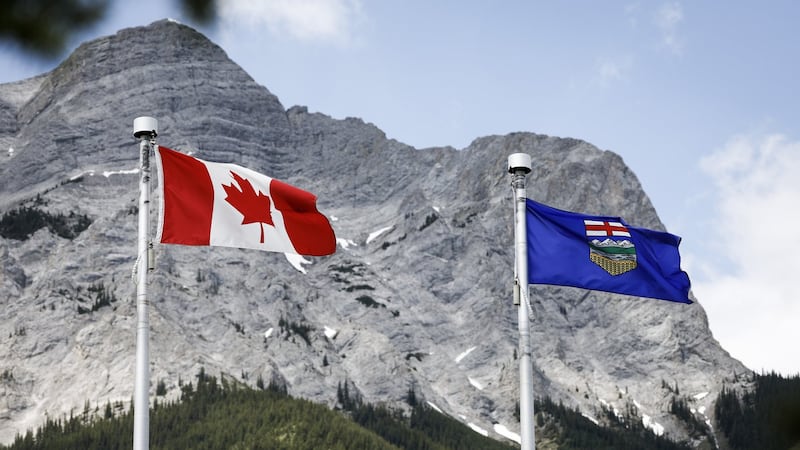
Drivers along Highway 3 are no strangers to wildlife, with bears, elk and deer seen all through the summer. And with so many animals so close to the road, a new initiative is being launched to make things safer for animals and drivers. “I think this is a really exciting project. It’s really a once-in-a-lifetime sort of opportunity for us as scientists and also for, you know, people who use these highways,” said Clayton Lamb, wildlife scientist with Biodiversity Pathways and UBC. “It’ll be a dramatically different experience.” Approximately 16 wildlife crossings will be installed on Highway 3 across Alberta and B.C. These crossings would run through the Rockies. Researchers are tracking animals to see where the best spots for these crossings might be. “We learn all kinds of interesting things about them, including where they cross the highway, (and) sometimes, why they choose not to cross the highway, such as cases where they come right up and turn around and go back,” said Lamb. “And then we learn other things that aren’t really part of the highway project but tell us a lot about the animals, such as migration routes.” The crossings would include both overpasses and underpasses. Researchers and construction crews will need to co-ordinate on what kinds of crossings can be installed on portions of the highway. “That’s kind of the cool thing about this collaboration is that, on the biology side, there’s optimal crossings. And then, as a biologist, you can say, “Let’s put it here.” And then an engineer will say, “Well, that’s a swamp. We can’t put a structure there.” And so that’s kind of where the team part comes in as we find that happy medium,” said Lamb. The crossing network would be similar to the crossings seen on Highway 1 around Banff. Animal-vehicle collisions have dropped 80 per cent since they were installed. The hope is for a similar outcome on Highway 3. Work on the crossings will be done over the next five to 10 years.