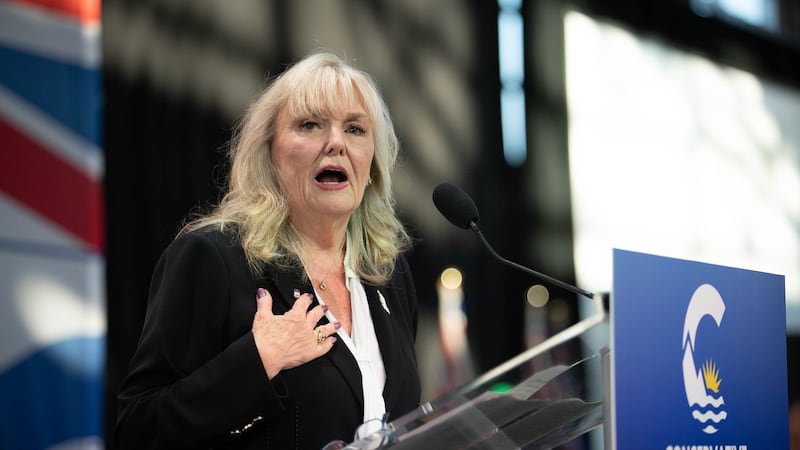
Prince Edward Island led Canada in economic growth last year, according to the province’s Annual Statistical Review. Produced by Prince Edward Island Statistics Bureau, the review gathers data from provincial government departments, the private sector and Statistics Canada. The province uses the data and information to help determine “where, when, and how best to deliver the critical programs and services on which Islanders depend.” “Although our economy has remained strong, the uncertainty and noise in the world today can make it hard to confidently make informed decisions. I encourage all decision makers to use the Annual Statistical Review for reliable data,” said Finance Minister Jill Burridge in a news release from the province. Real GDP P.E.I.’s real gross domestic product (GDP) increased by 3.6 per cent in 2024. According to the review, that means the province has exceeded national growth nine of the last 10 years. Eighteen of the 20 major industry groups recorded increases, including: There was also strong growth in employment and wages. Employment increased by 3.6 per cent, according to the Labour Force Survey, averaging a new “all-time high” of 92,500, and total labour income increased by 9.2 percent to $5.4 billion. The unemployment rate also saw an increase, up 0.8 percentage points from 2023 to eight per cent. Population The Island’s population was up by 2.8 per cent as of July 1, 2024, growing to 178,550. This marked the fourth highest growth among Canadian provinces. More Islanders died than were born last year. The number of births was estimated at 1,379, while deaths were estimated at 1,697. In 2024, the Island’s median age was 41.3 years. That number has dramatically risen over the decades, increasing from 24.8 in 1971, when only 11 per cent of the population was 65 years and older. The report says Ontario, Nova Scotia, and Quebec were the top provinces of origin for P.E.I.’s interprovincial in-migrants. When it comes to international immigration, 4,149 immigrants came to P.E.I. between July 1, 2023 and June 30, 2024, up 33.2 per cent compared to the last year and the highest increase on record. International exports International exports increased by 7.8 per cent, to reach an “all-time high” of $2.5 billion. According to the review, exports of frozen food products made up 30.7 per cent of all international exports of goods in 2024, increasing from $696.6 million in 2023 to $774.1 million in 2024. Other top exports included seafood products, vegetable and melon farming, and pharmaceutical and medicine. “Exports from PEI to the European Union have almost than tripled (up 191.9 percent) since 2017, when the Canada – European Union Comprehensive Economic and Trade Agreement (CETA) went into effect,” reads the review. “As a result, Belgium, Spain, and Ireland have moved into the top 10 countries for PEI exports over this period, joining France and Germany on the list. Significant gains have also been seen in PEI exports to other EU countries such as Greece, Italy, Netherlands, Sweden and Denmark.” Tourism The province saw continued growth in tourism in 2024, with 1.7 million visitors. “This was an increase of 6.0 percent over 2023 and surpassed the previous record set in 2019,” reads the review. There were increases in: Housing Residential investment increased by 37.6 per cent in 2024, which was largely due to increased investment in single family dwellings, according to the review. Investment in multi-unit dwellings also increased, rising by 24.7 per cent. Investments in other types of units fell 0.4 per cent. “The Canada Mortgage and Housing Corporation (CMHC) estimated that there were 1,694 new housing starts on Prince Edward Island in 2024, the most since 1973. This is up by 555, or 48.7 percent, from 2023,” reads the review. The annual vacancy rate for apartment structures of six units and more in Charlottetown rose 0.1 percentage point to 0.7 per cent in 2024. At the same time, the rate in Summerside fell from 2.7 per cent in 2023 to 0.8 per cent in 2024 Total non-residential capital expenditures on Prince Edward Island increased by 12 per cent over 2023, according to Construction, Investment and Housing Statistics Canada. “Non-residential construction investment increased by 16.4 percent in 2024, due to an 18.5 percent increase in commercial investment and a 35.2 percent increase in government and institutional investment.” Inflation Inflation went up by 1.8 per cent, down from the 2.9 per cent increase in 2023, according to the All-Items Consumer Price Index for Prince Edward Island. Core inflation – excluding food, energy, and tax changes – increased by 1.9 per cent. The price of food rose by 3.5 per cent and shelter costs increased by three per cent, while energy prices decreased by 1.6 per cent. The average price of gasoline on P.E.I. averaged about $1.67 per litre in 2024, and heating oil averaged about $1.29 per litre. For more P.E.I. news, visit our dedicated provincial page.