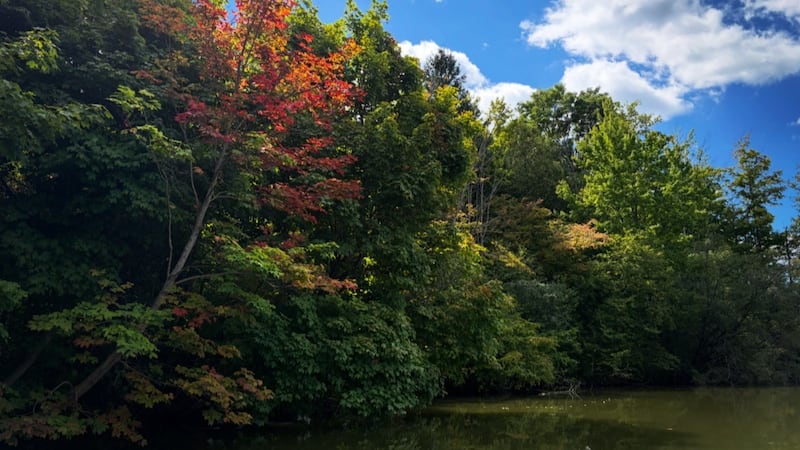
Nova Scotia’s top doctor is reassuring residents after news the provincial government is treating 1,200 hectares of forest in northwestern Cape Breton this summer to stop the spread of the spruce budworm. Dr. Robert Strang, Nova Scotia’s chief medical officer of health, released a statement Friday about the province’s plan to combat spruce budworm with Btk treatment. “The Province is facing a potential outbreak of the spruce budworm in the Pleasant Bay area of Cape Breton. This has happened before in our province, and the effects were devastating,” reads the statement. “To mitigate a potential outbreak, small amounts of bacillus thuringiensis kurstaki, or Btk, is used on a targeted area. Btk is a naturally occurring biological microbe that has been used worldwide for decades. It has been studied extensively and been approved by Health Canada for organic farming.” According to the government, early treatment can stop population growth and reduce the need for repeat treatments. The treatment will be mainly used on Crown lands, but private landowners in the area can opt in for the insecticide. “By acting early in a small, focused area, we can help prevent much larger impacts on Nova Scotia’s forests in the years ahead,” said Kyle MacQuarrie, ministerial assistant for Natural Resources, in a May news release. “Other parts of the country have recently seen the devastation the spruce budworm can have on their forests, and the risk it poses for forest fires. We want to be proactive in managing the effect of this species on our province.” According to Strang, Btk only affects specific insects in the larval stage because of their alkaline gut. “It does not have the same effect in humans or other animals and has been scientifically proven to be safe for other species,” said Strang. “The federal government and other provincial governments have carried out environmental and health-monitored after-treatment programs, and no public health issues have been identified, nor have any significant environmental concerns been caused by the treatment.” According to the Government of Canada, the spruce budworm mainly feeds on balsam fir and white spruce, along with red spruce and black spruce. Trees affected by the insect have dried-out needles held together by silk spun by the larvae. The budworm has outbreak cycles that occur every 30 to 40 years. During these outbreaks, which can last several years, tens of millions of hectares of trees can be severely defoliated. “I understand that the thought of aerial treatment can make some uneasy. Historical practices have not helped this feeling,” said Strang. “What I can say is that use of Btk is not one of those practices. It has been studied and used for many years, and I am confident this is a safe, measured and responsible approach to protecting our communities.” The Nova Scotia government says the province’s most recent outbreak of the budworm happened in the 1970s and 1980s, and it affected more than one million hectares of forest. The province notes the budworm was previously confined to the Cape Breton Highlands National Park, but claims Parks Canada declined to implement an early intervention strategy. With files from CTV Atlantic’s Sean Mott For more Nova Scotia news, visit our dedicated provincial page