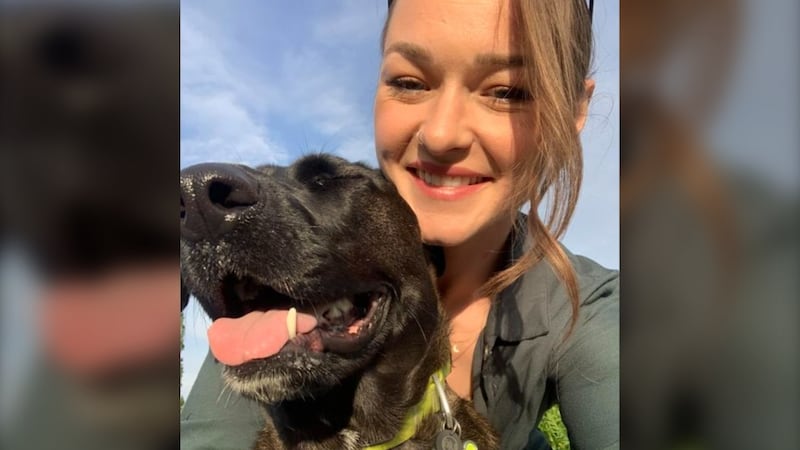
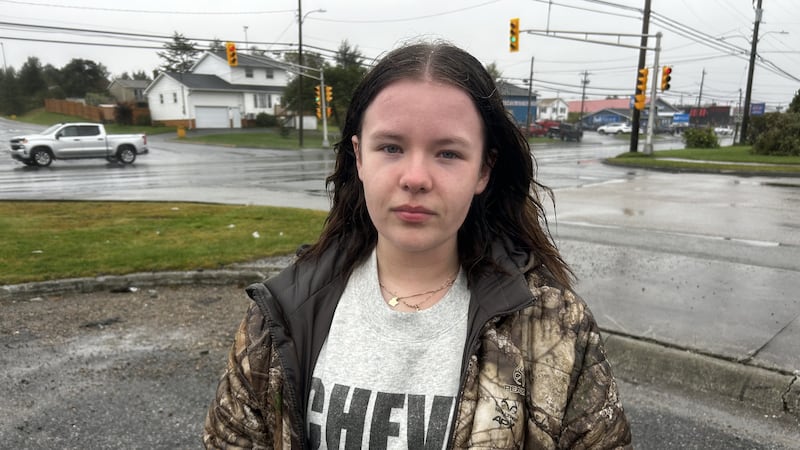
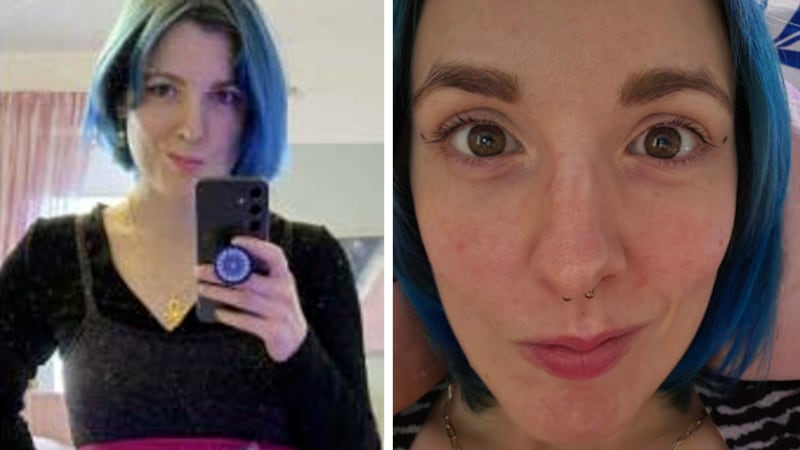
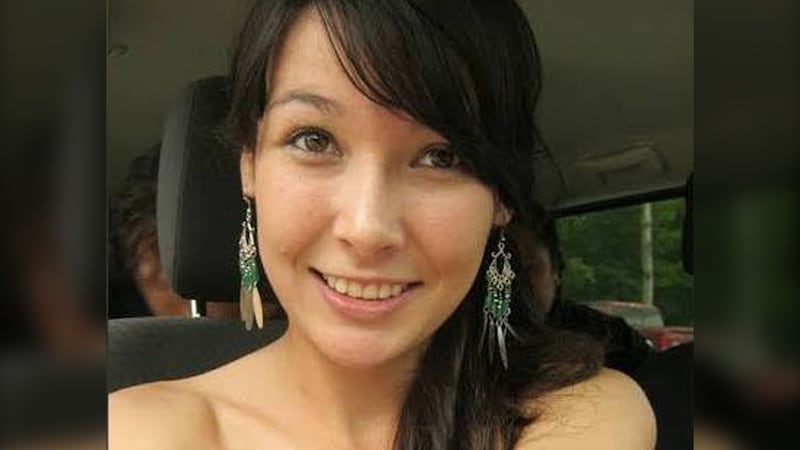
Brianna Voss did not inherit the gene that causes Huntington’s disease (HD), but her brother Connor did. “It’s often compared to having the same symptoms as ALS, Alzheimer’s and Parkinson’s altogether,” Voss told CTV News. The brain disease affects one in 7,000 Canadians. Voss’ grandmother, father, and aunt have all passed from the disease. “My father died of Huntington’s disease in 2019. A few months after that, my little brother ended up getting tested,” Voss said. “My little brother was around 13 when he started showing symptoms. But they were misdiagnosed.” “At that age, you’re changing with your hormones and everything as well. So, sort of acting out as a troubled child,” she added. “It turns out those were the symptoms of juvenile Huntington’s because it’s behavioral switches, it’s anxiety, it’s depression. That’s kind of the first stage of it.” Voss said it gave her the push to get tested. “Mine came back negative. And that’s kind of why I’m here today,” she said. From May 30 to June 2, Brianna will be walking 200 km from Lower Sackville to Amherst in support of her family’s HD journey and for the Huntington Society of Canada (HSC). “I think it’s really important to be an advocate for Huntington’s disease as it runs in my family. And seeing as I’m the healthy sibling out of me and my brother, and I’m the able-bodied one,” Voss said. “I think it’s not necessarily my obligation. But I think it’s important for me to get the word out there.” She chose to walk from Lower Sackville because her brother is in a care home there. “We’re originally from Amherst, so it’s kind of like bringing it home for my brother,” Voss said. Her goal is to raise $50,000 for research, and with four days to go before her walk begins, she’s at 40 per cent. Voss explained she wanted to do something outside of the box to attract attention for the cause. “Seeing as this is my first time hosting an event like this, I kind of wanted to go big or go home,” she said. She says she hopes that by taking the story across the province she can educate more Nova Scotians. “My mom will be there. She’s my support driver, so she’ll be in the back. I’m getting the car painted right now with 200 km for Huntington’s disease. So, she’ll be driving that and she’ll be responsible for making sure I’m on track and fed, I suppose,” Voss laughed. HSC aspires to a world free from HD to maximize the quality of life of people living with the disease through services, support, advocacy, and research. According to the Canadian Institute for Health Information, around 6,000 Canadians are currently living with HD and 7,500 are genetically at risk of developing the disease. Because it is a genetic mutation, a child whose parent has the gene has a 50 per cent chance of inheriting it. In this case it was Connor and not Brianna. Juvenile Huntington disease (JHD) is a rare and affects children and teens under the age of 20. In Canada JHD accounts for about five per cent of HD cases. Changes to the body in JHD happen faster but the speed and order vary from person to person. Symptoms typically appear for Huntington disease around 30 to 50 years old. Voss’ brother got JHD. “It’s a lot more rare than having the regular onset. So, it was pretty shocking,” she said. “I think we assumed our whole lives that if we were going to get sick, we’d have at least until around our 30s to show symptoms. And having half that life expectancy was a diagnosis we did not expect.” Just like in HD, symptoms of JHD cause changes to three main areas: physical, psychiatric, and cognitive, but there are also some key differences. It causes a rapid decline in cognitive, physical, and emotional functions, with symptoms differing from the adult-onset form. Unlike adult-onset Huntington, JHD can produce rigid muscles, clumsy motor skills, slurred speech, and seizures rather than erratic, involuntary movements (chorea). The first noticeable signs are often a sudden drop in school performance, something Voss said happened to her brother. “Me and my brother growing up were extremely close. My first best friend and I used to babysit him, we did a lot together,” she explained. “When Connor started showing symptoms, he started becoming a person we didn’t necessarily recognize. And a lot of us, unfortunately, thought that maybe he was taking substances or had something else going on, and it altered our relationship a lot.” She said he became someone they didn’t know but it wasn’t his fault. “But now we’re stronger than ever. And that’s my baby bro. And we’ll always be there for him. So, it was hard for a while. But we still get glimpses of the original Connor, and we live for those.” Voss continues to be an advocate and ally, visiting her brother as often as she can. She acknowledges that there are difficult emotions she deals with constantly about not being diagnosed. “I’ll be completely honest, going to see my brother sometimes is a pretty big mental challenge and it can affect me for days, sometimes weeks. And the unfortunate side of that’s kind of part of the guilt I experience is I have a really hard time going to see him,” she said. “So every two weeks and then more if I’m mentally, physically and have the time to.” Just like adult-onset HD, there is currently no cure or treatment to stop or reverse JHD. But for Voss, it’s nice to know the community is behind her. “I love living in Halifax and without a question, handing over the posters, asking if people could put it up, they don’t even let me finish my sentence before they’re like, ‘Yes, please, we’ll put it on our wall,’” she said. She added people have been kind with donations and community enthusiasm. “I have had a lot of support from people around Halifax, and even just walking through the streets, people honking at me, I don’t know if they recognize me from maybe some of my promotional videos, but yeah, the support has been beautiful,” said Voss. “My neighbour had a lemonade stand the other day. She’s a little girl, I think she’s around eight. And I went over and I made a donation,” Voss said. “And then I came home and the next day she came over with her father and said that she saw my Huntington’s video on TikTok, and she wanted to give me a donation from her lemonade stand and gave me the $5 and wish me well on my walk.” While Voss has come to terms with the impacts of Huntington’s in her life, she knows the decision to even get tested is a difficult one. She said everyone has a different story and there isn’t a right or wrong way to approach it. “Do what’s right for you,” she said. “If you have a potential to be gene positive, it’s hard to decide to get tested. And it took me 21 years to make the decision, and it was only because my little brother was a push,” she explained. “It’s a life altering diagnosis. So be gentle with yourself. Be kind. I think every day is an opportunity to spread some positivity and spread awareness.” For more Nova Scotia news, visit our dedicated provincial page