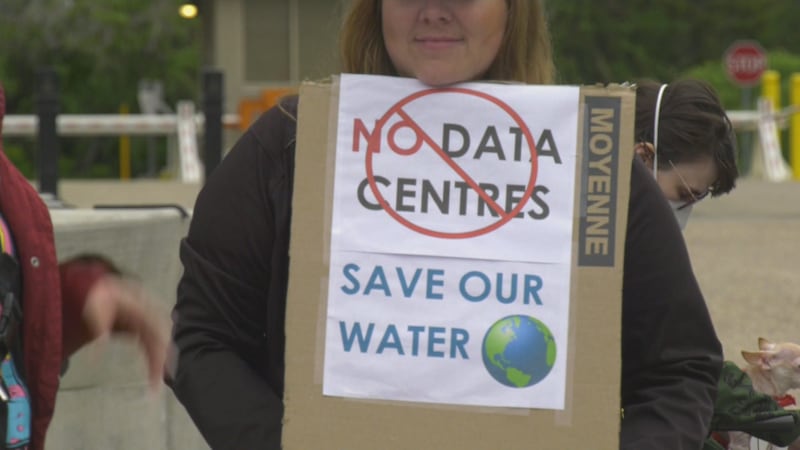
HALIFAX — Nova Scotia Environment Minister Tim Halman says he’s contemplating additional regulations for future phases of a proposed AI data centre in Cape Breton, but he wouldn’t provide details Thursday. In response, Opposition NDP Leader Claudia Chender said Halman wants Nova Scotians to believe he is listening to their concerns even though he hasn’t committed to anything. Halman said he’s satisfied with the province’s existing regulations for the initial phase of EverWind Fuels’ $10-billion, 18,600-square-metre artificial intelligence data centre project in Point Tupper, N.S., which is expected to come online by the end of next year. However, he said he’s aware of “big questions” surrounding the plan, and his department is looking at the possibility of implementing further regulations. “I have been listening attentively to Nova Scotians, as has the premier,” Halman told reporters after a cabinet meeting Thursday. “I am confident we have the regulations now for the initial phase of this project, but we’re in early days of the process.” The minister would not say what type of regulations his department is considering or at what point in the project they might be introduced. “Certainly this is a huge investment for the province that could have incredible returns financially for communities, but I’m also confident as we move forward we’re going to ensure we have the best regulations in place,” Halman said. Chender said thousands of Nova Scotians have come forward to express concerns to her party about the data centre plan, adding that Halman’s comments provide no assurance that those worries are being taken seriously. “They’re playing defence,” Chender told reporters. “They understand that Nova Scotians are incredibly concerned about data centres and the lack of regulation. And from what I heard today, they want to appear to be listening without promising to do anything differently.” Chender has repeatedly called for the legislature to reconvene to debate the AI data centre plan and establish legislated regulations for an industry that is new to Nova Scotia. “This government says a lot of things,” Chender said. “At the end of the day, what matters to Nova Scotians is what is legally mandated.” The Cape Breton data centre plan has sparked multiple protests, with many Nova Scotians calling for a moratorium on all large-scale AI data centre proposals. American tech company Anthropic has signed a 20-year lease for the centre, which would draw 95 megawatts of electricity in its first phase. A 325-megawatt expansion is expected in mid-2028, which would bring the development’s total energy demand to 420 megawatts. EverWind has committed to following provincial and federal guidelines for AI data centre projects, which are not binding. Phillip Croucher, a spokesperson for Nova Scotia’s Environment Department, said the key environmental impacts associated with the first phase of the project will be water usage and the company’s proposed backup generator, both of which come with regulatory oversight. EverWind estimates the system would use roughly 100,000 litres of water each day from nearby Landrie Lake during the first phase, and an average of 500,000 litres per day once the expansion is complete. The peak demand represents 1.5 per cent of the lake’s estimated sustainable daily yield, EverWind says. The industrial approval for its backup generator is under review. This report by The Canadian Press was first published Nov. 12, 2026. Lyndsay Armstrong, The Canadian Press