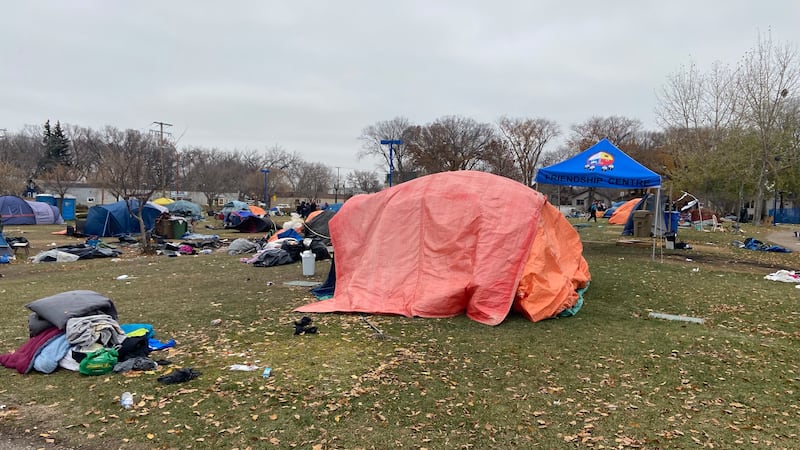
In the past year-and-a-half, the Halifax Regional Municipality has closed four designated encampments, and according to a new report, 25 people are still living in the two remaining sites. In November 2024, the municipality shut down the designated encampment on University Avenue. It then closed the Geary Street and Cogswell Park sites before shutting down the Lower Flinn Park site last December. A report submitted to Halifax council ahead of their Tuesday meeting noted 25 people are staying in the two remaining designated sites on Barrington Street and Green Road Park. In April 2025, 40 people were staying in the five designated encampments. The report also noted there are an estimated 20-to-25 people sleeping in non-designated sites in the municipality. “The de-designation of three sites has not resulted in a major spillover into non-designated locations to date,” the report reads. The report said there are 1,893 people experiencing homelessness in the municipality as of April 29, but noted this figure may not represent the true total as it only includes individuals in the By-Name Data system who are identified as homeless. “While this reflects an overall growth in the number of people experiencing homelessness, we are not seeing a corresponding increase in unsheltered homelessness,” the report reads. “In other words, the rise in total numbers is not being fully reflected in the number of individuals sleeping rough outdoors.” The report found there are 67 available units (in shelters and temporary housing options) for people experiencing homelessness but said the number of people in encampments has stayed relatively steady for the last few months. “Transitions to housing have occurred but not with the speed we should expect given the number of vacancies that exist in the system,” the report reads. Last November, Halifax’s homelessness team said it plans to close all designated encampments within two years, giving themselves the deadline of November 2027. The report noted they are on track to meet that goal and said some sites could close before then. “The risks of closing encampments without consistent availability of stable indoor options include an increased proliferation of tents in public, private and prohibited spaces, leading to increasing public safety impacts and harms, which would be experienced by citizens, services, businesses, and neighbourhoods,” the report reads. “We will make decisions about the closure of the remaining designated encampment sites in a way that reduces the risk of displacement, supports transitions indoors, and minimizes unintended harmful impacts on both individuals experiencing homelessness and the broader community. “We acknowledge the ongoing impact of encampments on citizen access to public green spaces and active transportation corridors and will continue to strive to identify closures at a time that balances the needs of those living unsheltered with those of the public.” For more Nova Scotia news, visit our dedicated provincial page