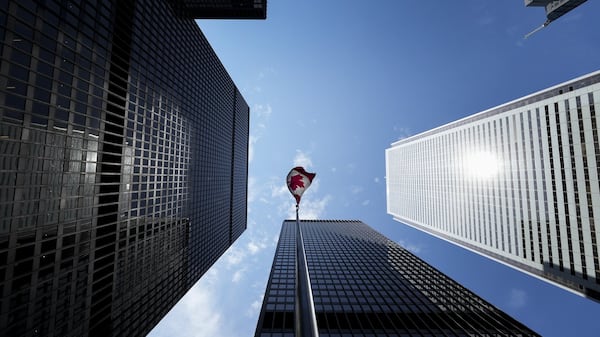
An agreement has been struck between eight provinces and two territories to create a coast-to-coast energy grid and better secure the country’s power sovereignty. Ontario’s Minister of Energy and Mines, Stephen Lecce, said the agreement is a first step towards making a made-in-Canada, interprovincial-territorial grid. While there isn’t a timeline or price tag yet, the intention is to build transmission infrastructure and new electricity projects and linking them all together. He compared it to the Canadian railway built from sea to sea. “Electricity will be the enabler of growth,” he said. He made the announcement in Toronto, alongside New Brunswick’s Energy Minister and Deputy Premier, René Legacy, and Yukon’s Energy, Mines and Resources Minister, Ted Laking. The agreement, which was sparked by Ontario, has been signed by British Columbia, Alberta, Saskatchewan, Manitoba, New Brunswick, Yukon, Prince Edward Island, Nova Scotia and the Northwest Territories. Lecce was asked about the absence of Quebec. He said they will sign when they’re ready, citing Quebec’s concern to ensure the federal government respects their provincial jurisdiction over energy and resources. “This is something we’re working with them on to finalize,” he said. “Quebec supports the concept of the federal government and the provinces working together to reduce cost and maximize benefits for their ratepayers.” Legacy called the agreement a natural fit for New Brunswick. The energy minister has expressed concern about the province’s power supply for some months now, saying in December that N.B. has a shortage in generation capacity and it’s a ‘regular conversation’ they’re having. Today, he acknowledged the ties the province has with Nova Scotia and P.E.I. already, calling N.B. the Atlantic Canadian energy backstop. “We in Atlantic Canada have a problem of scale. A kilometre of transmission line costs the same whether you have 400,000 ratepayers or whether you have four million,” he said. “This was a natural fit and we are quite happy to see all of our colleagues across the country to sign on and agree that working together is the right path.” Lecce said the concept is now in the hands of “system planners” who will build out the strategy not based on political decision-making but practical planning. “We have 13 islands in Canada of grids, they don’t speak to each other, they often don’t flow power to each other… so we have a real issue as a federation,” he said. “The cost of inaction is meaning that we continue to buy expensive power from foreign nations. We are less energy independent and we often put our industry and our economy at risk because we don’t have access to megawatts.” He said Ontario is currently selling power to the United States, despite knowing Canadian neighbours could use it. “Why would we give the Americans or any nations an advantage over ourselves?” he said. The ministers did acknowledge the hope that Ottawa is willing to lend a hand, both financially and in its’ leadership, to ensure the concept becomes a reality. For more New Brunswick news, visit our dedicated provincial page.