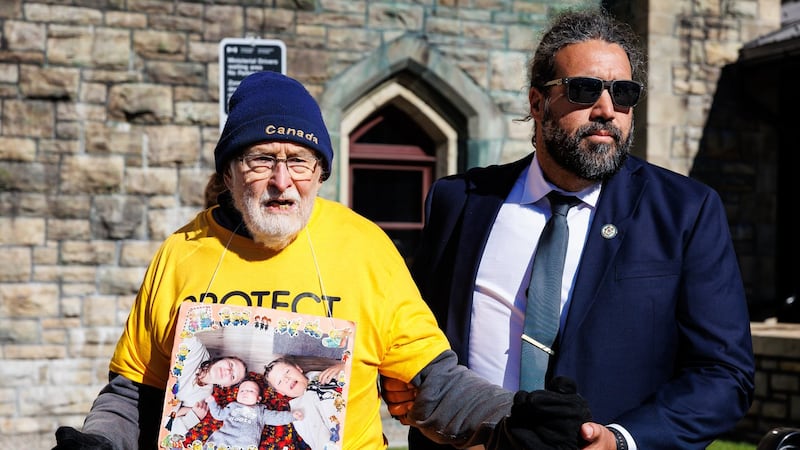
Shelley Perry Poirier shared a video of the moment she told her 100-year-old father he was finally moving out of the Oromocto Public Hospital and into a nursing home. It was Oct. 9, 2025 – 17 months after Arthur Perry first arrived at the hospital in Oromocto, N.B. “I’ve been praying every day and night to get there,” he said. Poirier says, while hospital staff were wonderful, those 17 months were difficult for the whole family. “His mental health really started to decline because, you know, he was depressed. He thought he was going to end up dying there and staying there forever,” she said in an interview with CTV Atlantic. She said of those 17 months, five were spent waiting to be assessed for what level of long-term care he needed. Perry passed away recently. Her father’s experience has inspired Poirier to speak out for those seniors who remain in hospital. “The words that they use and so on to describe, what’s going on in our health-care system usually depict seniors as the villains right? They’re getting sick, they’re clogging it up or having to hold the here in the hospital, there’s nowhere for them to go,” she said. “But, sadly, sadly, I think that’s just smoke and mirrors to cover up a system that’s sadly in need of repair.” Horizon Health CEO Margaret Melanson didn’t hold back this week, describing the situation in hospitals as “past a crisis point,” with 40 per cent of beds occupied by alternate-level-of-care patients who are mostly seniors waiting for a long-term care placement. “We’re moving toward having regional nursing homes as opposed to regional acute care hospitals. And that to me is extremely concerning and should be concerning to the population of New Brunswick,” she said Thursday. Richard Losier agrees with Melanson. The CEO of the N.B. Association of Nursing Homes worked in health care for decades, both on the frontlines and in administrative roles. He says the province needs more beds, but there’s no plans for new nursing homes to be built. He says it’s a problem years in the making, with successive governments concerned about the cost, staffing shortages and buildings sitting empty after the Baby Boomer generation was gone. We know that’s not the case, says Losier. “We know, in 20 years time, the group that are 75 and older are going to be double than the one today,” he said. He repeats Poirier’s message: seniors are not the problem. “Seniors are not to blame for the problems in the system. It’s the system that has failed the seniors. If the systems work together closely and we would have done what we knew, what we had to do, we wouldn’t be in this situation,” he said. Trevor Jain, an emergency physician in Charlottetown said the domino effect of the issue has many people thinking it’s a problem with the emergency department. It’s not, he told CTV Atlantic anchor Todd Battis Thursday, saying it’s a flow issue that stems from overcrowded hospitals. “We have a lot of long-term care in our hospitals. You know, everybody talks about ED overcrowding and ED wait times, but it actually has nothing to do with the emergency department. It’s a system flow. It’s a systemic issue. And we just happen to be the face of what’s going on in the system,” he said. MLAs who heard Melanson’s comments said different strategies are necessary to correct several issues plaguing the system. “The health-care system is in crisis, the senior care system is wholly inadequate. Both of those things need to be addressed,” said David Coon. “And, you know, they’re not effectively being addressed. The health care system needs far more money.” Melanson has suggested government extend the hours of homecare available to these patients, saying that could be the difference between a senior waiting in hospital or at home for a long-term care bed. If nothing is done, surgeries could be affected, she said Thursday. For more New Brunswick news, visit our dedicated provincial page.