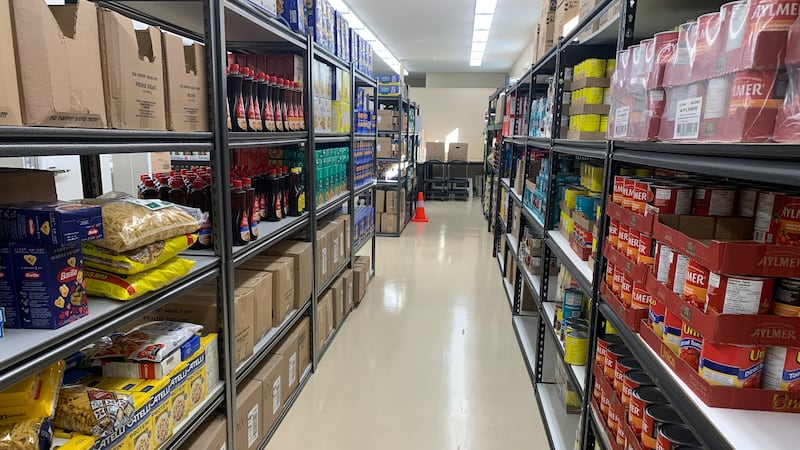
Food Banks Canada has issued report cards for federal, provincial and territorial governments assessing how well they’re doing with their efforts to reduce poverty. Overall, the annual report shows Canada’s resilience against poverty and food insecurity improved slightly in 2026, but without urgent action from political leaders, Canadians will continue to struggle with food insecurity at historically high levels. This year, the country received an overall’ D+’ grade, up slightly from a ‘D.’ “While there has been modest progress, the report makes clear that we’re still a really far ways away from where we need to be,” Ash Avery, executive director of Feed Nova Scotia, told Crystal Garrett on CTV Your Morning Atlantic. “The crisis is quite prevalent here in the Atlantic provinces,” she says. Nova Scotia: ‘D’ At the provincial level, Nova Scotia received a ‘D’ on its poverty report card, up slightly from a ‘D-’ in 2024. In its report, Food Banks Canada says the province still faces “major challenges.” Nova Scotia received a failing grade for housing affordability, access to health care and adequacy of government support. Some of the recommendations from the report card include: At Feed Nova Scotia, Avery calls for the same changes. She says one in four Nova Scotians are affected by food insecurity. “We also know that social assistance remains the lowest in Canada relative to need, and although there have been modest improvements since 2024, we’re simply not meeting the scale of the challenge,” she says. But as Avery points out, “no province in Atlantic Canada received a strong grade.” Sue Kelleher, also with Feed Nova Scotia, says they see nearly 2,000 daily visits to their network, which represents an eight per cent increase since last year. New Brunswick: ‘F’ New Brunswick received the only failing grade in the country. Food Banks Canada suggests “poverty reduction efforts have stalled, or even regressed,” in a news release. Some of their recommendations for New Brunswick include: Forty-five per cent of New Brunswickers reported feeling worse off than they did last year, the highest figure for this indicator in Atlantic Canada. The province received a failing grade on housing affordability within the report and access to health care. Canada Food Banks also found that residents spend 63.9 per cent of their income on essentials, the highest proportion nationally. Prince Edward Island: ‘D+’ According to the report, P.E.I. saw “recent sharp declines negating earlier improvements.” Thirty-three per cent of Islanders felt worse off compared to last year, making P.E.I. the best performing province in this indicator. The Island failed in the housing affordability indicator and in the adequacy of government support. In its report card, Food Banks Canada recommends P.E.I.: Seeing low grades across the Maritimes is alarmingly informative to Avery. “That tells us that poverty and affordability challenges are regional and systemic, they’re not isolated to one province,” she says. Food Banks Canada urges changes to modernize EI and improvements to provincial social assistance. Avery echoes this kind of approach. “We really need governments to start addressing the root causes of food insecurity and poverty,” she says. “Ultimately we can’t food bank our way out of poverty, we really need dedicated, targeted action.” With files from CTV News Atlantic’s Hafsa Arif