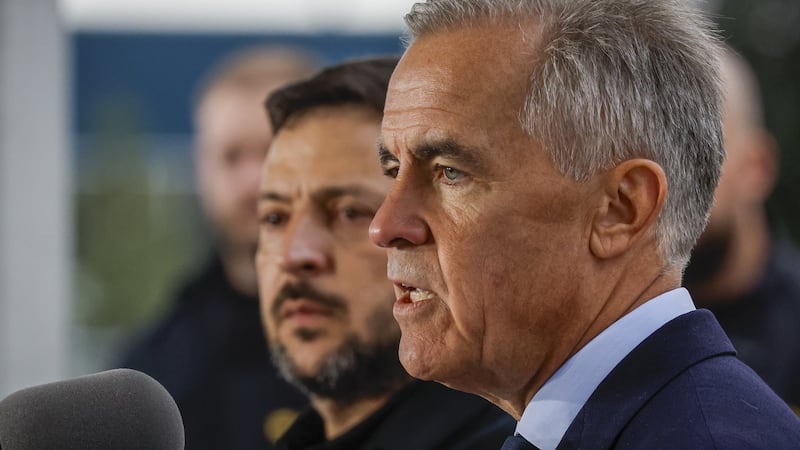
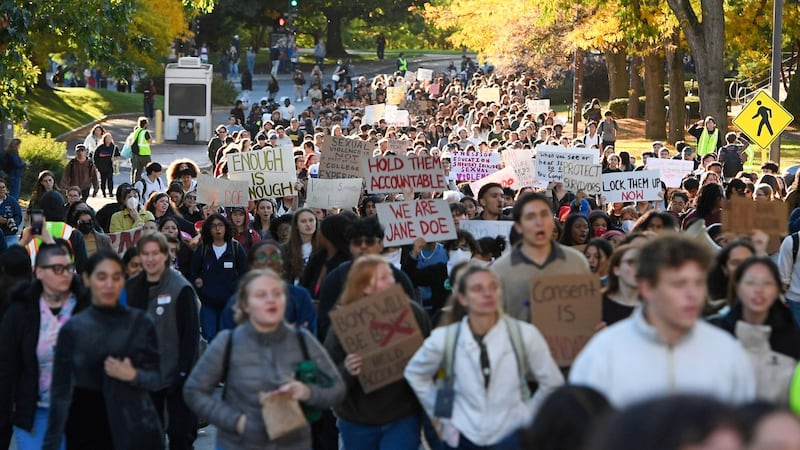
Canada is publicly backing Greenland and Denmark after U.S. President Donald Trump continues calls for the United States to take over the Arctic Island, raising concerns among experts about sovereignty, global stability and Canada’s relationship with Washington. Speaking at the World Economic Forum in Davos, Prime Minister Mark Carney said Canada “stands firmly” with Greenland and Denmark and supports “their unique right to determine Greenland’s future.” Trump has repeatedly suggested Greenland should become part of the United States, citing strategic and economic interests. Greenland is an autonomous territory within the Kingdom of Denmark, with a population of about 57,000 people. Political scientist and Dalhousie associate professor Robert Huish said pressure on Greenland has intensified. “Since Trump’s inauguration, his administration and his family have put direct pressure on people of Greenland,” he said. “The government of Denmark has declared that they have witnessed foreign interference by the United States into Greenland’s affairs and into its sovereignty.” Huish said Trump’s interest is driven partly by Greenland’s rare earth minerals. “Mr. Trump is aware of the precious, rare earths that are within the interior of Greenland under a lot of mountains and ice and snow, and as opposed to doing business with foreign counterparts or through sovereign programs, Mr. Trump feels that that has to be American territory in order to get access to it,” he said. Greenlanders themselves have publicly rejected the idea, with protestors hitting the street carrying signs saying, ‘Greenland is not for sale.’ Trumps rhetoric also alarmed Canadians after he revived talk of annexing Canada, referring to it as a potential U.S. state. “We’ve seen his foreign policy approach change dramatically,” Huish said. “He was elected by a mandate of isolationism and keeping America out of the affairs of the world, but since then, he’s attacked Venezuela, Nigeria, Iran, Iraq, Syria, Somalia and Yemen, and now he’s mounting pressure on Greenland. “The 11th airborne regiment, which is out of Alaska, which is an Arctic patrol and forward operating unit of the U.S. armed forces, is now being deployed to Minnesota. Why of all the branches of the military has that branch been activated in Minnesota, just a few hundred miles from the Canadian border?” Retired political scientist professor at Cape Breton University David Johnson said Trump’s position does not reflect majority opinion in the United States. Johnson said political fear is keeping many U.S. lawmakers silent. “Republicans in Congress and the House of Representatives and most in the Senate are petrified of Donald Trump, and they were afraid to say anything,” he said. Johnson warns any move on Greenland could trigger economic consequences worldwide. “That type of move would trigger a trade war, not only with the European Union, but with Britain, and likely with us,” he said. “That chaos would be felt economically in the United States by common, ordinary Americans.” Both experts said while the risk of outright military conflict remains low, the rhetoric alone is damaging long-standing alliances. “You cannot be sovereign by accommodating a bully,” Huish said. “You will be sovereign only by not accepting subordination.” Johnson said Canada may now need to prepare for a future where its closest ally is no longer predictable. “We are facing threats of military action against NATO members in Denmark and Greenland at the hands of the United States,” he said. “We have to be certainly prepared.”