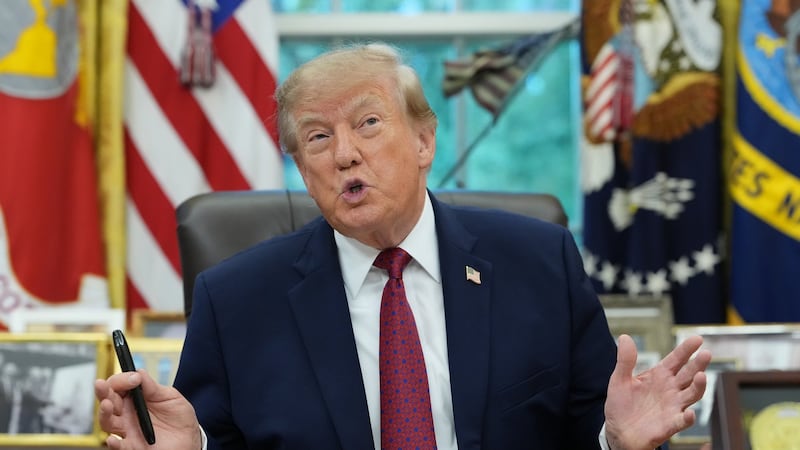
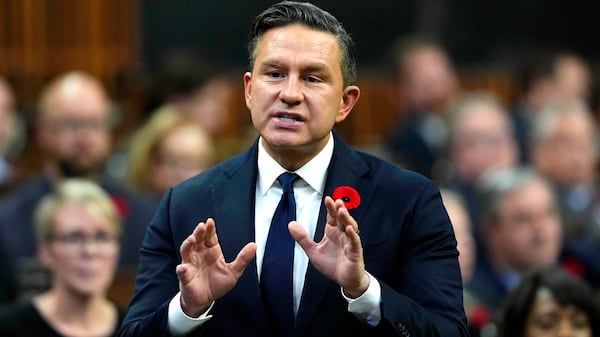
Canada and the U.S. could reach a deal on trade before the end of 2026, American Ambassador Pete Hoekstra predicts, but don’t expect the midterms to move the needle. Hoekstra, who was appointed as Washington’s ambassador to Canada by U.S. President Donald Trump, made the prediction during an interview with commentary outlet Northern Perspective. “I think Mark Carney probably knows exactly what he wants, the president knows what he wants. They’ve got to iron out a few of those differences,” he said. Asked whether a Democrat-controlled Congress will influence negotiations, Hoekstra said he didn’t think it would. “The president knows what he wants to get done on trade. I think that’s exactly where he’s going to keep driving,” said the ambassador. On Tuesday, Democrats celebrated sweeping victories across the U.S., taking both the House of Representatives and the Senate. In doing so, they captured the majority of congressional seats, solidifying control over the American legislative branch. Prominent Democratic senators have rallied against Trump’s tariffs on Canadian imports, especially in states that rely on trade with Canada to bolster their domestic economies. For example, Senator-Elect Abdul El-Sayed – who won his race in the auto-manufacturing hub of Michigan – called the trade war “insane” during a post-victory interview with CNN on Thursday. In Maine, a popular tourism destination for Canadians that relies on agriculture-sector imports, tariffs featured prominently during the campaign. The democrat victor criticized the Republican incumbent for not pushing back against Trump hard enough. Carney hasn’t spoken with any of those newly elected Democrats about legislation to drop tariffs. “Obviously, we welcome any moves to restore a free-trading arrangement,” he said in response to a reporter’s question in Winnipeg on Friday. Free trade is in the interest of American families and workers, he contented, and Canadians. Trump’s tariff authority But, while tariffs may be unpopular among the new Democrat caucus, Trump’s executive power over trade policy means Congress will face an uphill battle to change his course. “The swing in Congress, the results of the election, are very unlikely to have a significant impact on the president’s trade agenda and the tariffs that are in place,” Blake Harden, managing director for trade policy at Ernst & Young’s Washington Council office, told Reuters. “This is because there is so much trade authority within the executive branch that’s been delegated by Congress.” Once Democrats take control of Congress in January, they could introduce legislation aimed at reining in some of Trump’s tariffs. Trump, however, retains presidential veto powers that can only be overridden with two-thirds support in both chambers of Congress. Securing a two-thirds supermajority would require significant support from Republicans. While Democrats have secured majorities in both chambers, those majorities are far from the 290 House votes and 67 Senate votes needed to override a presidential veto. Democrats would also need at least 60 votes in the Senate to overcome any Republican attempts at filibustering proposed legislation. With files from CTVNews.ca journalist Daniel Otis and Reuters