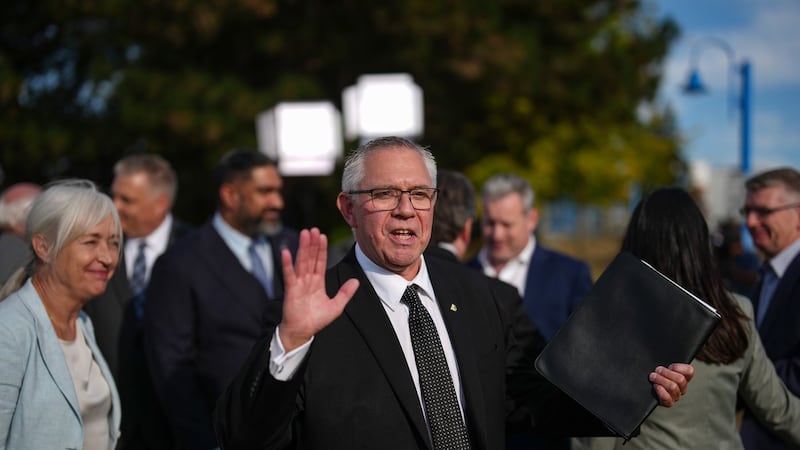
Thousands of Manitoba students are not showing up to class, according to a report released by an independent MLA this week. “A lot of the roots of Manitoba problems start with youth not being in school and if the government refuses to do this, what are they doing?” said Fort Garry MLA Mark Wasyliw. Wasyliw filed a freedom of information request with the province but was told the data isn’t collected. However, he said he obtained the report from an undisclosed source within the NDP government. “They were horrified by the numbers and that’s why they shared this with me. I think they were concerned that the government wasn’t taking this seriously.” It reports severe chronic absenteeism rates from kindergarten to grade 12 in every Manitoba school division for the 2023-24 school year. The data shows 15,288 students in the province have severe chronic absenteeism. “Chronic absenteeism is something students experience when there are multiple barriers keeping them from being engaged in the classroom,” said Mallory Pledger, the director of programming at Inner City Youth Alive. Breaking down the numbers, it means high school students are missing 20 classes, while kindergarten to grade 8 are missing 20 per cent of the school days. Of these students, 61 per cent identify as Indigenous. In high school, 58 per cent. Pledger said the data poses a real problem for high school graduation rates. “That is a cause for concern because it shows that there is something that’s not being addressed within the Indigenous community,” said Pledger. Tracey Schmidt, the minister of Education and Early Childhood Learning, said outcomes between Indigenous and non-Indigenous students are inequitable. She points to a $30 million investment in school nutrition that was announced in 2024 as a driver to get kids back into class. “Everything our government is doing is aimed at reducing that inequity. That starts with our universal nutrition program, that starts with treaty education for all. We’re working very closely with school divisions across the province to identify what is driving absenteeism in their corner of the province,” said Schmidt. When asked why the numbers aren’t public, Schmidt didn’t directly answer but said data collection is very important as a way to help school divisions bring down absenteeism. She said it’s an ongoing conversation between the province and school administrations.