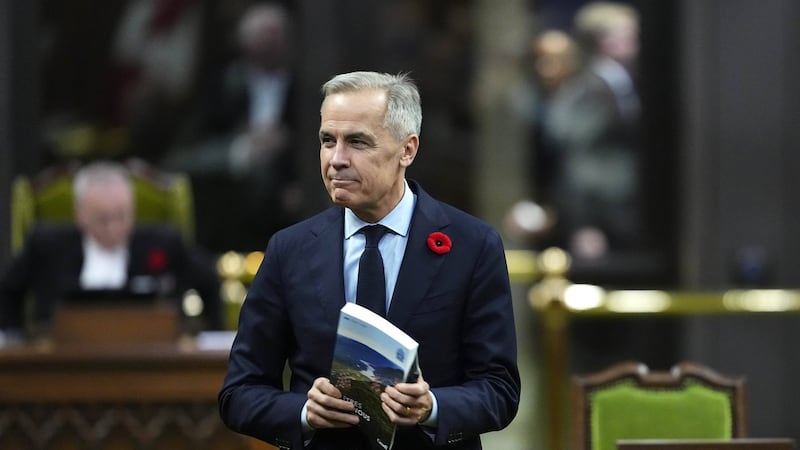
OTTAWA — The Manitoba Métis Federation is "appalled" by the lack of Métis-specific funding in Prime Minister Mark Carney's new budget. While First Nations and Inuit have targeted funding measures in the budget, Métis do not, despite having pressed the government for supports in areas like housing and health care. The only mention of Métis in the budget, released Thursday, is in association with $806 million set aside over five years to implement a Trudeau-era Indigenous child welfare law. Manitoba Métis Federation president David Chartrand said there is "no doubt" Red River Métis citizens will be angered by the fact that their needs were dismissed, despite the MMF holding meetings with the prime minister and ministers to outline their priorities ahead of the budget. "The hugely successful distinctions-based approach has vanished, and government is reverting to phrases like 'Indigenous' when, in reality, they mean First Nations and Inuit," Chartrand said. "We are never looking for a handout. Rather, we are looking for our tax dollars to be reinvested in the Red River Métis so we can put a shovel in our hands and continue addressing the critical needs of our Nation and strengthen Canada." Victoria Pruden, president of the Métis National Council, said in a media statement Thursday that Métis governments are being treated as an afterthought rather than partners in Canada's future. Indigenous Services Minister Mandy Gull-Masty said she can sympathize with Chartrand. She said when she served as a grand chief, she was sometimes disappointed at being passed over for federal funding. She pointed to what she called "historic" new funding for First Nations in the budget, including $32 billion over 10 years to repair, replace and build First Nations infrastructure. The Assembly of First Nations has said that work will require more than $32 billion. The budget is largely framed around building up the Canadian economy. The government says the First Nations infrastructure funding will make essential services more reliable and help communities retain skilled workers. There is a deep infrastructure gap between First Nations communities and the rest of Canada. The Assembly of First Nations and the Conference Board of Canada estimate it would take about $375 billion to close it. Many First Nations communities suffer from a lack of modern roads, schools and housing, poor internet connectivity and defective water treatment plants. The federal budget earmarks $11 billion over 10 years to maintain, renovate and build First Nations homes, and $18.5 billion to build roads, bridges and schools. The budget also commits $5.8 billion over five years for First Nations elementary and secondary education. Prior to the budget, Assembly of First Nations National Chief Cindy Woodhouse Nepinak repeatedly said the gap between First Nations and the rest of the country will only continue to grow without targeted investments. After the budget, Woodhouse Nepinak said the 10-year funding cycle will help communities plan better and allow them to turn their advocacy efforts elsewhere, since they won't have to lobby the federal government for that funding each year. "A budget titled 'Masters of our Destiny' should also better support First Nations right to self-determination and we will increase advocacy on these over the year ahead," Woodhouse Nepinak told The Canadian Press on Friday. She also praised the new federal homelessness strategy and called for First Nations leaders to be included in it at the start to tailor services toward their community members. The budget earmarks $6 billion for Jordan’s Principle over six years — to ensure First Nations children receive the health and social supports they need — and $575 million over five years for a similar program for Inuit called Pirutsiagutiit. The federal government is also setting aside $610 million over four years for the Nutrition North subsidy to help offset high grocery prices in the North. Inuit Tapiriit Kanatami, the organization that represents Inuit in Canada, has said the program has failed to improve food security and reduce prices in the region. In a media statement Thursday, the organization said investing in the program will not address the structural changes needed to eliminate food insecurity in the Inuit homelands. Inuit Tapiriit Kanatami says it's also concerned about the lack of Inuit-specific housing and infrastructure funding in the budget. "Inuit uphold Canada’s sovereignty. Investments in Inuit communities are investments in Canada. Aside from the welcome funding for Pirutsiagutiit, the broader sustainability of our communities is not reflected in this budget," ITK president Natan Obed said. "It makes significant investments in projects but building projects is not enough. The lack of investment in building healthy Inuit communities is a risk to this country." This report by The Canadian Press was first published Nov. 6, 2026. Alessia Passafiume, The Canadian Press