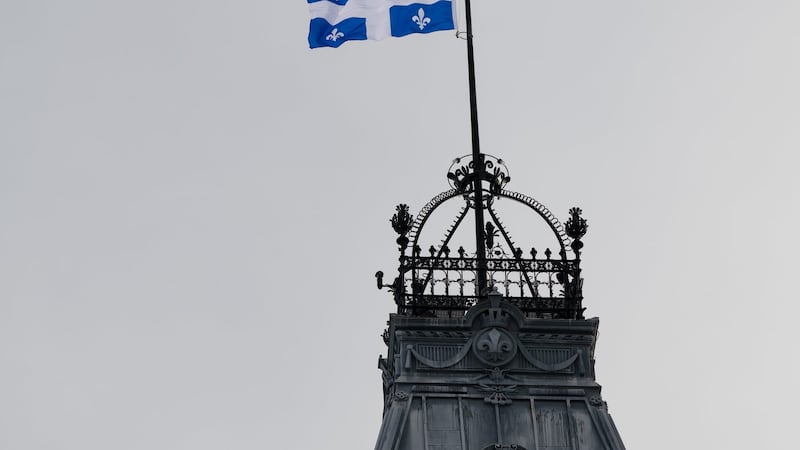
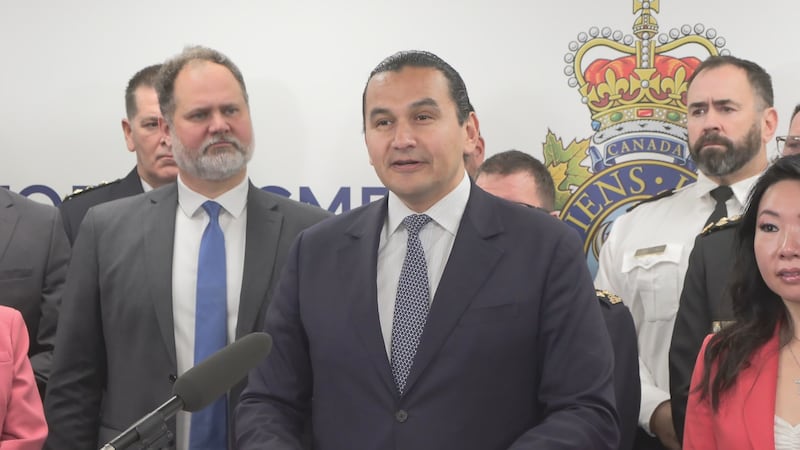
Manitoba Premier Wab Kinew is calling Quebec’s Bill 21 “legislative racism,” but says the Supreme Court of Canada’s decision to uphold it leaves open a way for opponents to seek a non-binding court ruling and take it to voters. Kinew told reporters Friday at an unrelated news conference that the ruling was difficult for Manitobans and for people who face discrimination, but not entirely a loss. “We did intervene in Bill 21, and this is a bittersweet day for Manitobans within Confederation,” Kinew said. “It’s bittersweet on the negative side, because Bill 21, which is legislated discrimination, is allowed to stand.” “I don’t fault the Supreme Court because this is the nature of the Constitution,” he said. In a fractured decision, the Supreme Court upheld Bill 21 by a 4-3 vote, apart from one provision. Three justices would have struck down key parts of the law because they would have found it violates the Charter’s guarantee of equality between men and women. The 2019 law bars certain public sector workers, including teachers, police officers and judges, from wearing religious symbols on the job. Quebec shielded the law from most Charter challenges by invoking the notwithstanding clause, Section 33 of the Charter, which lasts five years and can be renewed. The clause was a condition of provincial support for the Charter during the 1981 constitutional negotiations. In his decision, Chief Justice Richard Wagner wrote, “Bill 21 is rooted in Quebec’s legitimate and historical commitment to ensuring the laicity of the state in a free and democratic society.” The National Assembly of Quebec passed the bill 73-35 in 2019 under the former Coalition Avenir Québec government, with the Parti Québécois also supporting it. The Supreme Court struck down only the portion that barred members of the National Assembly of Quebec from wearing face coverings while sitting. It found that provision unjustifiably infringes the right under Section 3 of the Charter, which protects the rights of citizens to vote and to seek election as a member of a legislative body. Kinew said his government, which intervened in the case, argued that judges should still be able to weigh in on whether a law would otherwise violate Charter rights, even when the notwithstanding clause is used. Four of the seven justices said courts can still issue such declarations, even when the notwithstanding clause is used. A declaration would not strike down a law but would be a finding that the law would violate Charter rights without the override. “We won on the intervention that we made,” Kinew said. He said that gives Canadians a path to challenge laws that use the clause. “You have a tool that you can use to go to a court and get a ruling, non-binding as it may be, and then you can go out in the next election and say, ‘You know what, this provincial government… violated our charter rights otherwise if it wasn’t for Section 33,’” he said. “And then hopefully… the good people of Canada will vote governments like that out of office.” Kinew claimed Bill 21 was designed to discriminate primarily against Muslims, but also discriminates against Sikhs and other religious minorities. “The Canada that I want to live in should have an RCMP officer free to wear a turban, should have a school teacher if she chooses to wear a hijab to be able to do so ... and yes, your premier should be able to have long hair. These are all cultural symbols that would be banned by Bill 21, which I think is legislative racism,” he said. “The next step, as I see it, is for civil society to go out and get a non-binding declaration in Quebec.” Kinew’s government passed the Constitutional Questions Amendment Act this year. It requires any Manitoba government that invokes Section 33 to refer the law to the Manitoba Court of Appeal for its opinion within 90 days of enactment. With files from CTV News’ Judy Trinh and Kelly Greig