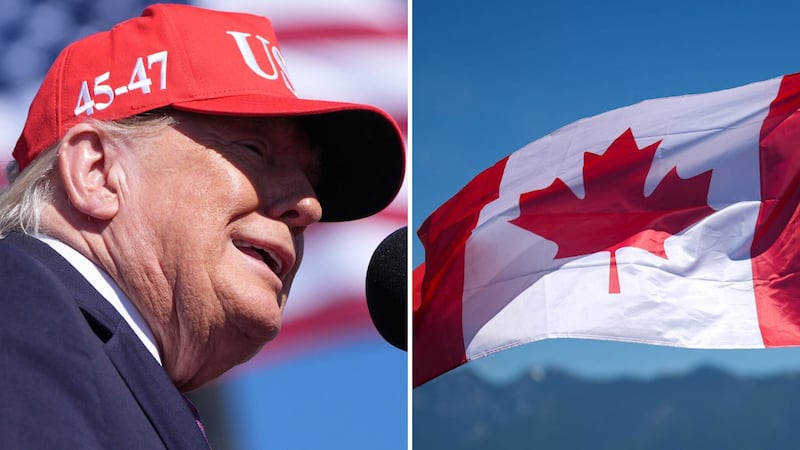
Tariffs from the U.S. against Canada have officially gone into effect. This move has made many worried of the impacts this will have, especially on the auto industry in Windsor. “As a country, we are clearly in a place that we hoped to avoid. We may have a better picture of the president’s goals when he addresses Congress [Tuesday] evening,” said Windsor Mayor Drew Dilkens. “The impact of these tariffs on the auto industry are quite significant for both Canada and the U.S. It’s hard to imagine a president wanting to inflict financial and economic pain on his own economy and country. It’s even more difficult to believe a president would do that at a time when affordability and inflation are key issues for constituents.” Dilkens continued, saying his hope is the tariffs are short-lived and quickly removed after the U.S. begins to feel the consequences. But in the meantime, the auto sector will need help staying afloat. “The widespread nature of this tariff will require financial support from federal and provincial governments on a scale analogous to that provided during the global pandemic,” the mayor added. “Premier Ford just won an election by campaigning on the need to offer supports to workers and families in the event tariffs are implemented. As a city, we are prepared to take any and all reasonable steps to assist residents during this period.” Dilkens is part of the Border Mayor Alliance, which he said is working to advocate for support from upper levels of government to help out communities like Windsor that will feel the impact of the tariffs. “We also continue our advocacy work through organizations the city is a member of, including the Ontario Big City Mayors Caucus, FCM Federation of Canadian Municipalities, and others,” he said. “We are ensuring that our local and regional messages, stories, stats, and more are part of the national discussion happening right now.” Ahead of the tariffs officially taking effect, the Border Mayors Alliance met Monday night and will continue to do so regularly. “We’ve been saying for weeks, since forming the Alliance, that tariffs will be catastrophic for communities across Canada and the U.S., and that border communities like ours will be ground zero for these impacts,” said Dilkens, adding the Alliance is almost at 40 communities. “I serve as co-chair of the Alliance, alongside Surrey, B.C. Mayor Brenda Locke. We all know that we have much to lose here, and we know that we’re not alone. That’s where our work started, and it’s fuelling our efforts.” The Alliance will work to connect with counterparts with U.S. border cities and towns, in addition to advocation to upper levels of Canadian government. Dilkens said he has connected with many Michigan mayors and meetings are to come. “We’re telling our U.S. counterparts what the impacts will be for Windsor-Essex and our communities,” said the Windsor mayor. “We’re asking them to analyze the impacts for their communities. We’re the voices from outside their country; we need their voices to get to the White House from inside the U.S. We are seeing some good movement.” On Monday, the United States Conference of Mayors passed an emergency resolution, calling on Trump administration to reverse the tariffs and protect trades with Canada and Mexico. “This act of solidarity underscores the recklessness of these tariffs,” concluded Dilkens. Brian Kingston, President and CEO of the Canadian Vehicle Manufacturers' Association, issued the following statement: “U.S. tariffs implemented today will do significant damage to the highly integrated North American automotive industry. This will undo over 60 years of integration that has fostered a globally competitive automotive industrial base. Given the importance of the automotive industry to the U.S., Canada, and Mexico, the tariffs will have negative economic consequences. We are calling for an immediate lifting of the tariffs.”