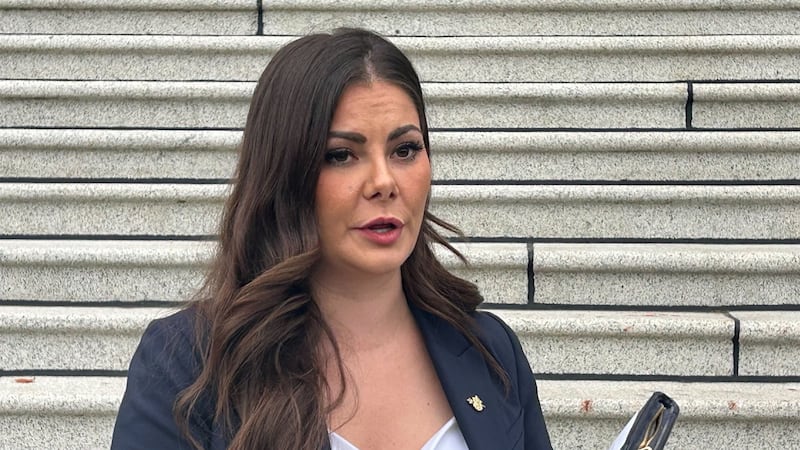
The University of Windsor is working to establish a unique research facility in Kingsville focused on understanding the degradation of human remains from death to discovery in the aid of forensic investigations. On Thursday, a public information session at the Grovedale Arts and Culture Centre gave residents a chance to better understand the aims of what could become the Southwestern Institute for Forensic Taphonomy (SWIFT) — which would be the first of its kind in Ontario. “Most of our work is to assist law enforcement or forensic personnel who are involved in medicolegal death investigations,” said Shari Forbes, the chair of the Forensic Science Program at the University of Windsor. “A lot of what we do is locating, recovering, and identifying victim remains — which could be missing persons, victims of homicide, even victims in a mass disaster.” It’s the kind of expertise that could help with investigations like the one into the death of Windsor’s Sahra Bulle, who’s body was discovered in a shallow grave in Northway Woods in June 2023. Forbes says there are only 13 forensic taphonomy facilities in the world, 10 of which are in the U.S. The other three are found in the Netherlands, Australia, and Quebec. The last two of which she spearheaded. They work as outdoor labs to not only advance learning and research but also training for law enforcement and other emergency workers. “Identifying a victim can be very challenging,” said Forbes in an interview with CTV News. “Particularly if bone or skeletal remains are discovered and there’s just no context. But even understanding how long a person has been deceased, if they’re being concealed like in a shallow burial or some other form such as in water, so, for us it’s about studying the degradation in all these different scenarios.” Kingsville council has yet to officially sign off on the plan. Forbes says the town has offered an undisclosed parcel of land at a fixed lease for the research facility. Should all go to plan, Forbes says construction could begin next year and cost up to an estimated $1 million funded by the university and higher levels of government. Filling a gap The proposal has piqued curiosity in town. “It’s innovation in the future,” one Kingsville resident told a CTV News camera. “It’s a little unusual.” The rarity of these facilities means researchers work in a wide range of geographic and meteorologic conditions, which leaves a gap in research data southwestern Ontario can fill. “We definitely need these facilities in local environments because, I mean, if we think about the southwestern Ontario environment, it’s extremely different to most of Ontario and particularly to most of Canada,” said Forbes. “We couldn’t take data from the Quebec facility, for example, and apply that to an investigation here because a body would degrade very differently.” Forbes says the facility will be located in a wooded area to best mimic real-world conditions and be wrapped by protective fencing in keeping with the sensitive nature of the work. “It looks like a forest with a high security fence around it,” said Forbes. “We call ourselves an outdoor or an open-air research facility.” Its location will remain undisclosed to protect the privacy of donor families who have consented to turning over human remains for research purposes. The cadavers are secured through a partnership with Western University in London, which has a satellite campus in Windsor. Spinoff benefits The facility’s rare research focus means it will attract students and faculty from far and wide to Essex County. Forbes says SWIFT would bring researchers, supervisors, and students to the region — as well as an economic boost with them. “Because it’s so unique, I’m already getting requests from students right across Canada saying, ‘Can I come up next summer? Can I come for a period? Can I do a placement with you?’ And they bring their own funding from the university or from the government,” said Forbes. She’s confident the added exposure will see more researchers and students ultimately call the region home once they see the opportunities on offer. “We feel that’s probably one of the major benefits to the community. We are out there every single day. We have a lot of students conducting research,” said Forbes. “They’ll be in the community drinking a lot of coffee. I know that for a fact.” While Forbes says there will be entry-level positions for students conducting research, there will be more well- and high-paying jobs for higher-level work. Forbes expects a permanent staff of three to five to be complimented by “dozens” of additional researchers cycling through the facility, in addition to the training programs bringing law enforcement officials to town for days or weeks at a time.