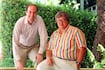
A simple orange lawn sign is starting to appear outside some Windsor homes — carrying a message meant to make Halloween night more inclusive for every child. The Treat Accessibly Campaign, which began in the Toronto area, encourages homeowners to hand out candy from the end of their driveway instead of at the front door. The goal is to make trick-or-treating easier for children who use mobility devices. “It started in 2017 — my daughter and I were putting pumpkins on the stairs, and she saw a boy in a wheelchair,” said co-founder Rich Padulo. “She asked, ‘How does he trick-or-treat at our home?’ We also noticed all the other houses on our block had stairs. So that night, we made the first treat accessibly sign and treated from the end of our driveway.” Hundreds of kids and parents came by that Halloween to ask about the sign, Padulo said. “We had seven families come that night, one parent with a child with autism who said, ‘We heard about your sign, and we’ve travelled four kilometres to be here with you.’ That moment is what led us to grow the movement,” he said. “Today, over 250,000 signs are on lawns across Canada,” he added. What began as a small gesture on one street has since expanded to include accessible trick-or-treat “villages” in nine Canadian cities each October. “You believe that anything is possible when you see your daughter’s dream adopted across the country,” Padulo said. “It’s breathtaking, really, to see a child’s dream come to reality like this.” Now, supporters are hoping Windsor will be next. Lauren Edwards, who owns four Pet Valu stores in Windsor-Essex and founded Charlotte’s Freedom Farm, said the signs are now available for free at all Pet Valu locations across Canada. “You can walk in anytime. Anyone can come in. They’re free — just walk in, say you’re looking for a treat accessibly sign, and you can grab it at any store,” said Edwards. The setup, she said, also has a benefit for families with pets. “If you set up your trick-or-treat station outside, you don’t have people knocking at the door or ringing the doorbell, which can be very stressful for dogs,” she said. “So, if you have a friendly dog, the dog can be outside at the trick-or-treat station as well.” Edwards hopes that by making signs more visible in Windsor, residents will think about how simple it is to make Halloween more welcoming. “A lot of people probably don’t even think about it, but if a child is in a wheelchair or has different disabilities, they’re actually not able to get up to your front door sometimes,” she said. “They don’t get to participate in trick-or-treating.” Edwards added, “I think this campaign is just amazing. It gets people thinking outside the box, brings neighborhoods together, and it’s a great way to still participate.” Padulo said treat accessibly has set a goal of one million homes participating by 2030. “Next year, Halloween is on a Saturday, so we’re going to rally the country to treat one hour before sunset and get as many houses as possible to treat accessibly,” said Padulo. “We want to make it the biggest single act of community inclusion this country has ever witnessed.”