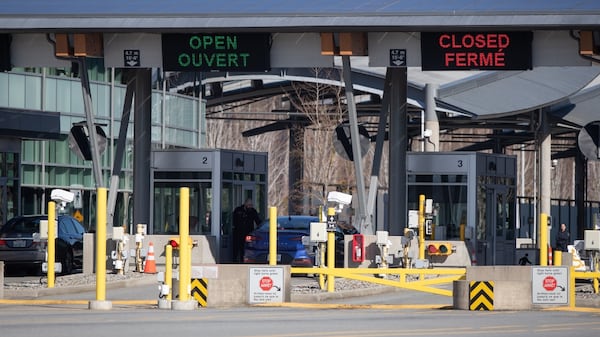
Business leaders and residents in Detroit are urging the Gordie Howe International Bridge to move forward as planned, after U.S. President Donald Trump suggested he could block the crossing’s opening. Trump made the comments in a Truth Social post Monday, criticizing the project’s financing and suggesting the United States should be “fully compensated” before the bridge opens. In Detroit, reaction has focused less on politics and more on the longstanding economic and personal ties between the two border cities. Glenn Stevens, chief automotive and innovation officer for the Detroit Regional Chamber, says the bridge is a critical symbol of cross-border cooperation. “The first and most important thing we want Canadians to know is that Michiganders are very appreciative of our partners and our friends and our neighbours,” Stevens said. “So, it’s really important for us to open up this new international crossing.” He says the chamber has been involved in discussions around the crossing for years and believes the new link is essential to the region’s future. When asked what he would say to Trump if they met face to face, Stevens points to the movement of workers and the bridge’s security benefits. “We have nurses and doctors that live in the Windsor community, work in our systems and go back and forth,” he said. “This bridge is also designed, engineered and built with the latest, modern, high-tech information and intelligent transportation system technology. So having that bridge open will improve security for both our countries and is really good for both of us,” he added. Several Detroit residents CTV News spoke with also voiced support for the new bridge while expressing positive views of Canadians. “They’re our neighbours to the north. We love hockey. We love Detroit. We love Canada here,” said Andy H., before sharing his view on Trump’s threat to block the opening of the Gordie Howe International Bridge. “I don’t think he has the power to do so. That’s just my opinion.” Corisia A. says she prefers cooperation over political conflict. “If we can all work together to figure out what we can do as a country to make it better, I think it will be better that way, instead of throwing negative jabs at each other,” she said. Another resident, Stephanie Eaton, says the president’s threat is a way to “make noise” and “cause distraction.” “I think it’s a wonderful opportunity for us to be able to come together and see another way to visit one another,” said Eaton. “We’re all more alike and similar, and just need to actually have conversation and relate.” As for the Detroit Regional Chamber, Stevens urges calm amid the political rhetoric, saying negotiations are part of the process. “I think that the president has been known as a very shrewd negotiator. He’s an ‘Art of the Deal’ president, so I think it’s important for us not to overreact,” he said. He added, “But I also think it’s important, and we believe this strongly, that Canadians are treated with respect. Calling them a ‘51st state,’ or referring to the prime minister as ‘governor,’ that’s not something that I would want to be done by any leader in the world.” On his way into a cabinet meeting on Parliament Hill Tuesday, Prime Minister Mark Carney said he spoke with Trump about the bridge. “So, we know there are negotiations going on,” said Stevens. “We’ll get through this.” Stevens adds political messaging is also being shaped by an active election cycle in Michigan. “We’re in a very big election year here in Michigan — new governor, new U.S. senator, lots of federal and state legislators will be elected. So, there is a lot of posturing and a lot of rhetoric, and we need to cut through that,” he said. In a written statement, Detroit Regional Chamber president and CEO Sandy Baruah says the Gordie Howe Bridge represents the most “consequential infrastructure project in the state and region of this generation.” “This project would not have been possible without the partnership of the Canadian government, which paid to construct the new bridge,” Baruah said. “Canada is more than a neighbor; it is critical to our economic future. There is no greater example of that than the international bridge.”