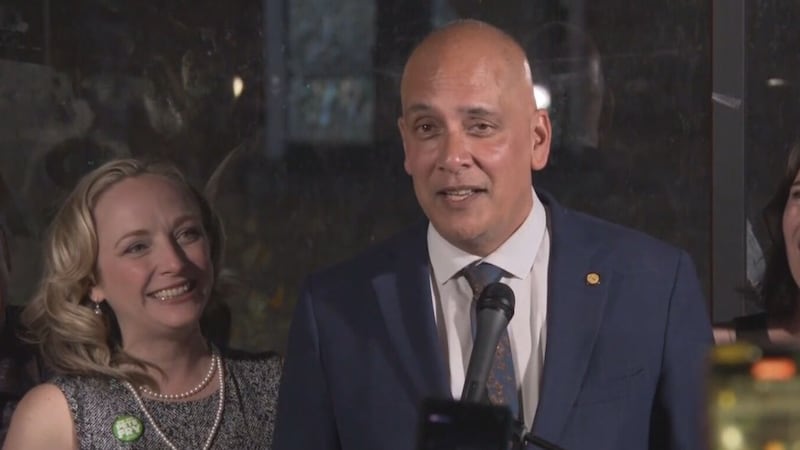
Surrey’s mayor insists she did nothing wrong by using the city’s communications team to make a video about the progress of the $150-million 72nd Avenue project currently under construction. The video was initially posted to Brenda Locke’s “Surrey Mayor” Facebook page, and it has since been shared on the “Surrey Connect” Facebook page—the page for the local political party she represents. A CTV News viewer contacted the newsroom with concerns about the video as a misuse of public resources to benefit a political party ahead of October’s civic election, so we brought that complaint to the mayor on Friday. “People share videos everywhere and this is one that we shared,” Locke told CTV News during an interview. “As I said, we’re very, very proud of the work that we’ve done on many issues, but certainly 72nd is a game changer for Surrey.” Locke pointed out the video has been shared many times, with many of the comments positive about a project that aims to improve the city’s traffic flow. And she insists the creation of the video with city resources and her party’s sharing of it on her party’s Facebook page is appropriate. “I don’t believe any rules were broken,” Locke said. “I don’t think any rules were broken.” University of the Fraser Valley political scientist Hamish Telford said the “campaign style” video is typical of something he’s seen at other levels of government and with other politicians. Vancouver Mayor Ken Sim was criticized recently for using city resources—specifically the city’s letterhead—to share what his political opponents have described as “campaign material.” “There’s sometimes a blurry line between government and party,” Telford told CTV News. “Governments are doing things in the public interest, and governments have a right to inform the public of what they’re doing. But they have to do it—or they should do it—in such a way as not to promote the interests of the party in power.” CTV News asked Elections BC if any rules appeared to be broken in this situation. “The Local Elections Campaign Financing Act (LECFA) regulates election advertising during a pre-campaign period and a campaign period,” reads a statement from Elections BC. “For the 2026 General Local Elections, the pre-campaign period runs from July 20 to Sept. 18. The campaign period begins on Sept. 19 and ends on General Voting Day, Oct. 17. “Advertising outside of the pre-campaign period and campaign period is not election advertising.”