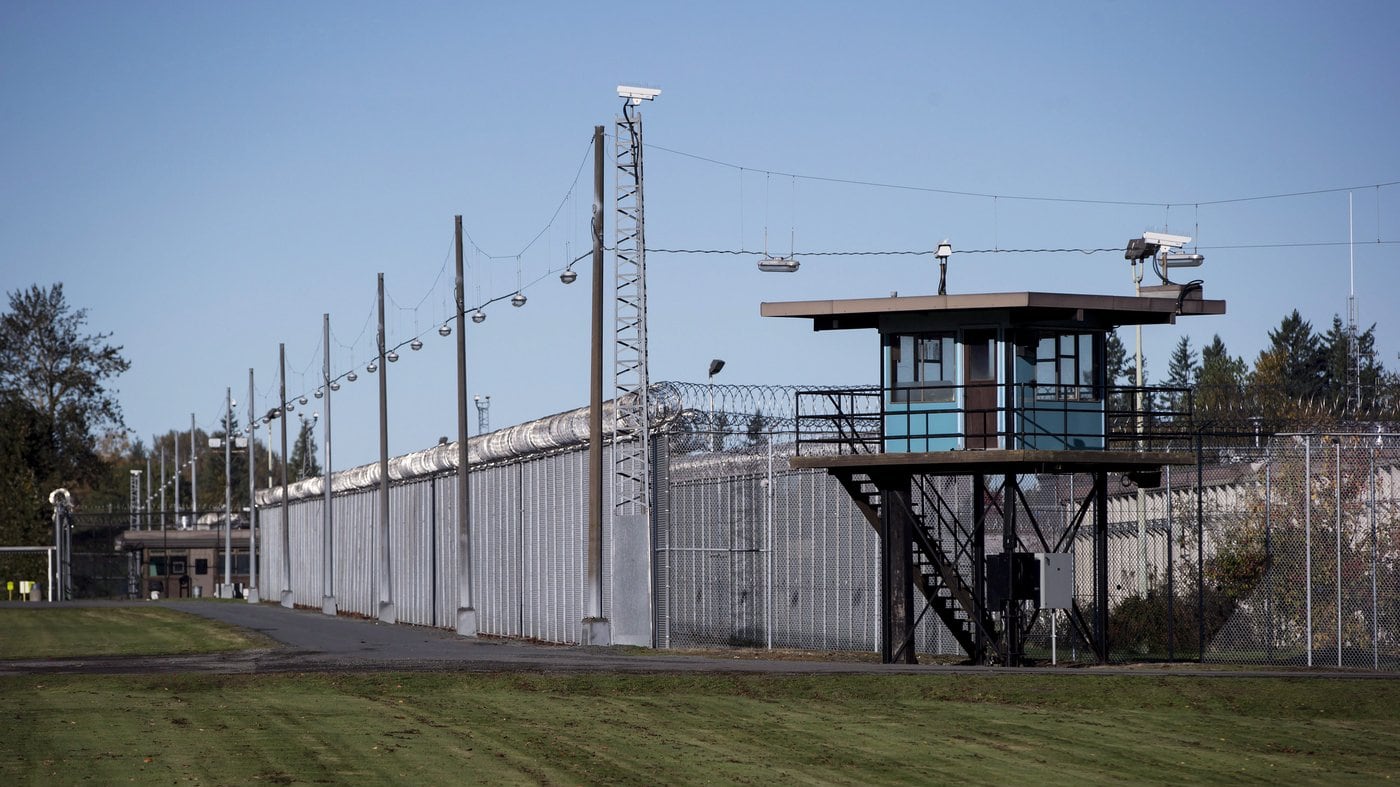
A federal inmate serving time for manslaughter has lost his negligence lawsuit against the Correctional Service of Canada after he was injured in a prison stabbing that he claimed could have been prevented. The British Columbia Supreme Court dismissed the claim Monday, ruling that the ice-pick attack at Matsqui Institution was not reasonably foreseeable, despite a correctional officer’s apparent failure to follow procedures governing the release of inmates from their cells. The court heard that Nolan Swallow was serving a manslaughter sentence for his role in the beating death of a 21-year-old man when he was attacked at the medium-security prison near Abbotsford. Swallow had served less than four years of his sentence and was scheduled to be released on day parole on Nov. 14, 2016. That morning, prison officials paged him over the loudspeaker system, telling him to report to the admissions and discharge department for his release. Fellow inmate Dennis Fletcher, who was serving time for attempted murder in connection with a drive-by shooting outside a nightclub, was on a different wing of Swallow’s living unit when he apparently heard the announcement. Fletcher called the second-floor control post from his cell and told the guard he needed to be let out to attend a counselling appointment. “That statement was false, as he did not have an appointment,” Justice Kevin Loo wrote in his decision. “The officer failed to check whether Mr. Fletcher was telling the truth and released Mr. Fletcher from his cell.” ‘Homemade ice pick’ According to the court, Fletcher left his cell and went to a corridor Swallow would have to walk through to get to the discharge desk. He waited for Swallow to approach before allegedly stabbing him with what the decision described as “a homemade ice pick.” A corrections officer witnessed the attack and stopped it with a verbal order. Health-care staff were then called to treat Swallow before he was transferred to hospital, the decision said. In his claim, Swallow argued the Correctional Service of Canada breached its duty of care by allowing Fletcher out of his cell without a valid reason and by failing to intervene when he was “loitering” near the corridor Swallow was expected to walk through. The judge found that the prison guard’s decision to release Fletcher without verifying that he had an appointment fell below the prison’s standards. However, he found there was no reason for staff to anticipate that Fletcher would attack Swallow. “I find that but for the officer’s error of releasing Mr. Fletcher from his cell, he would not have been able to commit the stabbing, at least at that time,” the decision noted. “However, the timing of these events is meaningful only in hindsight, and only if one considers them in light of an assumption that Mr. Fletcher might have reason to harm Mr. Swallow.” No ‘animosity’ between inmates Matsqui’s assistant warden at the time testified that inmates “seek to use ruses or schemes to get out of their cells for many reasons,” according to the decision, and there was no reason to expect conflict between the two inmates. The judge reached a similar conclusion on Swallow’s allegation that guards should have intervened when Fletcher was loitering near the corridor. No evidence was presented to show that corrections officers in the area noticed Fletcher hanging around the hallway for about 90 seconds before the attack. Nor were the guards necessarily obliged to do anything about a prisoner hanging around in the area. “Mr. Fletcher could have been loitering in the corridor for any number of reasons,” the decision said. “As stated, there was no reason for the correctional staff to suspect any issue or animosity between Mr. Swallow and Mr. Fletcher.” The judge dismissed Swallow’s claim, finding the Correctional Service of Canada was not liable for negligence in connection with the stabbing.