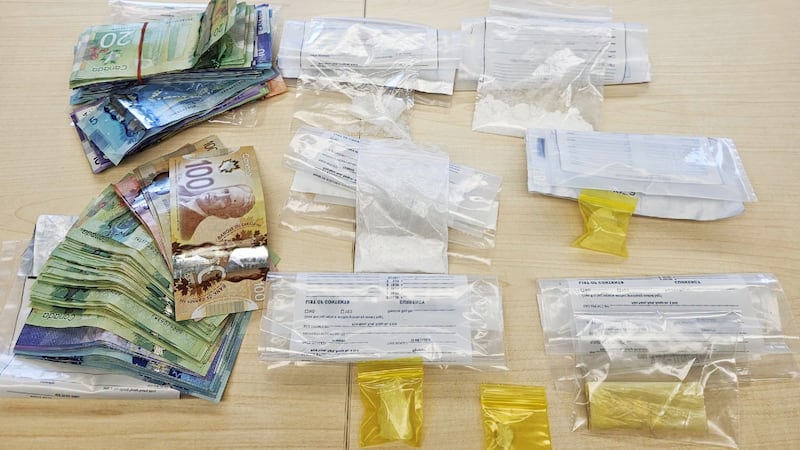
A shipment from China intercepted by the Canada Border Services Agency earlier this year contained enough of a fentanyl precursor chemical to produce more than a billion doses of the often-deadly drug. The CBSA shared details of the seizure in a summary of its Pacific Region's "operational and enforcement highlights" Tuesday. The shipment of 1,133 kilograms of Propionyl chloride was declared as "toys" when it came into Canada through Metro Vancouver in May, according to the summary. It was the first of four large drug shipments from China that the agency seized between May and July. The following month, officers discovered 1,100 kilograms of an MDMA (ecstasy) precursor called PMK Methyl Glycidate in a shipment declared as "various household goods." A further 338.5 kilograms of PMK Ethyl Glycidate were seized in a separate shipment from China during the same month, the CBSA said. This one was labelled "children’s protective gear." Finally, in July, officers seized another 303 kilograms of PMK Ethyl Glycidate that had been declared as household goods. The CBSA said these four seizures – plus another that happened at Vancouver International Airport and involved 70.7 kilograms of Propionyl chloride – were the result of "examination referrals" from the agency's National Targeting Centre. "The CBSA is committed to preventing illicit drugs and substances from entering Canada," the agency said in its summary. "The importation of precursor chemicals contributes to an increasingly toxic drug supply that continues to devastate families and our communities." Through the first 10 months of 2022, B.C. saw 1,827 deaths from suspected illicit drug overdoses. Fentanyl was detected in approximately 82 per cent of cases, according to the BC Coroners Service. OTHER 2022 CBSA HIGHLIGHTS Drug related seizures are not the only "highlights" included in the summary. According to the CBSA, the Pacific Region – which includes 43 land, air and marine ports of entry into Canada in B.C. and the Yukon – processed 11,441,510 travellers between Jan. 1 and Oct. 31 this year. That's up from just 2,075,652 travellers processed during the same period in 2021, when many pandemic-related travel restrictions were still in place. The agency's Inland Enforcement Section also issued 124 deportation orders during the timeframe. Fourteen of those were for inadmissibility to Canada for organized crime reasons, 11 were for security reasons and two were for human rights abuses. The remaining 97 were issued for other criminality provisions of the Immigration and and Refugee Protection Act. "The issuance of these removal orders restricts applications to remain in Canada, thereby paving the way for increased and expedient removal from Canada," the CBSA said in its summary.