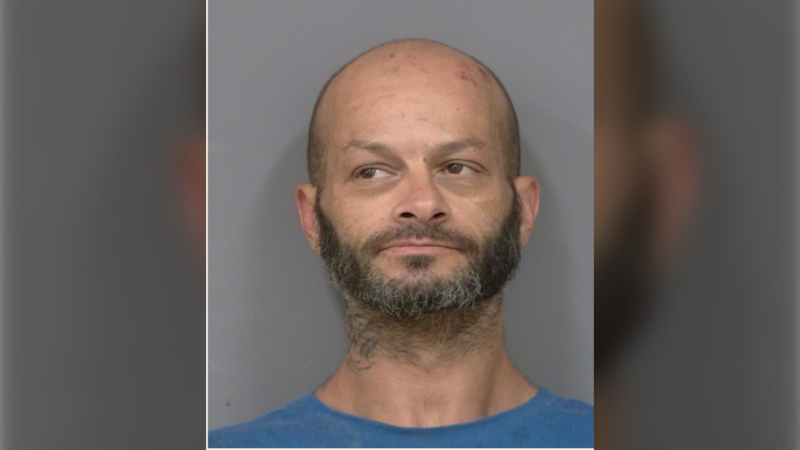
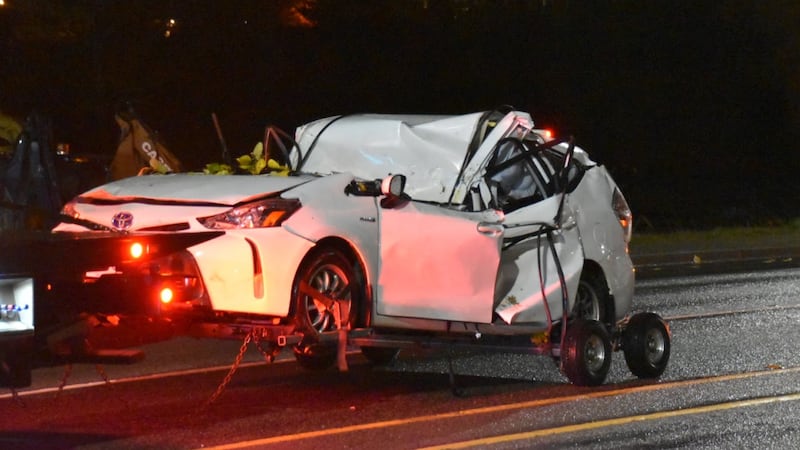
An impaired driver who struck a grandmother pushing her grandson in a baby stroller at a marked crosswalk has been sentenced to 18 months in jail for the hit-and-run crash. Kyle Nicholas Luca, 31, pleaded guilty to one count of impaired driving causing bodily harm and one count of failing to remain at the scene of an accident and was sentenced in B.C. provincial court last week. He also pleaded guilty to breaching bail conditions while the case moved through the criminal justice system. Judge Ariana Ward described the harrowing hit-and-run that occurred on a busy street in Squamish on April 22, 2024, in her decision. The victims’ identities are protected by a publication ban. “While he was impaired by alcohol, Mr. Luca drove his car through a stop sign and struck C.B. while she was walking across a street in a marked crosswalk. At the time, C.B. was pushing her grandson in a baby carriage. She hit the front windshield of his car with enough force to cause a spider crack in it. She then fell off the car and hit her head on the cement,” the judge wrote. “Meanwhile, the baby stroller she was pushing became attached to Mr. Luca’s car. He did not stop at the scene. In fact, he continued driving for five blocks, running two more stop signs with the baby carriage still attached to his car.” The court heard Luca was arrested after bystanders intervened—one who grabbed the baby out of the carriage and another who used his car to block Luca’s vehicle before taking the keys out of Luca’s ignition. His blood alcohol level was 0.11. The grandmother was taken to hospital and released several days later. However, the court heard she was soon re-admitted and needed surgery for a subdural hematoma. “To this day, she suffers physical, emotional, and financial trauma,” Ward wrote in the decision. “No sentence I impose can undo the physical, emotional, or financial harm caused by the events of April 22, 2024, nor can it erase the memories carried by those affected.” The baby, the court heard, was “thankfully not seriously injured.” Subsequent incident, breaches Five months after the crash—before Luca had been criminally charged—he was pulled over by police and took a breathalyzer that “indicated the presence of alcohol in his system.,” according to the sentencing decision. His vehicle was impounded and he was given a 24-hour driving ban. In March of 2025, Luca was charged and released with bail conditions that included a driving prohibition and abstinence from alcohol. Three months later, he was pulled over by police again, according to the decision. “Mr. Luca was found driving contrary to his release order. To make matters worse, he was also impaired. He initially denied drinking, claiming six months of sobriety, and resisted a breath demand, citing ketosis,” Ward’s sentencing decision said, adding that a breathalyzer found Luca’s blood alcohol concentration was over the legal limit. After being charged in that incident, Luca was released on $2,500 bail with one of the conditions being residential treatment for alcohol addiction. In November 2025, Luca was “evicted” from the recovery house after a relapse. “To his credit, he continued reporting to his bail supervisor, resided with his parents as directed, and later turned himself in. He was released to another recovery house under house arrest and with electronic monitoring,” Ward wrote. Finally, in July of 2026, Luca missed his court-ordered curfew of 7 p.m. and was taken into custody for breaching his release order. He remained in pre-trial detention until his sentencing on Nov. 2, 2026. Jail time required, judge finds Luca’s defence counsel was asking for a six-month jail sentence for impaired driving, followed by a six-month sentence for fleeing the scene—to be served in the community after Luca’s release. The breaches, Ward found, weighed against a non-custodial sentence for any of the offences. “After April 22, 2024, Mr. Luca knew, or ought to have known, that he was under investigation and facing serious criminal consequences. Despite that, he consumed alcohol and chose to drive on two further occasions, once contrary to his bail conditions. He also breached the conditions of what was effectively a last-chance release,” the judge wrote. “His conduct demonstrates not only a lack of insight but a continuing failure to comply with conditions specifically designed to protect the public and prevent further offending…I am not satisfied that a conditional sentence order, no matter how stringent its terms, would adequately manage the risk of future offending.” Crown counsel asked for a sentence of two years behind bars, which Ward decided was “too high” in the circumstances because it did not “properly account for some of the mitigating factors in this case.” Luca’s lack of a criminal record and guilty plea were among the mitigating factors Ward considered, as were his efforts to address his alcohol-use disorder, his strong support network and that he has been an “otherwise productive member of his community.” The judge also found Luca’s remorse mitigating, “He told me that ‘not a day has gone by’ when he has not thought about the harm he caused. I accept that his remorse is genuine,” Ward wrote. “I only wish it had prompted different choices sooner, including refraining from driving after consuming alcohol on two further occasions and complying with the curfew and electronic monitoring conditions imposed to support his recovery and protect the public. I hope that, going forward, his conduct will reflect the remorse he has expressed.” The judge sentenced Luca to 12 months in jail for the impaired driving offence followed by six months in jail for failing to remain at the scene along with a three-month sentence for the breach, to be served concurrently. After credit for time served, Luca’s sentence worked out to an additional 365 days in custody. Jail time, the judge wrote, was necessary to denounce Luca’s “senseless and entirely avoidable crime” and to demonstrate to the public “that such behaviour carries serious consequences and will not be tolerated.” The judge also prohibited Luca from driving for three years, which works out to an additional 17 months after he is released from custody. After his release, Luca will be on probation for 18 months.