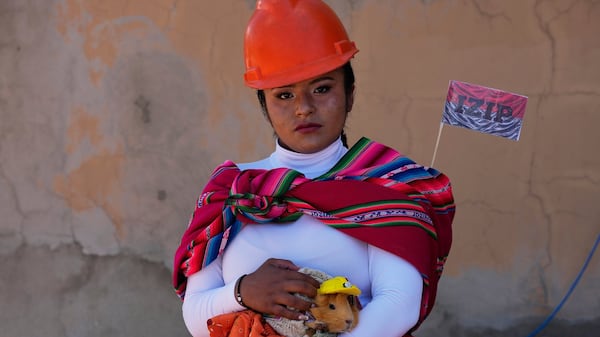
A new six-year journalism project involving the University of Victoria and the Museum of Vancouver hopes to share the voices of people directly affected by climate disasters around the world. Funded by a $2.5 million Social Sciences and Humanities Research Council grant, From Catastrophe to Community: A People’s History of Climate Change will train 500 students and journalists to document the experiences of 1,000 climate disaster survivors. The stories will be shared across documentaries, news features, an anthology and a travelling museum exhibition set to launch at Winnipeg’s Canadian Museum for Human Rights and the Museum of Vancouver. Viviane Gosselin, director of collections and exhibitions at the Museum of Vancouver, says the project aims to highlight the voices of those often lost in the rush to report on damage and interview the experts as climate events like forest fires and flooding become more frequent. “Numbers are important, they help us understand the scale of the problem, but it’s stories that really move people,” says Gosselin. “Stats can’t communicate human textures – the sights, the sounds, the tough choices, and the emotions that come with surviving and rebuilding your community, and yourself, after a disaster.” The initiative is the latest phase of the Climate Disaster Project, launched by University of Victoria writing professor Sean Holman in 2021. The project has trained over 250 students in trauma-informed journalism techniques and created over 320 climate survivor stories, delivered in the form of exhibitions, news articles and a documentary stage play. “Our students learn how to work with survivors to co-create oral histories about their experiences, but not just their experiences, who they are as people, the places that they live, the help that they received, didn’t receive, gave to others, gave to themselves,” says Holman. Those interviewed will be questioned on what they think can be done to help people like themselves in the future, and what they think can be done to assist in solving climate change issues. The focus of the project is not just to document the powerful stories, but to use them to inspire change and a desire to assist within the museum-goers and news readers, says Gosselin. “We don’t want people leaving with a sense of helplessness, we want them to take away real examples of communities rebuilding, adapting, and advocating for change,” she says. “The hope is to turn that awareness into action, so visitors see themselves as part of the global climate story and feel inspired to respond in ways that restore dignity, and strengthen connections with those most affected.”