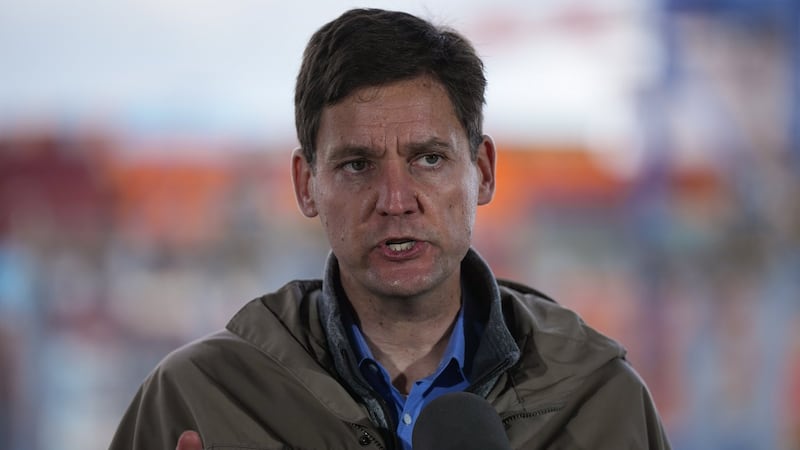
B.C.’s public service strike has now stretched into its second week, with thousands of government workers adding picket lines across the province – and an update from union leaders expected Tuesday morning. The B.C. General Employees’ Union says more than 1,000 additional members are joining the job action, bringing the total to more than 4,000 workers on strike at 22 different sites. New picket lines have been confirmed in Surrey, Nanaimo, Williams Lake, Kamloops, Nelson and Fort St. John. Union president Paul Finch said workers are standing firm because wages have not kept up with the cost of living. “Public servants are demanding fair wages across the province,” Finch told reporters. “In our last agreement, we fell behind inflation over the last three years – and over the last 10 years. The current offer does not meet the needs of workers in this province.” The BCGEU is seeking a four per cent raise in 2025, followed by a 4.25 per cent increase in 2026. The government’s most recent proposal was far lower – 1.5 per cent in year one and two per cent in year two – an offer the union says 93 per cent of members rejected. The union argues its two-year proposal goes beyond general wage increases – lifting pay for lower-wage workers, introducing targeted occupational adjustments, and converting bonuses into base salaries. The goal, Finch said, is to help members keep up with the affordability crisis while stabilizing public services. The BCGEU also points out that its members earn, on average, 2.7 per cent less than the provincial weekly wage, with wildfire fighters topping out at just $56,546 a year. Premier David Eby said government negotiators are aiming to balance fairness for workers with broader financial realities. “We’re keen for a deal that’s fair to workers, that recognizes the hard work done by government employees right across the province – making life better for British Columbians – and is also fair to taxpayers, recognizing the fiscal headwinds that the province is facing,” Eby said. So far, strike action has focused on government service offices, with the union stressing it has prioritized “core government services” in order to minimize the impact on the public. But Finch warned that won’t last forever. “Everything we’re doing is designed to bring government back to the table with a fair wage offer,” he said. “If they do not come back, we will be expanding this strike – and that expansion will start to impact the services that British Columbians rely on.” While there may be minimal impact on the public right now, the union warns their absence could stall resource projects, environmental assessments, and permits that communities depend on. A BCGEU spokesperson is scheduled to provide a strike update Tuesday morning outside the Surrey Pretrial Centre, one of the newly announced picket sites. The province has not indicated when, or if, negotiators will return to the table. Impacts at Surrey Pretrial Centre One of the most closely watched new strike sites is the Surrey Pretrial Services Centre on 57th Avenue, where correctional officers have joined the picket line. “The Surrey Pretrial Services Centre has been added to the list of many locations around the province that have gone out,” said Dean Purdy, vice-president for corrections and sheriff services with the BCGEU. “So we’re upping the ante and we’re putting our members on strike today here as well.” Purdy said the union is advising sheriffs of their rights under the labour code, requiring them to obtain a picket pass before crossing the line to pick up prisoners and transport them to court. “We’re just following the rules under the labour law,” he explained. “We’re asking them to come back with a picket pass before they can proceed and pick up prisoners and take them to the courts.” Although family visits to inmates are already virtual and lawyer visits are continuing, Purdy acknowledged there could be some administrative delays. “Anything’s on the table,” he said. “But essential service levels are set by the labour board – for corrections, that’s 91 per cent – so the public shouldn’t expect major disruptions today.” Still, he argued the strike is a necessary show of strength. “We don’t want to be out on strike, but we have an affordability crisis for our members,” Purdy said. “Half of our members are living paycheque to paycheque, and 22 per cent have to work two jobs. Our resolve is strong, our morale is high, and we’re willing to stay out as long as it takes.” Later in the morning, a manager from the B.C. Sheriff Service arrived and read a formal statement to picketers, warning that obstructing sheriffs or court-related staff could cross a legal line. “Intentional acts which interfere with persons having duties to discharge before a court of justice — including parties, witnesses, jurors, and officers of the court — or with access to a physical location where court services are provided, may constitute contempt of court,” the statement read. “Those found acting in contempt are liable to prosecution, a fine, or imprisonment. Please govern yourselves accordingly.” CTV News has reached out to the B.C. Sheriff Service for comment. What is criminal contempt of court? Contempt of court is a legal finding that someone has obstructed or disrespected the authority of the courts. In the context of job action, it can arise if picketers are found to interfere with sheriffs, jurors, witnesses, or others who need access to court facilities. Criminal contempt of court is more serious than civil contempt — it involves actions seen as threatening the proper administration of justice. If a court determines that picketers are deliberately blocking court operations, they could face prosecution, fines, or even jail time. Labour disputes that affect justice system operations have triggered contempt findings in the past, but each situation depends on whether courts conclude the line has been crossed between lawful picketing and obstructing justice. The consequences of the last strike The last time the BCGEU staged a major strike was in August 2022, when liquor distribution warehouses were targeted. That action lasted for nearly two weeks, leading to product shortages in bars, restaurants and liquor stores across the province. Industry groups say they’re watching closely to see if that happens again. While Finch has stressed liquor distribution is not part of the current wave of job action, he has repeatedly said “everything is on the table” if negotiations remain stalled. During the 2022 disruption, many restaurants were forced to scramble for alternative suppliers, with some shifting orders to local breweries and wineries. But shortages and price increases rippled through the hospitality sector for weeks afterward. Business owners warn that if the strike escalates in a similar way this time, it could add another layer of uncertainty to an industry already facing tight margins. What’s next Union leaders are expected to outline next steps at Tuesday’s media availability in Surrey, Kelowna, Kamloops, and Cranbrook. While they’ve emphasized minimizing disruption to the public so far, they’ve also left the door open to more disruptive action if the province does not return to the bargaining table. Observers say the standoff now hinges on whether government negotiators present a revised wage mandate in the coming days. Without movement, the strike could expand into services that British Columbians rely on more directly – raising the stakes for both sides as the second week unfolds.