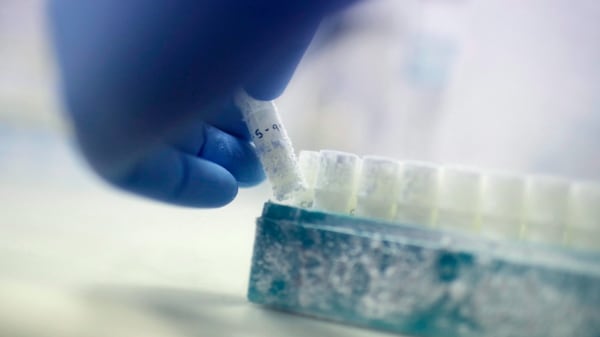
Toronto’s Drug Checking Service is warning of a new opioid that has recently been detected in the city’s unregulated drug supply, which it says could result in an increase in overdoses. In its latest update, the service, which along with the Ontario’s Drug Checking Community is based at and coordinated out of MAP Centre for Urban Health Solutions at St. Michael’s Hospital, said it is monitoring an emerging trend after a synthetic opioid, known as cychlorphine, was found in three fake pharmaceutical opioid samples collected in Toronto’s downtown core and the city’s west end between Oct. 25 and 28. One of these samples was expected to be hydromorphone (Dilaudid), another was expected to be oxycodone (OxyContin), and the third was said to be Percocet, it said. “None of these samples contained their expected drug – cychlorphine was the only drug found,” the drug checking service said. Cychlorphine, also known as N-Propionitrile chlorphine, has unknown strength and effects. And while other related orphine opioids are considered to be about as strong as fentanyl, the potency of cychlorphine is not known. This novel psychoactive substance is not approved for pharmaceutical or medical use. Cychlorphine is part of a class of synthetic opioids known as orphines, which some may refer to as “designer drugs.” Officially known as piperidinylbenzimidazolones, these types of opioids have increased in prevalence in recent years. ‘Risk of overdose may be increased’ “Depending on the strength of cychlorphine and how much of it is used, the risk of overdose may be increased,” Toronto’s Drug Checking Service said. “Naloxone should reverse the effects of cychlorphine and other orphine opioids in an overdose situation. We will keep the community informed as we learn more about cychlorphine and this emerging trend.” Toronto’s Drug Checking Service said it first located this substance on Sept. 12, 2025 in an expected Percocet sample. It should be noted that none of the four samples containing cychlorphine that were collected and analysed by the city’s drug checking service were reported as being associated with an overdose. Karen McDonald, the executive director of Toronto’s Drug Checking Service and Ontario’s Drug Checking Community as well as the director of program development and operations at St. Michael’s Hospital, said the emergence of cychlorphine is “yet another example of the worsening contamination and unpredictability of our unregulated opioid supply.” READ MORE: Drug checking in Toronto could be significantly impacted by closure of supervised consumption sites