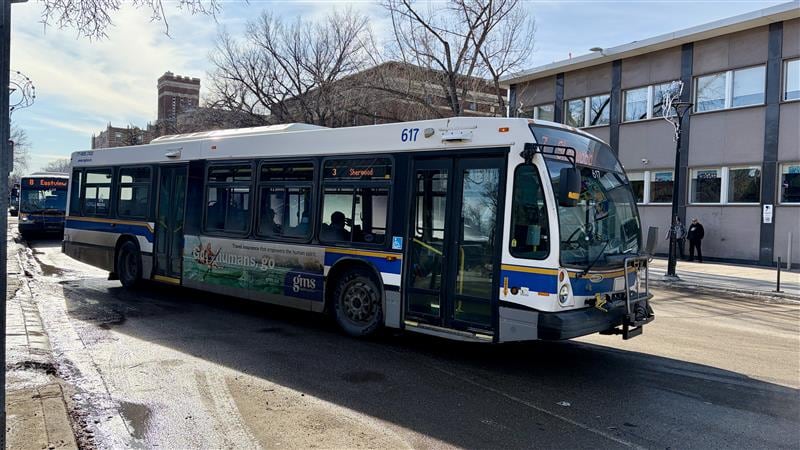
For Chaniece Favell, making ends meet means constantly calculating which bills she can afford to pay and which ones will have to wait. The 35-year-old mother of two works irregular hours at a job in the hospitality sector. With tips she earns about $19 an hour. “Rent and childcare expenses are due, both on the first (of the month)” Favell said. “So it’s ‘do I pay childcare fees, you know, a week or two late, or do I make sure my rent is paid on time’ and kind of go back and forth between that?” “It’s been challenging. I try to at least catch up and pay a portion of the upcoming bill, and then by the time it’s due, I only have some to pay,” she said. Favell has taken budgeting courses, watches grocery sales, buys food in bulk and avoids wasting anything. She can’t afford a car and relies on public transit. Her experience illustrates the financial pressures facing lower-income Calgarians as a new report finds the hourly wage needed to afford a modest standard of living in the city has climbed to $26.90. That’s nearly 80 per cent higher than Alberta’s $15 minimum wage, which has remained unchanged since 2018. Living wage continues to rise The annual calculation by Vibrant Communities Calgary (VCC) and the Alberta Living Wage Network puts Calgary’s 2026 living wage 40 cents higher than last year’s $26.50. The living wage represents the hourly income needed to cover basic expenses — including housing, food, transportation, clothing, childcare and health care — while allowing for modest participation in community life. Michelle James, director of policy at Vibrant Communities Calgary, says the difference between the minimum wage and the living wage is leaving some workers unable to meet their basic needs. “That big gap between the minimum wage and the living wage really highlights how difficult it actually is to get by when you’re making minimum wage alone,” James said. The calculation is based on a weighted average of three household types: a family of four, a single adult and a single parent with one child. The estimated living wage for a single parent with one child is considerably higher, at $36.37 an hour. James says the report should prompt the province to reconsider its minimum wage policy. She suggested increases could be introduced gradually and indexed to inflation to prevent wages from falling further behind rising costs. Labour leader accuses province of suppressing wages Alberta Federation of Labour President Gil McGowan says the widening gap is part of a broader problem with wage growth in the province. He accused the governing United Conservative Party of pursuing policies that have weakened workers’ bargaining power, including freezing the minimum wage and making changes to labour legislation. “The existing minimum wage here in Alberta is grossly insufficient,” McGowan said. “I think most people would agree that a minimum wage is supposed to hold people up, but under the UCP, it’s been allowed to transform into an anchor that’s dragging people down at the worst possible time during a cost-of-living crisis.” McGowan argues Alberta workers have lost the wage advantage they once enjoyed over much of the country. He says raising the minimum wage would also benefit the wider economy because lower-income workers tend to spend additional earnings on everyday necessities. “The money that goes into the pocket of lower-wage workers is recycled out into the economy almost immediately, often in the places that they work,” he said. “Increasing the minimum wage is actually in some ways stimulative to the economy because gives because the economy its workers, and when workers have more money in their pocket, they spend it, and it’s a virtuous cycle.” McGowan disputes arguments that increasing the minimum wage results in job losses, saying research and Alberta’s previous experience with wage increases don’t support that conclusion. He estimates Alberta’s minimum wage would be approximately $20 an hour today if it had kept pace with inflation since 2018. NDP calls for gradual increases Calgary-Foothills NDP MLA Court Ellingson says his party proposed legislation last year that would have increased Alberta’s minimum wage in stages, giving employers time to adjust. Under the proposal, the rate would have increased to $16 an hour last year, $17 this year and $18 next year. “I appreciate that is still well below what is considered to be a living wage today, but it is progress, and we need to start moving forward because people living on minimum wage simply do not have enough money to live,” Ellingson said. Ellingson acknowledged higher wages can present challenges for small businesses already operating on narrow margins. He said the province should pair wage increases with policies that help smaller businesses expand, access capital and become more competitive. The opposition also wants measures to reduce household expenses, including housing, groceries, electricity and other costs. “Our goal is that every Albertan can live a life of dignity, live a life of respect,” Ellingson said. “We don’t want to make choices about whether or not our kids can have fruit when they go to school.” Alberta government warns of job losses The Alberta government says increasing the minimum wage could hurt employment opportunities, particularly for younger workers. In a statement to CTV News, Hunter Baril, spokesperson for the minister of Jobs, Economy, Trade and Immigration, said most Albertans already earn more than the legislated minimum. “In Alberta, 95 per cent of workers earn more than minimum wage, with average weekly earnings being the highest across all provinces,” Baril said. “Increases to minimum wage limits businesses’ ability to create jobs for Albertans — and we see young Albertans suffer the most.” The government says its priority is creating conditions for wage growth without imposing additional costs on businesses. Calgary closing in on Toronto Calgary’s living wage is now just 70 cents below Toronto’s $27.60 an hour. It is also $4.25 higher than Edmonton’s $22.65 — a gap that has widened from $1.45 in 2023. Among 20 Alberta communities included in this year’s calculations, Calgary has the third-highest living wage, behind Banff at $27.45 and St. Albert at $27.20. Transportation was the fastest-growing expense category in the latest calculation, increasing by more than 10 per cent across all three household types. The calculated living wage fell slightly for single adults and single-parent households, largely because of lower estimated housing costs. But for Favell, who has been applying for more stable, better paying full-time employment since January, the immediate challenge remains finding enough work to cover her family’s expenses. “It’s challenging. It’s a lot mentally, and then it’s also emotionally challenging to have to say no to your kids often, but then they are more appreciative when you are able to make things happen,” Favell said. “Christmases have been smallish lately. We don’t have big giant you know rooms filled with gifts and stuff, but we do what we can.”