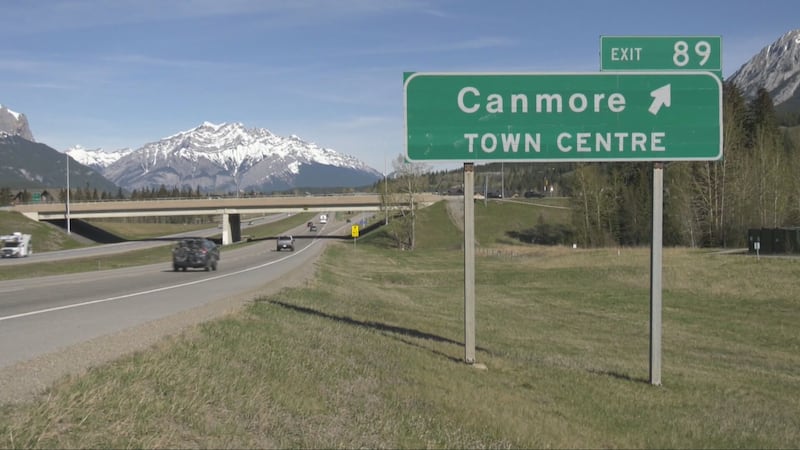
More than 35,000 families left the GTA last year for other parts of Canada, according to Environics data. This story is part of a two-part series examining where households are moving and why. Jessica Jerome still remembers the moment she realized her family could no longer make life in the GTA work. Sitting in traffic on her way home in Mississauga, exhausted from long drives to her children’s sports practices and unable to get ahead, she called her husband and said she was done — done with the gridlock, done with the cost of living, and done trying to buy a home that always felt out of reach. In one week since CTV News Toronto reported that thousands left the GTA for other parts of Canada last year, dozens of families have reached out to share similar stories, including some who have already moved and others who are preparing to. While most relocations still happen within Ontario, Alberta was the number one destination outside the province, according to Environics Analytics, compiled from the first quarter of last year to this year. In recent years, Alberta has in fact spent millions on a marketing campaign targeting other regions in Canada, including Ontario. The campaign has included billboards with targeted messages like, “What did the Albertan say to the Ontarian? You’re hired.” and “Hey Hamilton, what is North America’s most livable city? Calgary.” And it might be luring some residents. Statistics Canada shows that Alberta gained a net of 12,880 new residents as a result of interprovincial migration during the first two quarters of 2025. Ontario lost a net of 11,474 residents to interprovincial migration during the same time period, though its population continues to rise due to other forms of migration. Of the many families who contacted CTV News, several said that they ended up in Alberta in search of cheaper real estate and more space. Feeling stuck in a ‘hamster wheel’ For Jessica, age 38, the decision came after years of trying to buy a home. “No matter how much we saved, it was just not enough to own a home in the GTA… home ownership should be attainable. (However) we were starting to discover that was not the case,” she said. The family had hoped to buy a home in the $300,000 to $400,000 range. Instead, they found limited options, heavy competition, and prices that pushed them further from the life they wanted. “I can’t afford a 500,000 to a million dollar home. There’s no homes available in what I want to pay… I have four children. I can’t (imagine)… to even afford a down payment and a mortgage for that home is just not attainable.” In Mississauga’s Square One area, she says their days heavily revolved around traffic. “We lived in Mississauga, so it was really busy to get anywhere for the kids’ sports. It was a lot of driving time,” she said. “It was like we were in a hamster wheel.” Last year, the family moved to Lloydminster, on the border of Alberta and Saskatchewan. Jessica works in customer care, while her husband is an emergency technician. They now rent, hoping to buy a home in the $300,000 to $350,000 range. “We moved here just over a year ago… now we’re starting our house hunt, and we’re looking at a $300,000-350,000 home out here. We’re able to get that… four bedrooms and three bathrooms.” Jessica says the move allowed their life to “slow down,” but at a personal cost. “There is a personal cost… you’re losing your support system, you’re losing your village. And it is extremely hard to lose that,“ she said, adding that her older step-daughters still remain in the GTA. “It’s emotional, for sure, having your kids so far away… We miss them very dearly.” Still, she says, “We took a deep breath, and we’re like, this was the best decision we ever made.” Another family, weighing a similar path Derrilynn Pritchard, originally from England, also left Mississauga three years ago, ultimately settling in Stoney Creek. She and her family moved for lower rent and less crime. “My husband’s truck had been broken into three times… it was the crime that really kicked us…,” she said. But rising costs have her eyeing Alberta too, for many of the same reasons cited by Jessica. “With that, Alberta’s homes are substantially cheaper than Ontario’s,” she said. “I’d be doing the exact same job, so my salary wouldn’t change.” Her husband works in a trade, which she notes is in high demand for Alberta. “My husband is in a trade, and Alberta is looking for trades all the time… we just think that would be an easier move.” In Calgary, the average benchmark for a single-family detached home is about $744,400, while all other housing types sit around an average of $568,000. Meanwhile, the average price of a home in the GTA recently fell 3.5 per cent year-over-year to $1,114,900 in the third quarter of 2025. A single-family detached home sits at $1,403,800. Alberta is ‘no surprise,’ industry experts say Justin Sherwood, COO of the Building Industry and Land Development Association (BILD), says the economics behind these decisions are predictable but still preventable. “It’s absolutely no surprise that jurisdictions like Alberta rate highly on housing affordability, whereas Ontario rates very low,” he said. Sherwood notes a single-family home in Alberta costs less than half of what it costs to produce in Ontario, pointing to lower government fees and taxes. “In Edmonton, it takes an average of two months to approve a new housing project. In the GTA, it takes an average of two years,” he said. “For each month of delay… you’re adding costs.” He warns that continued out-migration, will have long-term consequences. “Typically, it’s younger families leaving… we will see an aging of the population.” CivicAction echoes that urgency. In a report earlier this year, the group described the GTA’s working middle class as “the invisible poor” — a workforce the region is beginning to lose due to rising costs. “We are essentially exporting the workforce we depend on because they can no longer afford to stay,” CEO Leslie Woo, wrote in a statement. A decision weighing on younger families Jessica says her story isn’t unique, adding that it’s simply what happens when affordability and opportunity stop lining up. “It’s really hard for young people to be able to afford life out there (in the GTA), it really is.” For families like hers and those still deciding — the question is no longer whether the GTA is home. It’s whether staying is still possible. --- How is living in the GTA actually working for you right now? Did moving here meet you expectations or challenge them? If you came for opportunity, affordability, or lifestyle and found a different reality — good or bad — we want to hear from you. Share your story by emailing us at torontonews@bellmedia.ca with your name, general location, and phone number in case we want to follow up. Your comments may be used in a future story.