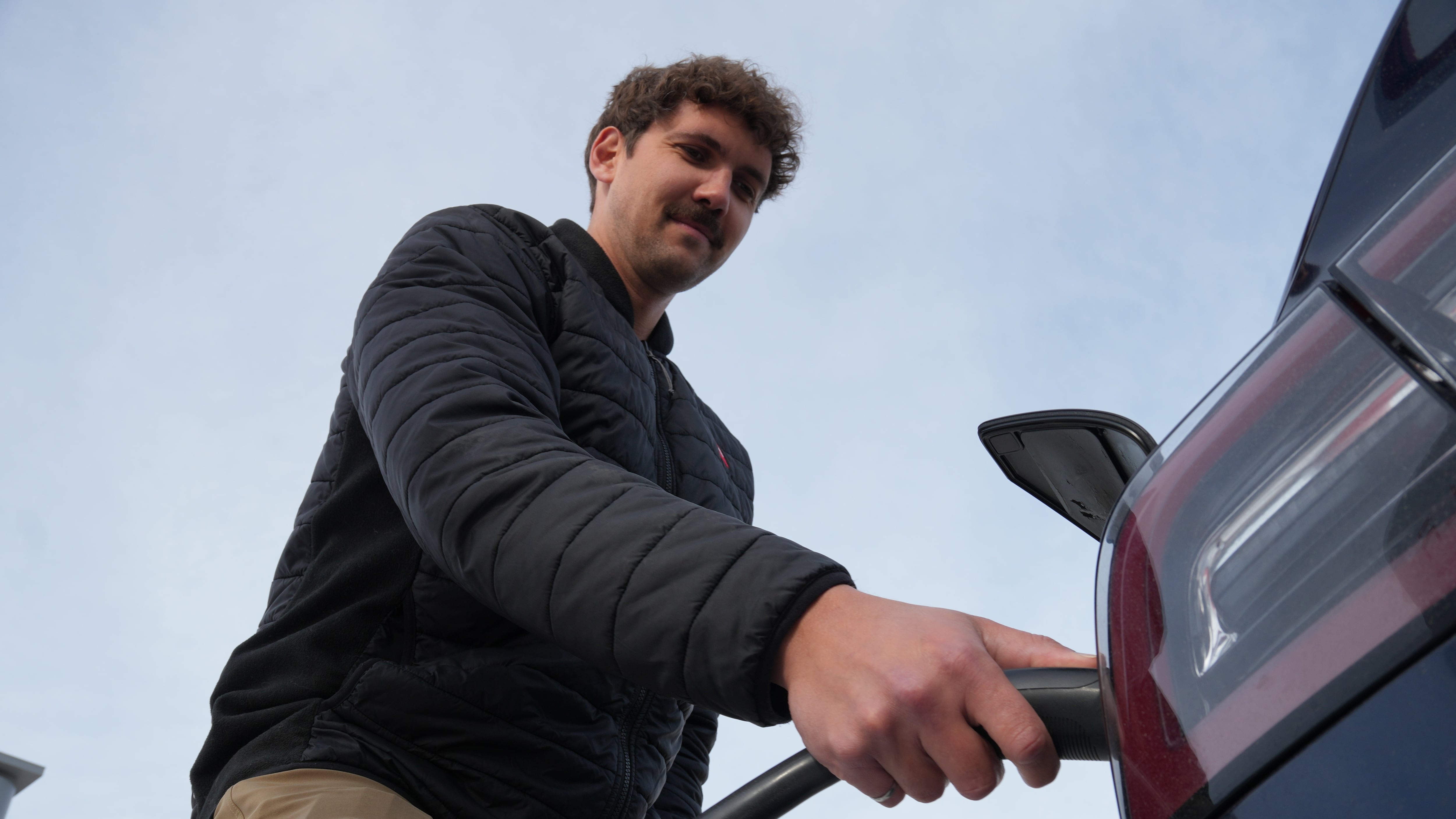
Electric vehicles continue to grow in popularity as an eco-friendly means of travel. Across the map, more people are making the switch to drive electric. Norway, with likely frigid winters, saw more than 79 per cent of new cars sold in 2022 were fully electric, reports say. With so many relying on car travel throughout the Saskatchewan winters, questions on driving electric through the sleet and snow come up. “I talk to a lot of people that don’t think I drive my EV in winter at all. They’re surprised to see I’m driving around on a -35 degrees or even -40 day,” Tyler Krause, a Saskatoon engineer, said. A recent study from sciencedirect.com reports that the concerns about the performance of electric vehicles (EVs) during Saskatchewan winters are misperceptions, and are what Krause believes could be solved by understanding EVs further. One of the most common misperceptions presented in the study included “battery electric vehicles do not work in the winter.” Krause has driven a Tesla Model 3 since 2018, through several Saskatchewan winters. He has never experienced frozen door handles and windows getting stuck, snow-ridden windshields while driving, concerns about cabin temperature for passengers or dwindling battery range. These are worries that are unique to Saskatchewan winter driving conditions, but he says that his winter travels have been better than he originally expected. Krause has never had an issue with his battery range and remembers on one occasion he was driving from Colorado to Regina, then home to Saskatoon. A rerouted border crossing left him short on range to make it to the next stop in Estevan. By driving at half the speed he was previously, the range estimate started to increase. “You don’t get that kind of gain in a gas vehicle. In an EV, it’s crazy how much energy you can recoup from driving a little bit slower,” Krause adds. The same study reports that “a 2024 survey of 5,567 Canadians showed that Saskatchewan participants had a lower preference (31 per cent) for zero-emission vehicle (ZEVs) in their next purchase of a new vehicle, while participants from British Columbia (48 per cent) and Quebec (50 per cent) had a higher preference for ZEVs.” “I think a lot of people think that there are only disadvantages of driving electric in the winter… That’s not the case, there are so many benefits,” Krause says, naming the following as a few of his winter electric driving perks. Krause says his electric vehicle warms up a lot quicker than a gas vehicle. At -43 degrees, after leaving his car outside for a nine-hour workday, the Tesla cabin heated to 20 degrees within 12 minutes. He clarifies “If it was a gas vehicle it would certainly take longer than that. If the EV was plugged in, it would take four or five minutes to get to that temperature.” Another plus of driving electric that Krause notes is the higher torque and horsepower than their gas counterparts in the same class and price of vehicle. This helps the car move through the mud, snow and slush of Saskatoon roads. “They really seem to outperform a lot of gas vehicles in terms of traction and handling,” he adds. He does acknowledge that the reduction in range on a very cold day is a downside, but that cars also use more gas on those days. Like any winter travel, electric vehicle travel just takes planning ahead. Things like charging your battery more often, keeping a healthy charge and checking your charge often will optimize winter trips, according to a report from electricvehicletalks.com. It’s a good practice to know where chargers are located around your city, just in case battery percentages do get low. Sites like plugshare.com and more will show real-time EV charging station availability across North America, making it easier to plan your electric travels. “If you take your phone outside in -40 degrees, it will probably shut off in 10 or 15 minutes. Batteries can’t function in that kind of extreme weather. It goes the other way too, they can’t be too hot. It has to be at a happy temperature, just like humans,” Krause says. Price is another factor keeping people from driving electrically. Krause claims that federal and provincial incentives are crucial. “We’ve seen an increase in EV sales across the country when there’s a federal incentive, and we’ve seen a drop when that incentive changes,” he says. Krause is on the Board of Directors for SaskEV, a group that holds events to educate people in Saskatchewan about driving electric, as well as funding charging infrastructure, hosting EV car shows, and working with governments on a ranging scale. If people are debating whether driving electric is right for them, especially with winter concerns, he tells them to go drive one. “Go to the store and test drive an electric vehicle,” Krause says. “Because that’s usually the moment when people’s opinions really start to change.”