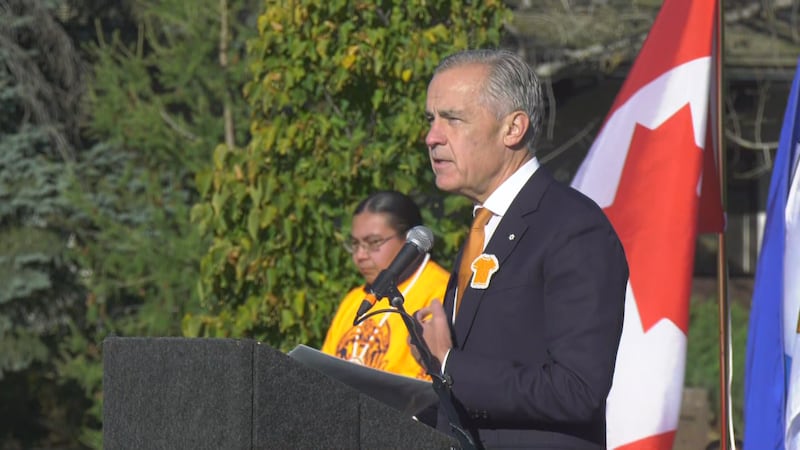
Thousands of Liberals are arriving in Montreal for their annual convention with a spring in their step following news of a fifth-floor crosser in just over five months. The 2026 Montreal convention was advertised as an opportunity to chart the party’s course. Liberal strategists expect the three-day convention will focus less on policy and more on building momentum ahead of three crucial byelections. Dan Arnold oversaw the Trudeau Liberal’s research program during their 2015, 2019 and 2021 election victories and now teaches at Carleton University. Arnold says the policy process has its place but says those discussions likely won’t dominate the conversation like they usually do at conventions. “In the hallways of the convention, there’ll be a lot more chatter about floor crossers and byelections then there will be about policy resolutions,” said Arnold. “The policy process has its place, but I think it’s fair to say that there’s less focus on that because the parties in government.” Over the three-day convention, Liberals from across Canada will attend networking events, speeches and attend dozens of panel discussions and policy workshops. The convention will feature keynote addresses from Finance Minister François‑Philippe Champagne, Man in Motion founder Rick Hansen, former federal Liberal cabinet Minister and Montreal Mayor Soraya Martinez Ferrada, the President of the Liberal Party of Canada Sachit Mehra and Prime Minister Mark Carney. Floor crossers to speak Two floor crossers will be on those panels discussions. Former NDP MP Lori Idlout will be speaking on a panel entitled In “Partnership With Indigenous Peoples: The Shared Path of Reconciliation,” while former Conservative MP Matt Jeneroux will be on a panel entitled Strengthening and Diversifying Canada’s Partnerships. Twenty-four policy resolutions have also been proposed by regional and demographic caucuses on topics ranging from removing visas requirements for Ukrainians to establishing a minimum age of 16 to access social media and AI chatbots and enacting a Canadian Artificial Intelligence Act, modeled on the European Union’s approach. ‘More pragmatic’ Arnold says many of the policies reflect ideas he could see the government implementing. He says it appears the party members are being “more pragmatic” this time around. “Sometimes at policy conventions, the membership is trying to push the government to do something radical and bold,” he said. “If you go back 20 or 30 years, it was Liberal delegates pushing for legalized marijuana and same sex marriage. … Today, actually, the policies on the table are things that are a lot more, you could actually see the government bring them forward.” One of the proposed resolutions from the Ontario caucus is to change the first-past-the-post electoral system to a system that requires candidates to get 50 per cent of the vote plus one vote to be elected. The resolution says that can be achieved through ranked ballot system or a run-off election. Another of the Ontario caucus’s policies seeks to create a national passenger rail strategy that explores the feasibility of additional high-speed rail projects and prioritizes investment in green rail infrastructure. The Alberta caucus, meanwhile, is working with the Senior Liberals’ Commission for what they are calling a “Canada Strong” health-care framework that aims to modernize the Canada Health Hat, setting measurable national standards for equitable access and consistent benefits. ‘Activist’ policies unlikely Liberal Strategist Sabrina Grover says the policies presented this year reflect affordability challenges rather than many of the aspirational, big picture policy changes, including the legalization of marijuana, that were presented at previous conventions. “The policies really reflect some of the realities on the ground that people are facing with affordability,” Grover said. “I think the time for some of those more activist policies reflect a different time in the economy.” Grover, like Arnold, says that at any convention, the news and the issues of the day tend to be talked about the most. “People, of course, come from across the country to be participating in that grassroots policy process,” Grover said. “But I think once you leave those policy workshop rooms people are really chatting about what’s happening in politics, both in Canada and, I think this year, in the United States.” In addition to floor crossers and the byelections, Grover expects the Canada-U.S. relationship and the upcoming CUSMA negotiations to loom large. “I think for a lot of Liberals it’ll be an opportunity to kind of reconnect and get maybe a little bit more information as well as to what the government is thinking and where they’re headed when it comes to some of those negotiations, and what is coming out of that agreement, that central future agreement with Donald Trump,” Grover said. The byelections ahead The Montreal convention wraps up on Saturday after a keynote speech from the prime minister. Less than 36 hours later, voters will go to the polls in three key byelections, two in Ontario and one in Quebec. After five floor crossings, including former Conservative MP Marilyn Gladu on Wednesday, the Liberal government now has 171 seats. If they win all three byelections on April 13, Prime Minister Mark Carney will have a two-seat majority in the House of Commons. “The Liberals are projected to win handily in two and most likely to come through in Terrebonne as well,” said Grover. “I think you’re going to see a lot of enthusiasm for not just being able to have a majority, but for what that means in government and what that means in committee.” So what does success look like coming out of the convention? Arnold says its all about building momentum that will help get out of the vote. “This is really an exercise just in firing up the base,” Arnold said. “Having a floor crosser announced right before the convention, I think, helps fire up the base, certainly.” Some observers and party insiders speculate the floor crossings aren’t finished yet. Liberal Strategist Scott Reid says he’s not positive this the only move up the Liberals’ sleeve. “Rumors have been buzzing like hornets for days now that some Conservative MPs have been in conversations with the Prime Minister’s Office,” Reid said. “I always partially wondered whether, as sort of a setup for the convention, as a kind of celebration of the convention, if we might see this kind of move.”