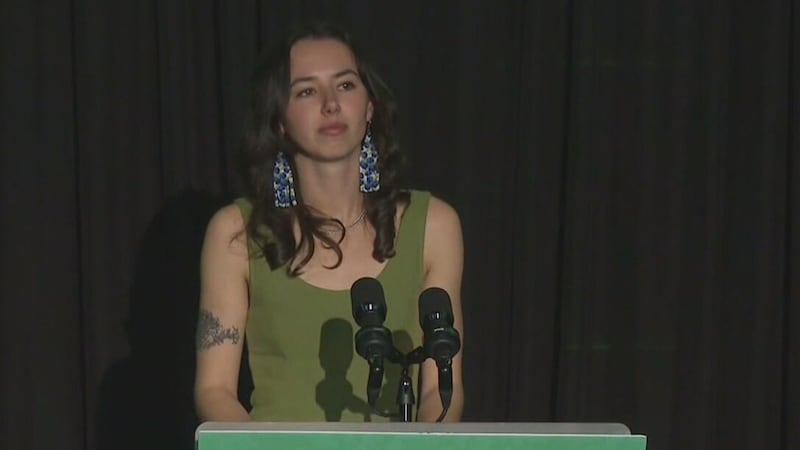
Women’s Shelters Canada (WSC) is launching a new program to equip workplaces to help identify domestic violence and refer survivors to needed resources. Through Refer Her, WSC is providing employers across the country with training materials for their employees to give those experiencing intimate partner violence more avenues to seek support. Data shows that one in three workers experienced domestic violence, and 82 per cent say it affected their performance at work. A WSC survey also found that one-third of people experiencing violence have confided in their colleagues. WSC executive director Anuradha Dougal says colleagues may not always know what to do or how to respond to that information, which is where the resources and training kick in. “You have to recognize the signs of domestic violence in the workplace. Then you should be able to respond to it, so to know what to do and how to do that in a very positive way, and then refer. Where would you find resources? How would you help that person if they came to you?” she says of the training program. Canadian employers also have legal responsibilities when it comes to employees living through conjugal violence, including ensuring the workplace remains safe, providing some paid leave depending on the province, and having a domestic violence policy. For example, in Quebec, employers must provide a minimum of two days paid leave, which can be used for sick days, but can also be used in the context of domestic violence. An employee can also have 26 weeks of unpaid job protected leave in a year to get back on their feet. Some employers can choose to offer more paid time off in the context of domestic violence at their discretion, but must follow this minimum. Part of WSC’s new program ensures both employers and employees are aware of these rights and obligations. “It’s really important that people know that everybody is part of the solution. And many employers want to get better at responding,” says Dougal. Some benefit packages include the Employee Assistance Program, which is a phone line for free counselling and advice. “All these things add up and make workplaces more compassionate and more responsive to survivors,” said Dougal. WSC partnered with the Regroupement des maisons pour femmes victimes de violence conjugale to roll out programs in Quebec.The organization has been offering similar training since 2021 through its Programme milieu de travail allié contre la violence conjugale. Catherine Boucher, who leads the training program, says it’s important to note that domestic violence “does not magically stop when you leave the house.” “Domestic violence can intrude into all areas of a person’s life and in all places, including at work,” she said. She pointed to a survey by the Canadian Labour Congress, which showed that half of those who reported domestic abuse said the violence continued at work. Conjugal violence also impacts performance in the workplace: it can affect concentration, productivity, attendance, and cause team issues. It’s also crucial for survivors of domestic abuse to retain employment to have access to a salary and a reason to leave the house. “It’s not a miracle cure, but it certainly adds protective factors that we don’t want to do without,” said Boucher. “It’s also a place where you can maintain certain social ties, because we know that isolation is really something that is part of the very unfortunate toolbox of perpetrators of domestic violence and coercive control.” It can be extremely difficult for victims and survivors to come forward while experiencing domestic abuse, and they may not feel comfortable going to their employer, but Boucher and Dougal say it’s crucial to make information as available as possible. Boucher says that by doing so, employers equip their employees with important knowledge but also send the message that they’re in a caring and empathetic workplace where they can come forward without fear of being penalized. Both Boucher and Dougal say they received positive feedback from workplaces that implemented the programs. Femicides on the rise The need is especially urgent in Quebec, where six women were killed by their partners in six weeks in 2026. Dougal says it’s a trend that’s been growing since 2020, when the pandemic hit. “Those numbers actually haven’t gone down,” she said. “The numbers are increasing every year when it comes to conjugal violence.” Boucher says that “for every woman who is a victim of femicide, there are even more who are victims of attempted femicide.” While there is a lack of data on the issue, there are women who die of suicide because of the consequences of domestic violence, she adds. “These are all women who deserve to be alive, to receive services. That’s part of the answer,” Boucher said. She did not mince words when it came to the source of such violence. She pointed to anti-feminism and masculinist movements, which she says are the “roots of domestic violence.” While she acknowledges that there are men and non-binary people who are victims of domestic abuse, the large majority are women. “We know that one of the driving forces behind domestic violence is misogyny. And it is gender roles that are based on a power imbalance between the genders,” she said. “We have to change how we conceive of relationships and bring about profound cultural changes. Taking someone’s life because they dared to leave you, that is trying to have ultimate control.” More needs to be done, advocates say Though Boucher and Dougal agree that making information and resources available to victims and survivors is crucial, more needs to be done to protect them. The Regroupement des maisons pour femmes victimes de violence conjugale is asking Quebec to increase the number of paid leave days available to survivors, as they are lumped in with sick days and personal days. “If the person already took sick days, they may not have access to those two paid days off,” said Boucher. Women’s shelters are also underfunded and are having to do more with less. The housing crisis, which is especially pronounced in Quebec, is making it worse, according to Dougal. “Shelters are turning away survivors, turning away people because they can’t find more space, so people are having to make terrible choices about where they can go,” Dougal said. One way to make it easier for victims to get back on their feet is to make sure there is affordable, safe housing for them. Dougal also stresses the importance of prevention work. “We can’t solve domestic violence by just dealing with people who’ve already experienced it. We have to stop it from happening in the first place,” she said. However, she added, it can be difficult to do. “Schools don’t necessarily want to talk about issues of dating violence or intimate partner violence, even though it’s the best time and the best place to do it. Workplaces think that by talking about this, they’re going to cause problems,” she lamented. But Dougal maintains we can’t afford to hide from the reality of domestic abuse. “It’s an absolute emergency. It’s beyond it. We’ve talked about it being an epidemic, a pandemic. It’s destroying women’s lives right now,” she said. SUPPORT NETWORK Victims of domestic violence can contact SOS violence conjugale at 1-800-363-9010. Other resources: