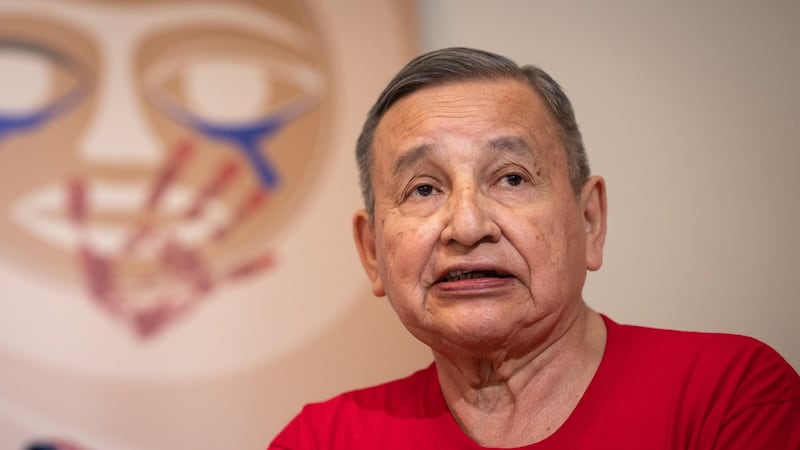
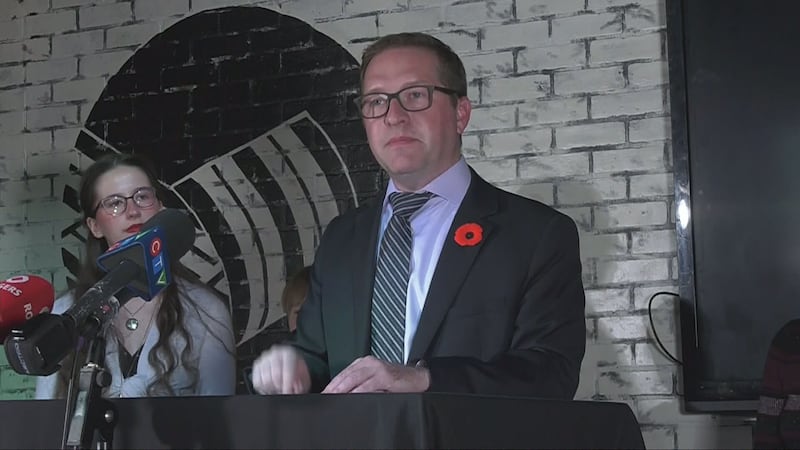
The president of the Quebec English School Boards Association (QESBA) and chair of the English Montreal School Board (EMSB) is sharply criticizing Quebec’s new Bill 94, calling it an unjust expansion of Bill 21 that “targets the most vulnerable” and “contradicts the province’s core values.” “Bill 94 narrows what it means to belong in Quebec’s schools,” said Joe Ortona in a QESBA news release issued Monday. READ MORE: Religious symbols ban: Quebec passes law to prevent students, staff from covering their faces ‘An extension of what’s bad in Bill 21′ Bill 94 broadens the existing ban on religious symbols for public-sector employees to include nearly all school workers and even volunteers. Joe Ortona, whose organizations are already challenging Bill 21 before the Supreme Court of Canada, said this new measure deepens the harm. “First it was teachers, because they were in positions of authority,” he said in an interview with CTV News on Tuesday. “Now they’ve extended it to everybody, from the caretakers to the secretaries, including parent volunteers, or anybody who comes to speak or present in the classroom.” He offered an example to illustrate how far the restrictions could go. “I think of someone who wants to speak from the Montreal Holocaust Museum about the Holocaust and World War II, and having to be told that he has to remove his kippah in order to go into the classroom to speak to the students. There’s just something fundamentally wrong about that.” ‘They’re targeting the wrong individuals’ Ortona argued the Quebec government’s approach to secularism has drifted from neutrality to exclusion. “They’re targeting the wrong individuals,” he said. “They’re targeting the ones who are the most vulnerable and who face bigotry and discrimination as a result of their religious beliefs. The government should be supporting them and not marginalizing them further.” He said that while Quebec’s English school boards support secular institutions, they reject the government’s rigid interpretation. “I believe in the separation of church and state,” he said. “It means that the institution itself is not religious. It’s neutral. It doesn’t favour one religion over the others… This government’s definition of laicity is almost a religion in and of itself, with all of these rules in place.” Ortona added that he feels the banning of any religious symbol of any kind is “immoral and indecent. It’s not a reflection of Quebec’s values in 2025.” Enforcement challenges Ortona also questioned how the CAQ government intends to apply the new law. “It’s very complicated, and in many ways it has real negative impacts,” he said. “It’s even going to be difficult to implement, and I think even difficult for the government to enforce.” He cited several grey areas, such as dietary accommodations and exam scheduling, that would be nearly impossible for officials to monitor. “How is the government going to know if the food we order has anything to do with dietary restrictions for religious purposes? If we set dates for exams, how will they know if we took religious holidays into consideration or not?” Possible legal challenge The EMSB and QESBA are already parties in the Supreme Court case challenging Bill 21. Ortona said his organizations will review Bill 94 carefully before deciding whether to launch another legal challenge. “We’re going to take the same approach we’ve always taken,” he said. “Look at the impact, the legal grounds, and the chances of success. … If all of that leads in a direction that favours a challenge, then elected commissioners are going to have a decision to make.” He added that the Supreme Court’s eventual ruling on Bill 21, expected in 2026, could also affect how parts of Bill 94 are interpreted. “Maybe some of those questions are going to be settled when the Supreme Court renders their judgment.” Political, not practical Ortona accused the government of pushing the legislation for political reasons rather than practical ones. “All of it really for no reason other than the fact that this government keeps trying to appease their base because they’re low in the polls, and they’re trying to do it at the expense of those who are more vulnerable,” he said. “And they’re doing it by punching down on them.”