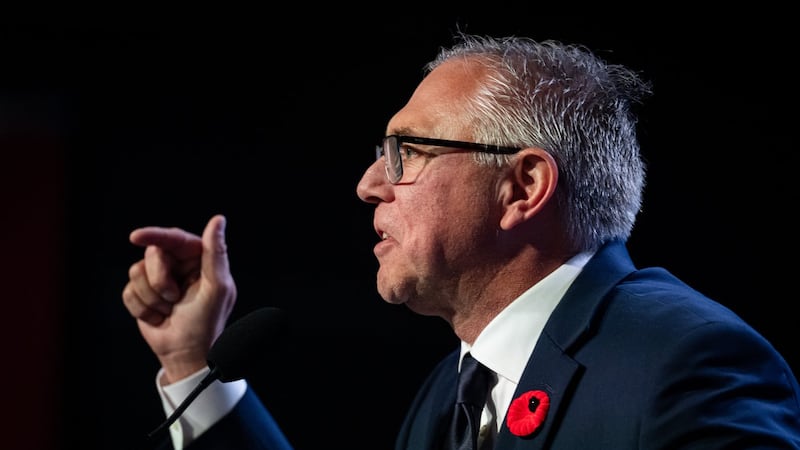
The Legault government is putting an end to “recess” for publicly funded religious private schools. They will have three years to stop selecting their students and teachers based on religious affiliation and to end the teaching of religious content during class hours, otherwise they will lose access to public funding. “People have time to make the necessary changes (…) If they do, very well. If they don’t, then there may be institutions that will choose to forgo public funding. That’s up to them,” said Jean-François Roberge, the minister responsible for secularism, at a press briefing Thursday at the National Assembly, after tabling Bill 9, which aims to strengthen secularism in Quebec. These schools may still hold religious activities, but only outside class hours. Those activities must also be optional and not funded by the state. The issue of funding for religious schools sparked debate in the National Assembly last year. At the time, the Liberals, the Parti Québécois, and Québec solidaire supported ending subsidies for these schools, but the CAQ government opposed it. Premier François Legault eventually opened the door. Roberge was not able to specify how many private schools in Quebec currently teach religious content during class hours. Even so, he insisted he has the means to enforce this part of the upcoming legislation. “At the Ministry of Education, every time we renew a subsidy or an accreditation, it is always conditional. Right now, there is no condition related to secularism, but those conditions will be added if the bill is passed,” the minister said. ‘Acts of provocation’ The bill will also ban street prayers, which can be “acts of provocation,” according to the minister. “For me, it’s obvious that when a religious group knowingly positions itself in front of another religion’s place of worship, repeatedly, to chant and pray, that is provocation,” said Roberge. The minister believes this ban will “calm the social climate.” “It’s upsetting to see people blocking traffic, taking over public space without a permit, without warning, and then turning our streets, our parks, our public squares into places of worship,” he added. Municipalities will be allowed to authorize street prayers, but under certain conditions. “It’s case by case. It must not disturb public order. It must respect the charters — meaning, for example, equality between men and women, etc. So there are clear enough guidelines in the bill that say under certain circumstances it’s prohibited and cannot be authorized,” the minister explained. The legislation will also prohibit daycare educators from wearing religious symbols. However, the minister is planning a grandfather clause “under certain conditions.” Roberge also intends to require uncovered faces in daycares, CEGEPs, and universities — both for people receiving services and those providing them. The government intends to further strengthen its secularism law, Bill 21, which bans religious symbols for state employees in positions of authority, including judges, police officers, and teachers. “This is how we live in Quebec, and this is how we will continue to live together,” the minister said, concluding the presentation of his bill. This report by The Canadian Press was first published in French Nov. 27, 2025.