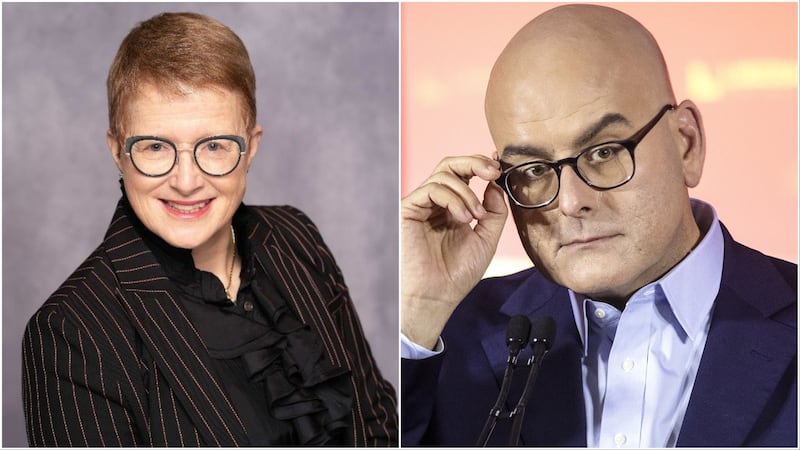
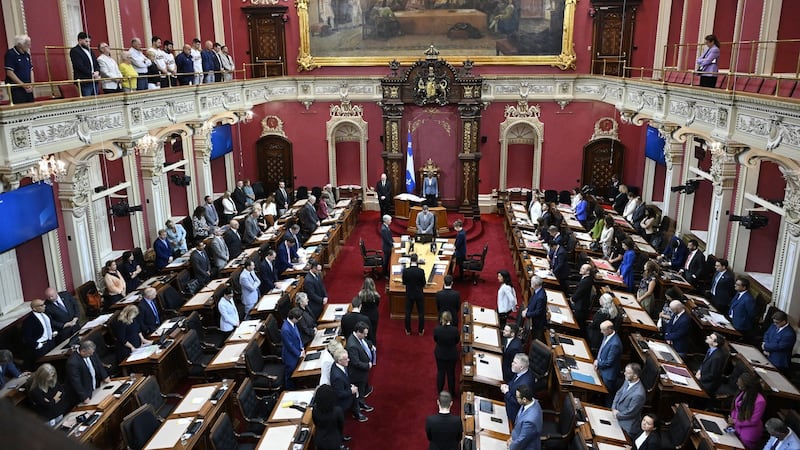
Quebec MNAs will have to swear an oath to the King before taking their seat in the National Assembly, a judge has ruled. On Monday, Superior Court Justice Ian Demers delivered his ruling on a request for an injunction to suspend a law that removed the mandatory oath to the King. The law, known as Bill 4 before it was passed, had been in effect since December 2022 but was only challenged in court this year. Under the law, MNAs had the option to swear an oath to the people of Quebec instead of the King, which is what all 127 MNAs did last month when they were sworn in following the Oct. 5 election. Since the MNAs cannot take their seats in the Quebec legislature, it now raises questions on whether or not the start of the parliamentary session, scheduled for Dec. 1, will take place. ‘Constitution is not an à la carte menu,’ judge says The judge agreed with the applicants that all laws passed by a majority of MNAs who have not taken the oath would be invalid and that the Constitution cannot be unilaterally amended by a provincial legislature. “Our legal system can function only if all stakeholders respect the Constitution and the law,” the judge wrote in his 22-page ruling. “The Constitution is not an à la carte menu from which a citizen can choose only what suits him or her … Any other proposal invites constitutional disorder, or even chaos.” The injunction was filed by a legal group called the Public Interest Litigation Institute, which argued that Law 4, tabled by the previous CAQ government, is unconstitutional and should be temporarily suspended. On Oct. 20, Justice Demers heard arguments from the group’s founder, University of Ottawa law professor Lawrence David, and lawyers for the Quebec Attorney General. In his ruling on Monday, the judge said the Attorney General’s arguments against the injunction request violate the Constitution and the rule of law. The fact that the bill that removed the mandatory oath was passed unanimously has no legal effect, he said, noting that, “Strong support does not validate a law.” In granting the suspension, Justice Demers said his ruling will be enforced even if the Quebec government files an appeal. Oath to the King is a ‘disgrace’: premier Speaking in Montreal at a news conference, Premier Paul St-Pierre Plamondon said he will take the time to read the decision and will consider all of his legal options. “I do not and I cannot take an oath to the King of England. And I think we are dozens, and maybe more than 100, elected members of parliament, duly elected through a democratic process, who think it’s a disgrace,” he said at a news conference in Montreal where he voiced his support for the city’s bid to host the Defence, Security, and Resilience Bank. He added that the oath to the King is “an act of disloyalty that requires Quebec’s elected officials to pledge allegiance to a foreign sovereign.” Monday afternoon, he said on social media that his government will appeal the ruling before the Quebec Court of Appeal to request a stay of its enforcement until a final decision is reached. He also acknowledged that the decision could cause delays for the parliamentary session, which he has postponed twice already. It was originally scheduled to start on Nov. 17, but he delayed it to Nov. 24 before postponing it to Dec. 1. It will be up to the next speaker of the National Assembly, he said, to decide whether to force MNAs to swear the oath to the King next week. St-Pierre Plamondon has never shied away from expressing his opposition to the monarchy. He has said he wants to abolish the office of the lieutenant-governor in Quebec. Does Quebec have a government? Frédéric Berard, a constitutional lawyer who was not involved in the legal challenge, said there is a way to abolish the oath to the King under the law: Quebec would need the consent of Parliament and all 10 provinces to amend the Constitution. “I don’t like the oath to the King myself, but I hate even more all the violations to the rule of law,” he said in an interview. Berard, who has written books on constitutional law, said in his legal opinion, the judgment calls into question whether Quebec has a functioning government or a premier. The logic applied to MNAs also extends to ministers, he said. He welcomed Justice Demers’ decision, praising him for following the law and not letting the start of the new session next week influence his decision. “You cannot do whatever you like with the Constitution,” he said. “What if, you know, tomorrow we try to get rid of some kind of fundamental values like the freedom of speech, for instance? Will we accept violating the rule of law? I mean that’s the same question here.” Justice Demers’ decision only temporarily suspended Law 4 while the arguments on the merits of the law will be held at a later date. CTV News has reached out to Quebec Justice Minister Marie-Claude Sarrazin for comment. Opposition parties react Opposition parties are already reacting to the judgment. Liberal leader Charles Milliard said his party was “proud” to swear an oath to the Quebec population, but it is “open to any solution that would allow parliamentary proceedings to resume” on Dec. 1. “Quebecers expect their elected representatives to work on their real priorities: the cost of living, the economy, health care and education,” he said on social media. Quebec Conservative Party leader Éric Duhaime said he hopes the Court of Appeal will reverse the ruling. “Quebec must use every tool at its disposal to defend elected members’ right to swear an oath to the people,” Duhaime said on X. Interim CAQ leader Mathieu Lévesque also called on the government to file an appeal. “The loyalty of Quebec’s members of the National Assembly lies with the people who elected them. It does not lie with a foreign monarch,” he said on X.