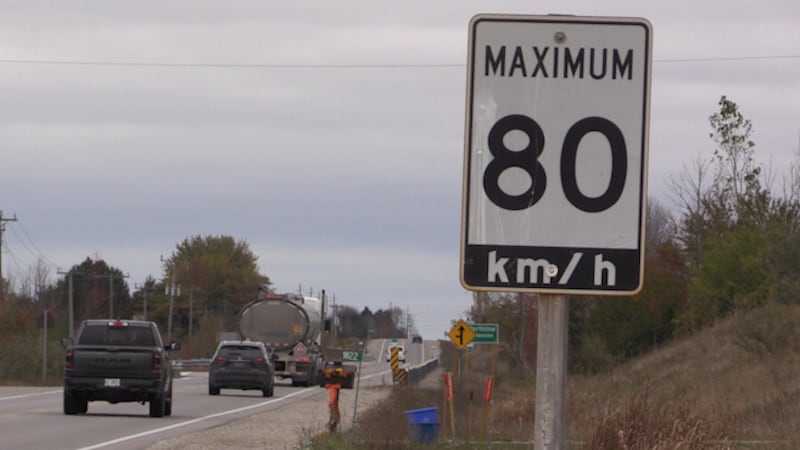
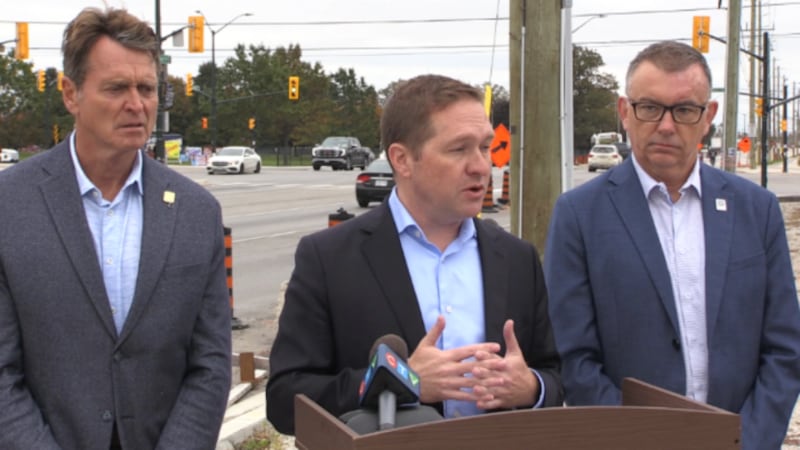
Some residents in the Town of Mount Royal (TMR) say speeding along Lucerne Road has become a daily safety concern — and they’re calling on the town to act quickly. The 1.5-kilometre stretch connects Jean-Talon Street to Highway 40. It’s wide, straight, and residential, with four lanes of traffic and few stop signs. There are no protected bike paths, and during rush hour, no street parking — all of which, some residents say, create the perfect conditions for drivers to speed. “The speed limit is 40, but it’s routine to see people going 60 or 70,” said Alexandre Cassis, who lives on Lucerne and is a father of two. “We’ve had a few close calls. Nothing serious yet, but it’s very concerning.” Cassis launched a petition last month urging the town to install safety measures, like protected bike lanes, curb extensions, and speed bumps. He said the current state of the street makes it feel “more like a highway than a neighbourhood.” He said the issues have been raised repeatedly over the years, but that the town keeps delaying taking action. “There are families here who no longer let their children walk or bike on their own,” he said. “None of this is normal for a neighbourhood street with so many families.” TMR installed a radar speed sign years ago, which Cassis said only reinforces the severity of the problem, often displaying speeds well above the limit. In an interview with CTV News, Mayor Peter Malouf said he takes the issue seriously, not just on Lucerne, but across all of TMR. He said the administration is working on long-term solutions that consider the complexity of the road’s function. “Lucerne is an intermunicipal road,” Malouf explained. He confirmed the town is preparing to launch a traffic study this fall, which will assess driver behaviour on Lucerne, look at where vehicles are coming from, and whether they’re cutting through to reach major arteries like Highway 40 or Jean-Talon. “We don’t want to just do trial and error,” said Malouf. “We want a well-thought plan, based on expert recommendations and best practices from other municipalities. The goal is to come up with reasonable, effective solutions that don’t simply move the problem to smaller residential streets.” He also pointed to steps the town has previously taken, such as reducing the speed limit from 50 to 40 km/h and installing pedestrian signals at some key intersections. But he acknowledged more work is needed in the case of Lucerne. The traffic study is expected to begin in late October or early November — once Hydro-Québec completes ongoing infrastructure work on the street. The timing, Malouf said, is intentional. “Fall reflects more typical traffic patterns, with school, buses, and commuters back in full swing,” he said. Meanwhile, for residents like Cassis, the wait is frustrating. “It’s already been years of delay and residents asking for change,” he said. “We want to see a timeline and we want to know something will finally change.”