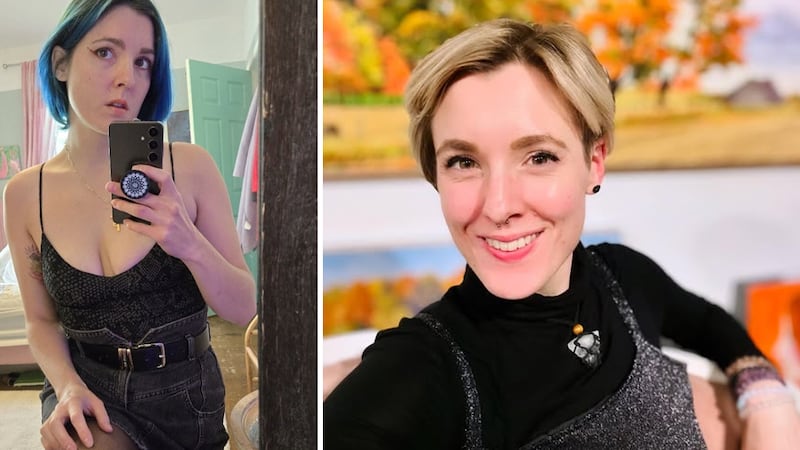
A Montreal musician was forced to learn some hard lessons about distribution, streaming and the reality of hosting music on Spotify. Naomi Silver-Vezina recorded and launched her album “Timescape” in February under the name Naomi SV. Listeners would check it out on Bandcamp, Spotify, YouTube or on CD, for those more keen on the physical copies. Then, however, she got an unpleasant and unexpected surprise. “So I got an email from my music distributor, Soundrop, saying that they got my request to take down my album and that they were on it and they were going to do it soon,” she said. “I never made that request, and I freaked out. I was wondering, have I been hacked?” Spotify’s help page says that “if you didn’t request your music be taken down, reach out to your label or distribuor for help as they’ll have more info.” CTV News attempted to contact Soundrop without success. Silver-Vezina also went through a frustrating ordeal of trying to contact her distributor to re-upload her album. It was eventually reestablished on the site, but not without headaches. “There’s a lot of issues getting support from humans, because it’s all AI chatbots now,” she said. “It’s that feeling of frustration, of not feeling in control, and feeling like your your music and your work is being controlled by all these different entities.” To get an album on streaming sites, artists rely on distributors or labels, who profit off the artists’ work. “Every distributor takes a cut, whether it’s a percentage or a yearly fee or one time payment, but it’s just so many steps to go through, and it adds a lot of distance between the artist and where their music ends up being distributed, so it’s hard sometimes to feel like you’re in control of your music,” said Silver-Vezina. In addition to lacking control, artists typically make very little money from streaming. The Duetti Music Economics Report found that for 1,000 streams, an artist makes about $3.41 on streaming sites. That is down from $4.04 in 2021. Economist Moshe Lander said that artists have always had issues getting money for their work and that middlemen have always existed to eat into profits. “Unfortunately, the problem is that in order to maximize your value, you need to remove all of those various layers from the actual creation of the product to the distribution of the product,” he said. “And so whether we’re talking about Spotify or iTunes, or whether we’re talking about the old fashioned way of making an actual physical album, there’s so many other people along the way who have leverage that if you don’t work with them, then your product doesn’t get out to the audience.” Lander said the entire system of patents, copyrights and trademarks is meant to protect artists’ intellectual property and be paid for its use. “If you’re not going to pay me what I like, then I’m not going to allow you to have access to my music. That’s the missing part of the story here that doesn’t quite match up with, say, other intellectual property, but it is a story that’s as old as music itself,” he said. Though she makes very little money from Spotify streams, about $60 from her recent album, by her estimates, Silver-Vezina said she needs the Spotify data for other reasons. “It’s such an important metric of success and credibility, it’s the thing that you know, bookers or agents or even festivals or grant applications might look at,” she said. “I’ve had grant applications that ask me my Spotify listener count, and I think some festivals also asked for that, and how much it’s used as a factor, as a deciding factor, I’m not sure, but it’s still something that gets associated with your artist profile.”