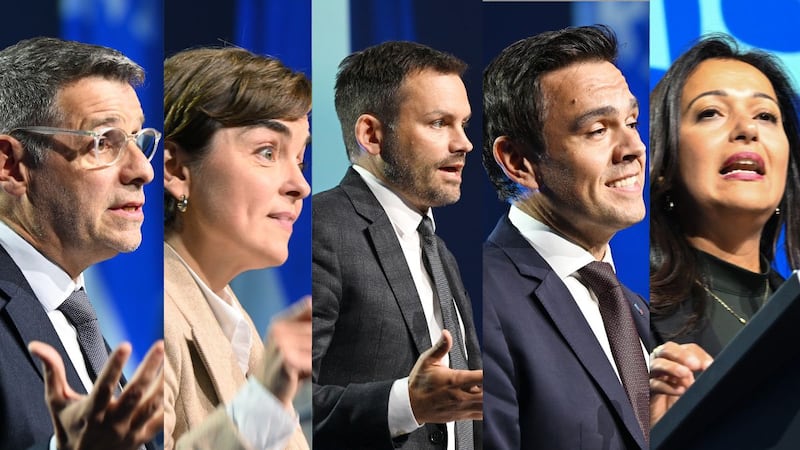
As election day inches closer in Quebec, the two front-runners in Montreal’s mayoral race are growing more combative, especially on one issue: mobility. Projet Montréal’s Luc Rabouin and Ensemble Montréal’s Soraya Martinez Ferrada took to CJAD 800’s airwaves for an hour to debate on The Elias Makos Show Thursday morning. They touched on their campaigns’ key issues like homelessness and housing, revitalizing the downtown core and improving traffic flow. That last point got the candidates especially heated as they debated the necessity of the city’s bike lane network. Makos pointed out that over the last eight years, Montreal spent an estimated $181 million on bike infrastructure, with 1,000 kilometres of bike paths. The bike network is receiving international attention. The Economist said it serves as an example of a new, disruptive transport model that is highly efficient, cost-effective, and effectively reduces car congestion, pollution and the need for large parking lots. TIME Magazine also named Bixi one of the top inventions of the century. However, a portion of Montrealers oppose the increase in bike lanes, and some Parc-Extension residents have threatened to sue after losing parking spaces. Though a McGill study showed that over 97 per cent of Montreal’s roadway is designed for car use, parking complaints led Martinez Ferrada to promise to revise and even remove some bike paths. Martinez Ferrada said Projet Montreal “lacked ambition.” Rabouin defends Projet Montreal’s investments, saying Montrealers are putting them to use. Last year, some 13 million trips were done through Bixi – not including personal bikes, he said. “Montrealers are moving by bike. This is important that we offer them safe infrastructures. But what I said since the beginning of this campaign, I want to put the same level of passion and energy that we put into building this bike network for improving our bus network,” he said. Rabouin added that removing bike lanes is off the table for his administration as “they are part of the solution, not the problem.” He insists investment in public transit and active transportation is the only way to reduce traffic congestion – by taking cars off the road. He said changes can be made for safety reasons if need be. “If there’s a pothole, we just have to fill it. We don’t need to wait 12 or 18 months on the moratorium to evaluate everything,” he said. Martinez Ferrada argued there is room for improvement and accused her opponents of circumventing consultation processes. “Projet did a lot quickly without listening and doing consultation, impact on business and seniors, we need to do more on how we share the street,” she said. “You’re sacrificing merchants. You’re sacrificing elderly people that can get their medication delivered because they can’t get in somewhere,” she said. She added that the city has “never been in such a paralysis” when it comes to traffic and said Projet Montreal had a “lack of [planning]” when it comes to roadwork. Ferrada Martinez pointed out that areas like the city’s east end, Île Bizard or Lachine need better access to public transportation. Rabouin assured that’s part of his vision, too. When it comes to homelessness, both candidates said encampments shouldn’t be dismantled without providing people with alternatives – in line with a court injunction. They also gave listeners a glimpse of their personalities, explaining what pushes them to be mayor. Rabouin boasted of his background in community organizations and environmentalism. He said he sees his kids’ anxiety before the climate crisis. “My job as a mayor and as a father, I want to always be able to look in their eyes and say to them that I’m doing everything I can do for them, for their generation also to prepare a better future,” he said. Martinez Ferrada leveraged her experience in federal politics, saying it gives her a unique perspective. “As a minister of tourism, as a minister of economic development, I went all across the country. And, every time I would come back to Montreal, I felt that Montreal went silent,” she said. Montrealers will decide who they trust with the keys to City Hall on Nov. 2.