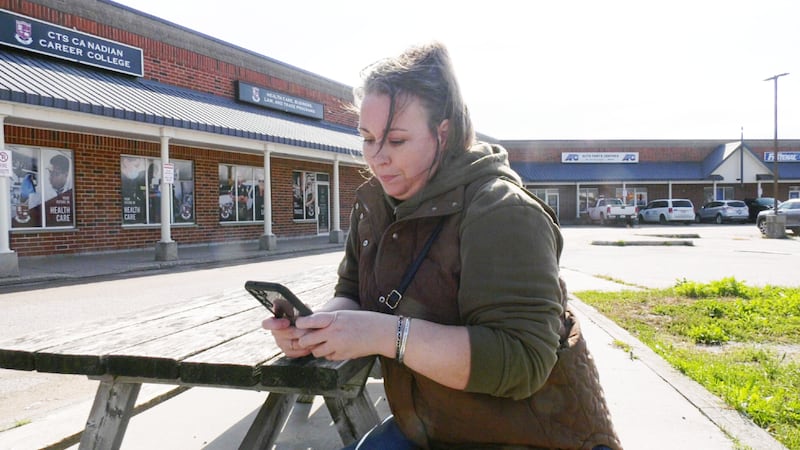
Canadians lost over $638 million to fraud in 2024, with cases nearly doubling over the past decade. One expert says this rising trend is creating a crisis in financial services that is likely to get worse before it gets better. “If it hasn’t affected you as an individual, it’s probably affected somebody that you know, and it’s only a matter of time before they come for you,” said technology expert Carmi Levy, who added that artificial intelligence is fueling the rise. According to the Canadian Anti-Fraud Centre (CAFC), reported losses have surpassed $2 billion since 2021, even though only an estimated five to 10 per cent of fraud cases are reported. In a February news release, the Competition Bureau said impersonation fraud — when scammers pose as a bank representative, a member of a known organization, or another individual to trick people into giving sensitive information or money — is one of the fastest-growing types of fraud. It’s a case Claudine Jeanson of Granby, Que. knows all too well. In June, she says she was contacted on Facebook Marketplace by someone interested in buying an item she was selling. The person asked for her cellphone number to send $100 by e-transfer. When the link didn’t work, she agreed to meet the buyer in person. But minutes later, Jeanson received a phone call from someone she believed was a fraud representative from the Royal Bank of Canada (RBC) — a call that ultimately cost her thousands of dollars. “He said, ‘listen, ma’am, there’s something very suspicious going on with your account.’ He told me that we had to act quickly because someone was trying to take $10,000 out of my account,” Jeanson recalled. “It was RBC’s phone number on my caller ID, so I didn’t panic. He was really convincing.” The caller instructed Jeanson to send a $10,000 e-transfer to a supposed safe account while they secured hers. When she opened her banking app, Jeanson noticed a contact listed as “RBC” had already been added. “You think it’s to protect your money, but in the end, it’s a scam... You don’t want to lose $10,000, so you think it’s true,” she explained. Her heart sank as soon as she hit send. She then contacted RBC and learned that, before sending the e-transfer, there had already been three separate attempts to withdraw $10,000 from her credit line. “So, the bank stopped those three attempts, but not the transfer? And it didn’t raise a red flag?” she said. In a written statement, RBC said it investigates fraud on a case-by-case basis but could not comment on Jeanson’s situation. The bank added that it takes client concerns seriously and communicates with them directly. “We remind clients that an RBC representative or employee will never ask a client to share one-time passcodes, to send money to secure their profile or to share the link to an e-transfer deposit,” the bank said. “Additionally, RBC will never ask to access a client’s online banking to add payees on their behalf or ask clients to participate in an undercover operation to prevent a fraud.” CTV News asked RBC about its process for stopping transactions, but the bank would not provide specifics. Levy explained that banks don’t typically answer precise questions following a fraud. “Banks do have very sophisticated protective tools and processes in place to identify fraud, fraud attempts and stop them from happening, but the precise techniques that banks use, they’re not willing to share, for obvious reasons. They don’t want to tip off fraudsters,” he said. However, Levy noted that the continued rise in these types of scams suggests the current measures aren’t enough. “It’s not enough to say after a fraud has occurred, ‘Well, you should not have handed that information over. You should have ended the call.’ The financial services industry and Canadian banks need to be far more proactive, far more aggressive at educating their customers and being front and centre in terms of fighting this scourge,” Levy said. According to the CAFC, about 34,642 victims reported fraud in 2024. After completing its investigation into Jeanson’s fraud claim, she says RBC told her she was responsible for the transaction under the bank’s Electronic Access Agreement and would not be reimbursed. She said it left her devastated. “I cried. I felt guilty. I said to myself, ‘How could this happen to me? I’m so careful,’” Jeanson said. “You feel like you’ve been abandoned. I’m leaving my money with them, and they’re telling me there’s nothing they can do.” Jeanson said some of her interactions with RBC employees also left her feeling blamed and dismissed. “When I got to the bank, I was in a state. I was crying. Then the woman said, ‘What did you do? You did it.’ I found that inhumane,” she said. Levy emphasized that banks place the onus on clients to act as the final line of defence in recognizing that any unsolicited requests for authentication information should be treated as an “enormous” red flag. “They will not be compensated if they, in fact, follow through on that,” he said. Levy said stronger rules are needed to ensure financial institutions have proper fraud-prevention tools and provide clear, centralized resources for customers. He also called for greater accountability and government legislation to protect consumers when banks fail to prevent fraud. “I would tell people who have been scammed like this: don’t give up,” Jeanson said.