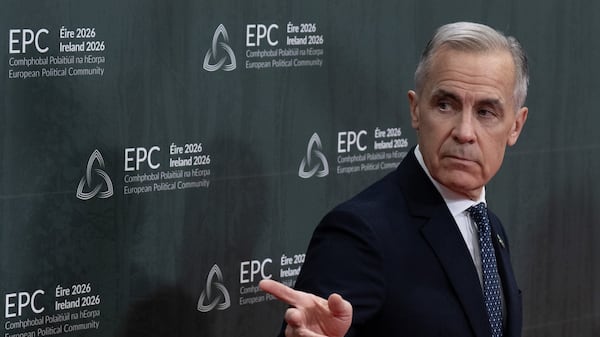
MONTREAL — CAE Inc. chief executive Matthew Bromberg says the flight simulator maker is shrinking its global footprint more quickly than planned, as it launches into the second half of a yearlong overhaul aimed at cutting costs. The Montreal-based company now expects to retire 16 to 18 flight simulators by the end of its fiscal year in late March, up from 13 to 15 previously, the CEO said Thursday. The change comes as part of a transformation plan set in motion by Bromberg that will see CAE close up to six of its civil training centres and shed more than 500,000 square feet from its operating network across the globe. “We’re now more than 50 per cent complete across key milestones, which is ahead of our original forecast,” he told analysts on a conference call. About a fifth of the $150 million in annual savings targeted for 2030 will stem directly from the scale-back, he added. Despite its leaner figure, the manufacturer plans to retain more than 99 per cent of its civil aviation revenue. Bromberg offered an upbeat forecast on commercial flying, business jets and defence, even as the Middle East war costs CAE millions of dollars per quarter due to lower demand for flight training amid reduced travel in the region. “We feel good about the outlying market. But more importantly, internally we’re executing better than we expected, so that gives us confidence in the second half of the year,” he said. “The mitigation plans we put in for the Middle East are holding,” he added. Those measures refer to rerouting airlines’ training to facilities far from the conflict zone, a step that comes with a cost as equipment and instructors are relocated. In its latest quarter, defence stood out as a bright spot. The segment upped its book-to-bill ratio — a measure of orders received to sales billed, a key indicator of near-term demand for a company’s goods and services — to 1.06, an improvement over the previous 12 months. In the United States, CAE renewed a nine-year, $300-million contract to train U.S. air force crews on the C-130 Hercules military transport plane. The company also announced in recent months co-operation agreements with German information technology company Msg Systems and Polish aeronautics manufacturer WB Group. “Today 45 per cent of our revenues are associated with supporting the war fighter,” said Bromberg, a former submarine officer in the U.S. navy. Longer-term, he sees the civil aviation sphere as equally promising. American regulators last month certified the Boeing 737 Max-10 passenger jet, which accounts for some 1,500 orders worldwide. United Airlines, “an important Max-10 customer,” has been a CAE partner for more than four decades, Bromberg noted. “New aircraft platforms are an important driver of long-term demand for training and simulation, and the recently certified 737 Max-10 is a clear example,” he said. As for private planes, the global fleet of business jets is expected to grow by about 51,000 by 2035, he said, a 30 per cent leap from current levels. “More aircraft means more flying. More flying means more pilots, and the regulatory requirements continue to drive not only type training but recurring training,” Bromberg said. Under CAE’s transformation, the firm will retire one-tenth of its full-flight simulators — about 25 — and relocate up to 15 more alongside the training centre closures. The reforms are expected to cost between $200 million and $250 million, with roughly half of that total already incurred, the company said. CAE counted 375 full-flight simulators across the globe as of June 30, among the facilities used to train more than 150,000 pilots a year. On Wednesday evening, the company reported a 21 per cent year-over-year drop in profits to $58.6 million in its second quarter and a nearly three per cent decrease in revenue to $1.20 billion. Nonetheless, CAE increased its adjusted earnings forecast for the fiscal year to between $1.28 and $1.35 per share, up from between $1.21 to $1.28 per share previously. On an adjusted basis, its earnings rose to 33 cents per share from 28 cents per share the year before, beating analysts’ expectations of 26 cents per share, according to financial markets firm LSEG Data and Analytics. This report by The Canadian Press was first published Nov. 12, 2026. Christopher Reynolds, The Canadian Press