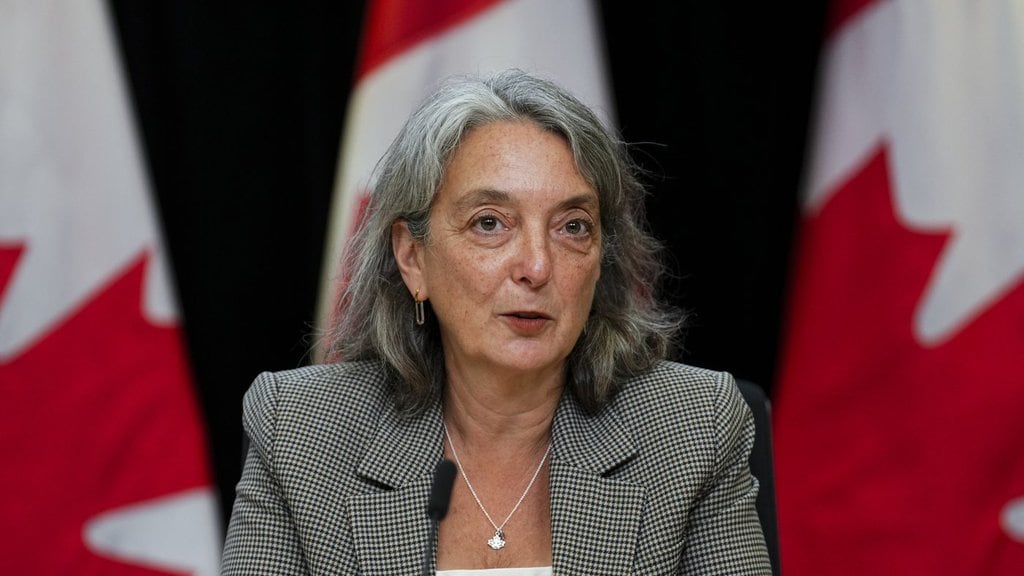
Following the historic signing of a memorandum of understanding (MOU) between Ottawa and Alberta to lay the groundwork for a new oil pipeline — and the resignation of longtime cabinet minister Steven Guilbeault over the issue — Environment and Climate and Change Minister Julie Dabrusin insists the federal government is not rolling back its climate policy. On Thursday, Prime Minister Mark Carney and Alberta Premier Danielle Smith committed to a series of measures aimed at strengthening cooperation on major projects and outlining the conditions that need to be met before a new oil pipeline to the Pacific to proceed. Just hours later, Guilbeault — who served as environment minister for nearly four years under former prime minister Justin Trudeau, resigned from the prime minister’s cabinet declaring his strong opposition to the MOU. “Over the past few months, several elements of the climate action plan that I worked on as Minister of the Environment have been, or are about to be, dismantled,” added Guilbeault, who was serving as Canadian identity and culture minister and as Carney’s Quebec lieutenant at the time of his resignation. Since Carney was elected, his government has zeroed out the consumer carbon tax, paused the 2026 electric vehicle target and set the stage for not proceeding with the implementation of the oil and gas sector emissions cap. The MOU with Alberta went even further, including provisions that would see the federal Liberals suspend the clean electricity regulations in the province and if required, make an exemption to the federal tanker ban. While Carney and his cabinet insist that they are committed to the 2050 net-zero emissions target, they’ve been less definitive about the 2030 and 2035 milestones. In an interview on CTV Question Period airing Sunday, host Vassy Kapelos asked Dabrusin about Guilbeault’s criticisms, pointed to the abandoned Trudeau-era climate policies and cited analysis by the Canadian Climate Institute (CCI) which accounted for each policy and its corresponding emissions reductions, asking how 2030 and 2035 targets are even mathematically possible. “I’ll disagree with the characterization that we’re rolling things back when we’ve actually committed to strengthening the industrial carbon price, strengthening methane regulations, extending the methane regulations to landfills and also to building out infrastructure that, in the long term, does help us to move towards a cleaner electricity grid,” Dabrusin said. Pressed by Kapelos on whether the government would concede it will not meet the 2030 targets, again citing the CCI which stated this week that the MOU risks unravelling Canada’s climate policy, Dabrusin said the Liberals are “determined” to meet their objectives. “The thing is, we also always knew that they were really, really ambitious targets,” Dabrusin said. “And we could have set lower targets, they’d be easier to meet.” “We knew that these would be tougher targets to make, but we have to do that work,” she also said, adding the federal government “need(s) the provinces to also help us to get there.” When pressed again on why federal ministers continue to tell Canadians that they’ll meet their climate targets without evidence that’s the case, Dabrusin pointed to the yet-to-be-unveiled Climate Competitiveness Strategy and plans to strengthen the industrial carbon price and methane regulations. “But in everything that we do, we need to keep moving and pushing forward on, on reducing emissions, in fighting climate change,” she said. “That commitment is absolutely still there, and it’s in two places, one place where it’s regulatory, but the other piece is also in actually making sure that we’re building that electrical grid for the future that we need.” You can watch Environment and Climate Change Minister Julie Dabrusin’s full interview on CTV Question Period Sunday at 11 a.m. ET. With files from CTV News’ Rachel Aiello