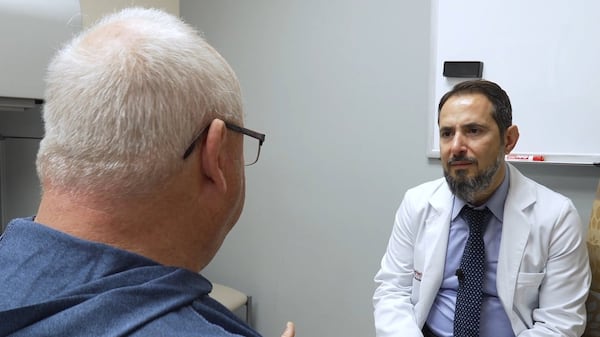
Warning: This story includes details about suicide. After a Quebec pediatrician’s death by suicide last April sent shockwaves through the medical community, some physicians are speaking out and calling for change. Dr. Karina Poliquin, based in Trois-Rivières, Que., was only 35 years old when she took her life. In the months leading up to her death, while doctors were in negotiations with the François Legault government, she spoke publicly about the lack of support for health-care workers and about her own struggle with burnout. “She was very present on social media. She talked about children’s care, children’s health. She also denounced the lack of resources in the health-care system and her death was like a big shock in the whole medical community,” said Noovo Info’s Marie-Claude Paradis-Defosses, who dug deeper into the tragedy to find some answers. Paradis-Defosses met with one of Poliquin’s friends, who shared part of the letter she left behind. “I can’t ignore the fact that medicine has broken me. This world—despite some incredible people—is so inhuman at times,” reads part of the letter. The friend said Poliquin was worried and was given warnings when she spoke to the media. In a statement to Noovo Info, the regional health board wrote: “Our organization has implemented various initiatives to support the mental health of its staff. These include a ‘peer support network, …. awareness-raising activities, training sessions, and regular reminders about available support resources.” But Poliquin’s death could be a symptom of a much deeper problem. More than 11 per cent of doctors have had some suicidal thoughts during the past year, which is far higher compared to the general population (less than three per cent, Paradis-Defosses said. “It’s a huge difference.” In the same national survey by the Canadian Medical Association, nearly 46 per cent reported high levels of burnout. It rises to 49 per cent among women. Additionally, 65 per cent of physicians sought psychological support — an 11 per cent increase since 2021. Dr. Steven Palanchuck says Poliquin’s death brought him back to a time years ago when he was struggling. He knows at least five colleagues who have died by suicide. Now, he addresses physician mental health in his podcast, Soigner jusqu’à se briser. “I want to show that we are not alone feeling and this kind of way. And the more we talk about it, the better it will be,” he told CTV News. Dr. Jean-Paul Brutus suffered burnout twice before deciding to leave the public system. The plastic surgeon says there were clinic days when he would see as many as 100 patients. Many doctors and advocates Noovo Info spoke to cite work overload, constant pressure, and a lack of resources as contributing factors for burnout. “Most of us doctors know doctors who’ve taken their lives, and I personally know of about four personally, but I also indirectly know of well over 20,” said Brutus. Some experts say physician distress is still taboo, and precise data on the number of doctors who die by suicide doesn’t exist in Canada. That has some calling for change, including improved data collection. “A doctor who stops working, or the doctor who dies, or a doctor who’s unable to work for medical leave or whatnot, that’s a lot of patients who don’t have a doctor anymore,” Dr. Brutus said. It’s an issue many want to see urgently addressed to prevent more tragedies in the future. With files from Noovo Info If you or someone you know is in crisis, there are resources available, such as the The Quebec Physician Assistance Program (PAMQ) at 1-800-347-4166. Here is a list of mental health resources in Quebec If ever you need help, don’t hesitate to reach out to: Find a crisis centre (in French only) near you to obtain free specialized crisis intervention services for you or a loved one. If you need immediate assistance, call 911 or go to the nearest hospital.