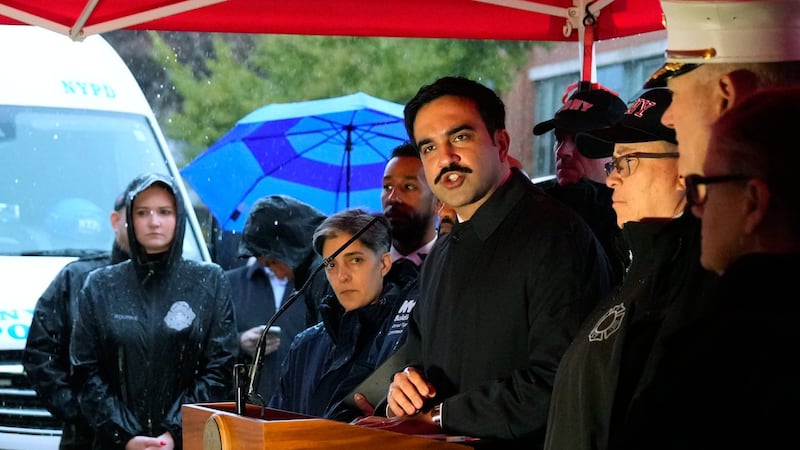
Rouyn-Noranda’s Horne Foundry has announced the launch of a voluntary arsenic biomonitoring program for its employees, their families, neighbours and certain local residents. The company in Quebec, which emits much higher levels of arsenic than the provincial standard, announced on Thursday morning that it will allow hundreds of people to participate in a biomonitoring study. The study will be aimed primarily at employees and their families, but Rouyn-Noranda residents wishing to take part are welcome to apply. The objective of the program is twofold, Horne Foundry general manager Vincent Plante explained at a press conference. The company wants to “provide our employees, their families and friends living in Rouyn-Noranda with the opportunity to assess their biological exposure to arsenic, as well as better document and understand biological exposure at the community level.” Urine, nail and ambient air samples Glencore, owner of the smelter, has commissioned the independent firm Intrinsik to carry out the study, which will begin next April and is expected to last ten months. During this period, Intrisink will collect five urine samples from the volunteers and one toenail sample. It is also planned that a “series of soil and indoor dust samples” will be collected “from each willing participant, according to a precise schedule.” Individual results “will be forwarded to consenting participants” and “community results will be presented to participants and the wider community in April 2026,” Glencore explained in a news release. Arsenic levels in children’s fingernails Quebec public health conducted a biomonitoring study in Rouyn-Noranda in 2018. The results showed that arsenic concentrations in the fingernails of Rouyn-Noranda residents were on average 3.7 times higher than those observed in the population of Amos, a town in the region. The study also pointed out that high arsenic levels can increase the risk of cancer. In March 2023, the government required the Horne smelter to put in place a plan that would enable it to meet the threshold of 15 nanograms per cubic metre (ng/m3) of arsenic by 2027, which, if the smelter meets the target, would be five times higher than the environmental standard of 3 ng/m3. The previous agreement with Glencore, which was signed with the Liberal government in 2017, allowed arsenic emissions from the smelter to reach an annual average of 100 ng/m3, 33 times higher than the standard. In spring 2023, the government also required the company to submit an action plan by 2027, to eventually reach the 3 ng/m3 standard. Mothers at the front demonstrate in Quebec City At the same time as smelter management was announcing the launch of a voluntary arsenic biomonitoring program, activists from the group Les Mères au Front were once again denouncing Glencore’s permission to exceed the province’s pollutant emission standards. They went to the National Assembly on Thursday with the intention, among other things, of distributing copies of the new book “Zones sacrifiées” to certain MNAs. “While we watch helplessly as democracy and the common good crumble away, we have an opportunity here to take action and make the government stop sacrificing part of its population with impunity,” said Anaïs Barbeau-Lavalette, co-leader of Mères au front and co-author of the book. In a news release, Les Mères au front indicated that an “artistic performance was held outside in front of the National Assembly.” The same release indicates that the activists went to the National Assembly to demand that “the Horne Foundry finally respect Quebec emission standards for all toxic contaminants, including arsenic. That the Quebec government stop ignoring the health crisis in Rouyn-Noranda and take immediate action, and that elected officials be held to account and stop putting the interests of multinationals ahead of public health.” Emissions linked to cancer risk Arsenic emissions from the Horne Foundry are associated with an estimated increased risk of cancer. In the summer of 2022, a Quebec Institute of Public Health (INSPQ) report revealed that, over a 70-year period, an excess number of Rouyn-Noranda residents, between one and 14, would develop cancer if Glencore did not reduce the concentration of arsenic in the air produced by the smelter. This report by The Canadian Press was first published in French on Feb. 20, 2025.