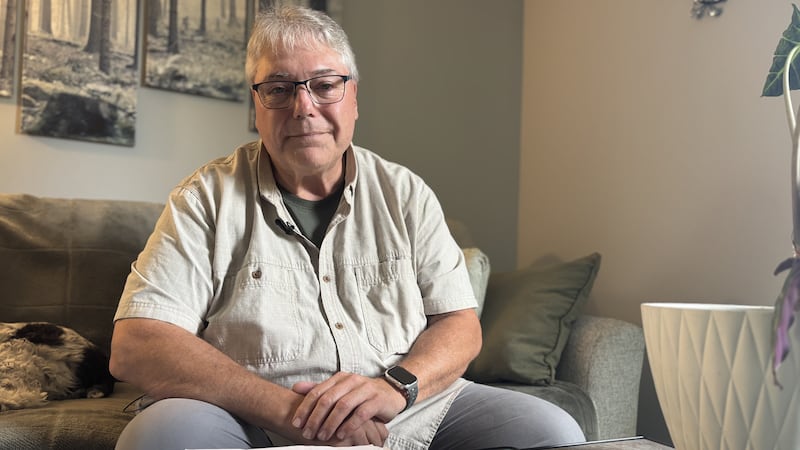
Everywhere you turn at Richard Trépanier’s home in Lachute, Que., you’ll find a thermometer. Each is part of a larger collection of tools he uses as a meteorological observer. The 73 year-old has been tracking the weather nearly every day since he was a child. He says the responsibility of weather observing for the Quebec Ministry of the Environment landed on his family’s doorstep after other observers in his neighbourhood decided they’d had enough. The government landed on Trépanier’s family farm since fewer trees are part of what makes grounds ideal for the practice. Without tree trunks and branches, natural winds can blow freely and that’s most important for recording accurate precipitation. Trépanier doesn’t do it for the money. This work earns him a salary of just $1,900 a year. It’s a passion - but one that requires precision, he says. With freezing rain in particular, measuring precipitation from all directions is a must, as amounts can differ from north, south, east and west. Though Trépanier is most fascinated by a quieter and more gradual weather event for which his records date back to the 1960s. “On my paper it’s the high records that I note and few records of low temperatures,” he says, adding “we have a problem.” Despite climate change and increasingly unpredictable weather patterns, Trépanier has been able to predict and protect his community from flash floods. It’s a talent that also comes in handy while vacation planning. “I had to go with my wife in Louisiana in August. I say to my wife, ‘No, no, no Louisiana. We will go to British Columbia!” “Three weeks in British Columbia and we add one half hour of rain. That’s it,” he told CTV. Although Trépanier’s station will soon be replaced by an automated one, he’ll continue recording for personal use. Even in retirement, he’ll weather a few more storms.